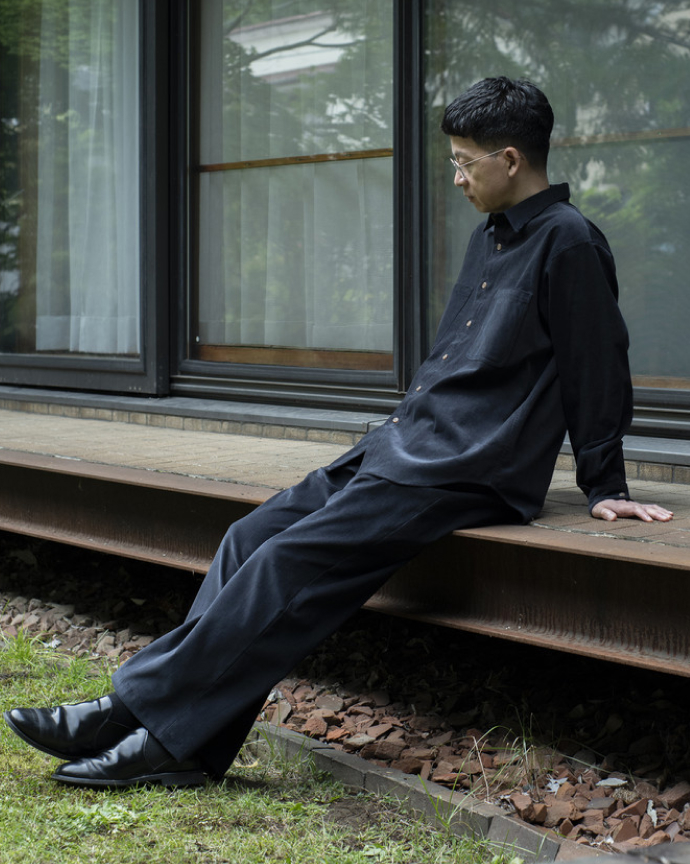
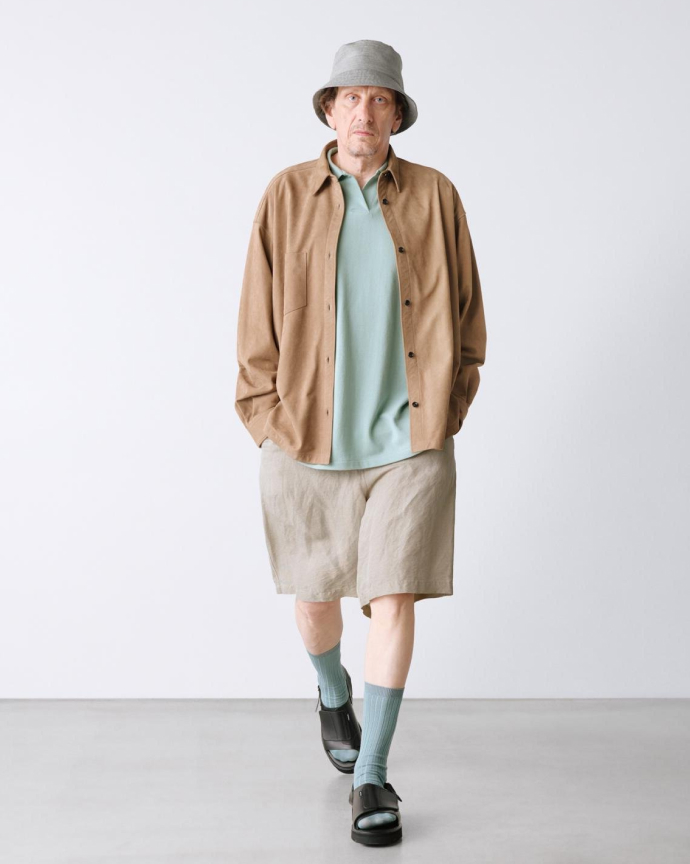
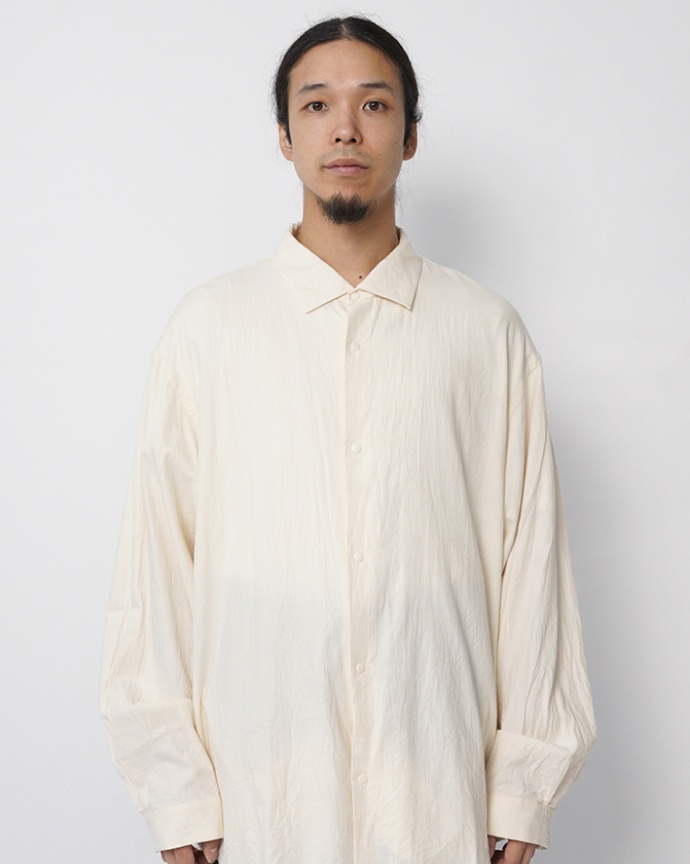
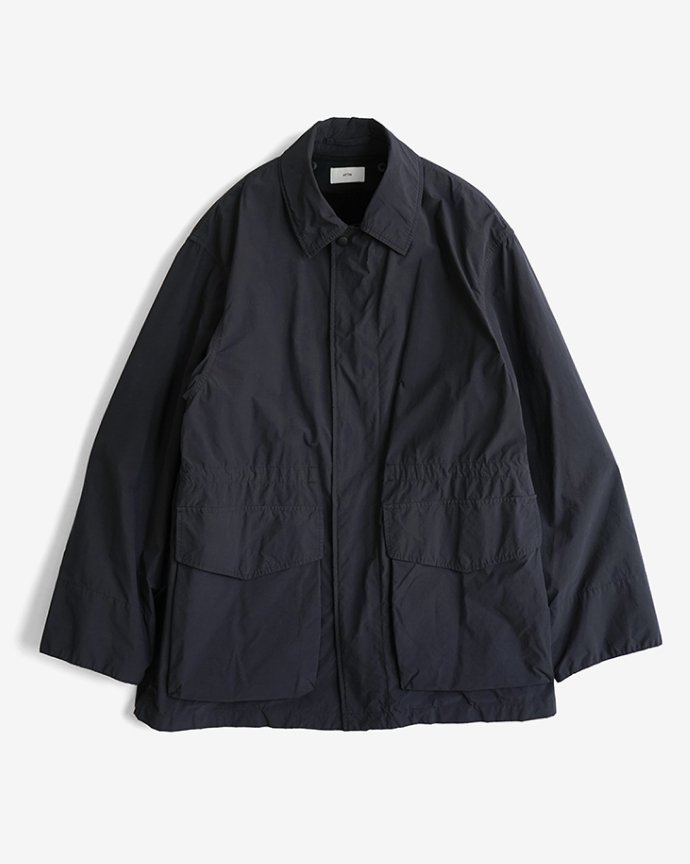

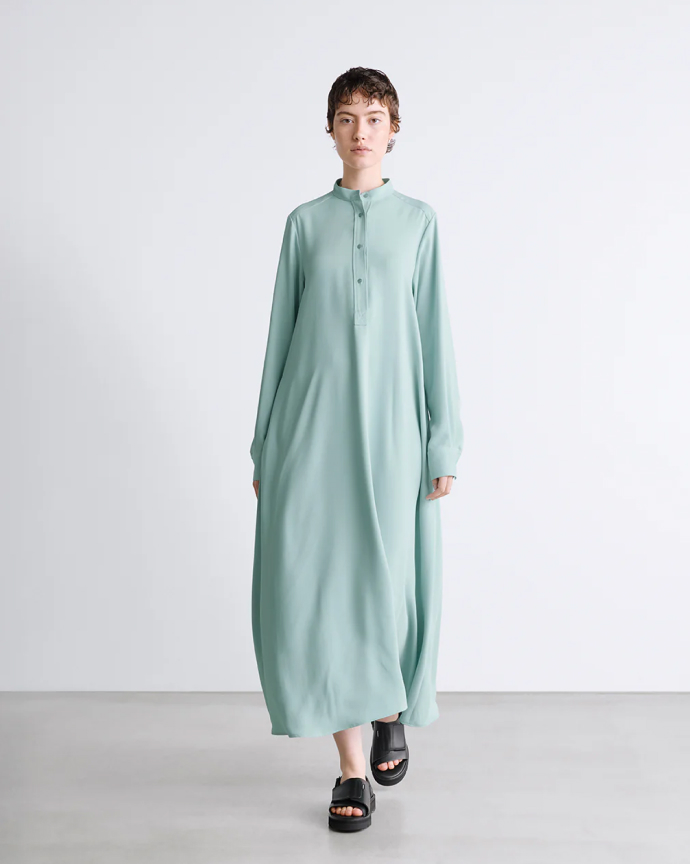
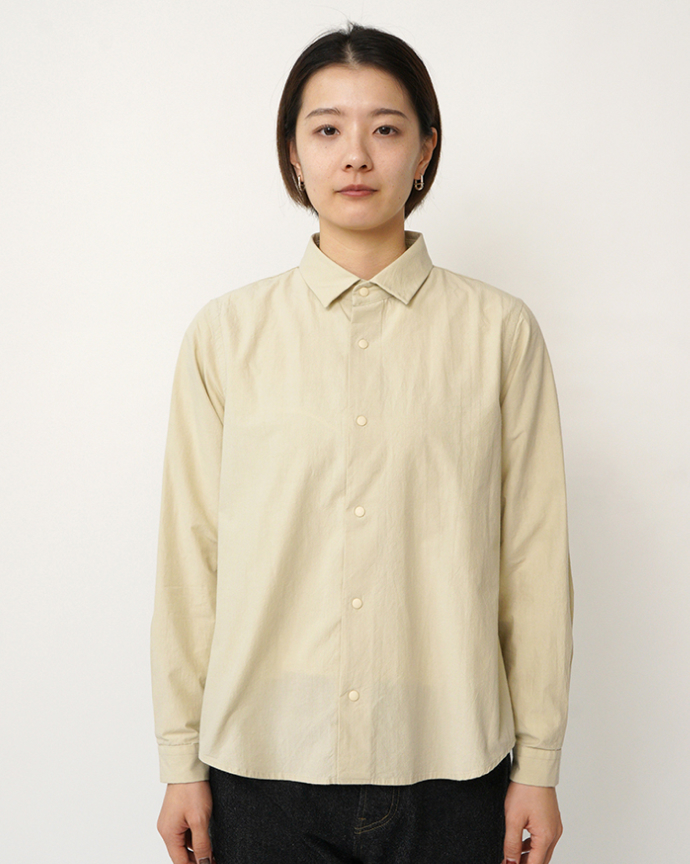
From the spring/summer season of 2021, the brand 'quitan' will be available at Dice and Dice. In the brand release text, there was an unfamiliar phrase 'cultural exchange.' The designer, Sae Miyata, was born in Seattle. During her childhood, she moved around like a nomad, experiencing different cultures. I felt that her phrase 'cultural exchange' carries a very important sentiment. I had various discussions about 'quitan's' craftsmanship, 'cultural exchange,' and the foundational work of Claude Lévi-Strauss, 'The Savage Mind.'
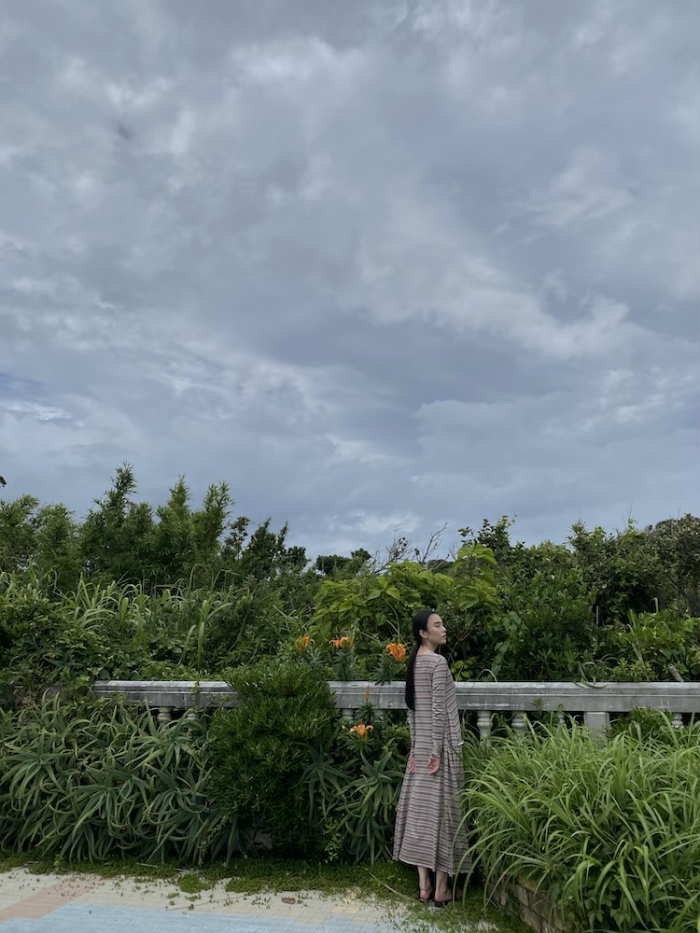
—First, could you tell us about the origin and meaning of the brand name 'quitan'?
There is a word '綺譚 (kitan)' which means a mysterious yet beautiful story. There is a novel by Kaho Nashiki called 'Kamori Kitan,' which features various kappa and is a mysterious tale. I love the beautiful and fresh writing in this novel, which led me to the word 'kitan.' I tried to spell 'quitan' using sounds from French. I believe starting a brand is like embarking on a journey. I hope to encounter 'kitan' along the way, progressing through each season. The back cover of 'Kamori Kitan' says, 'It is a record of a free-spirited exchange.' Reading that excited me, and I thought, 'This is it,' so I borrowed the phrase 'cultural exchange' as the brand's concept.
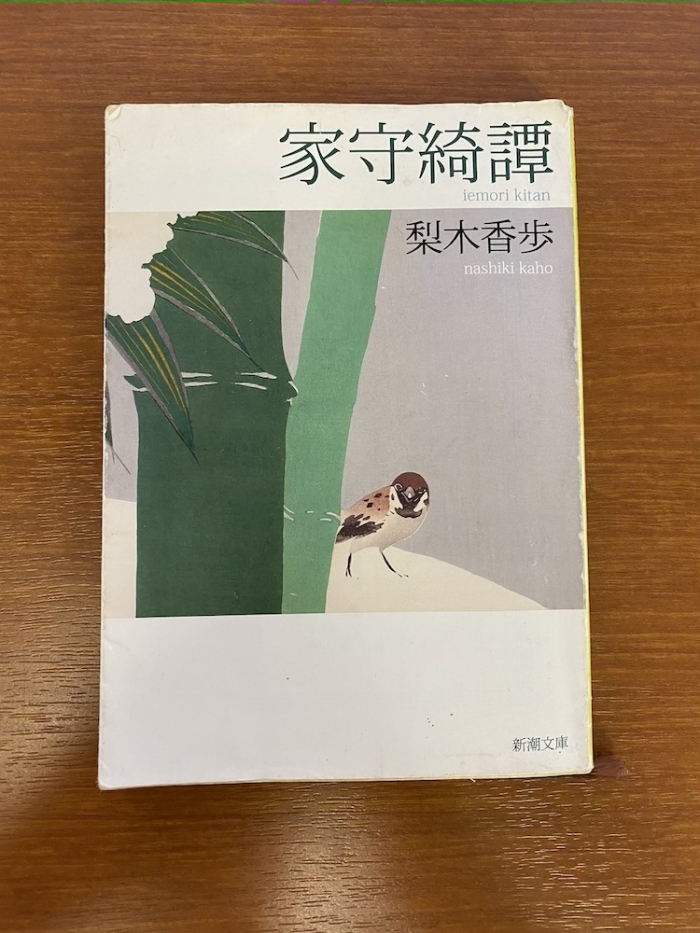 Kaho Nashiki 'Kamori Kitan'
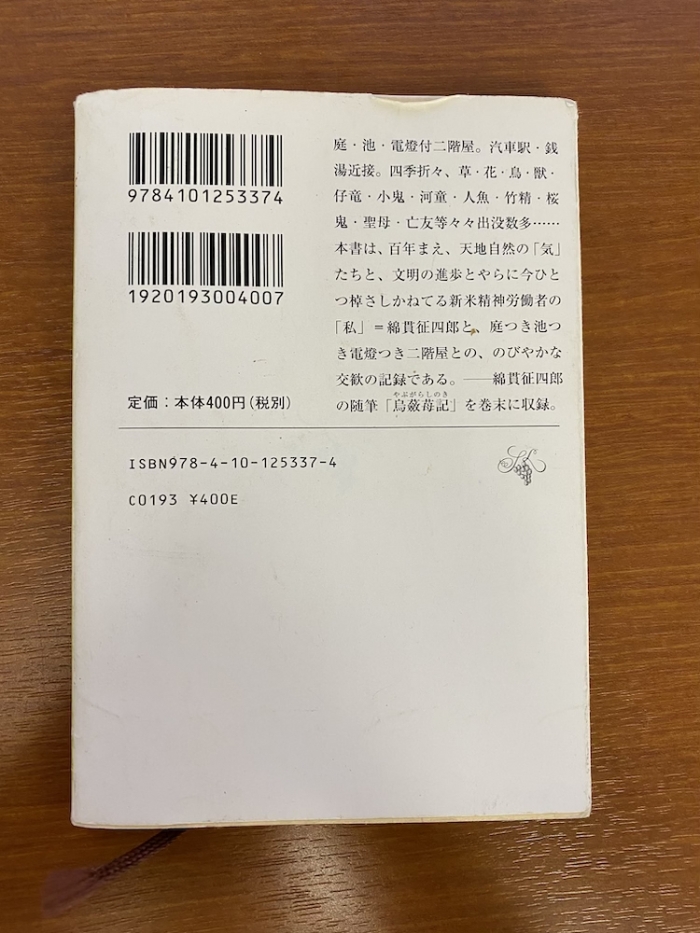 Summary on the back cover of 'Kamori Kitan'
—The phrase 'cultural exchange.' I interpreted this as 'different cultures mixing together to create new cultures.' Is this interpretation correct?
I believe there is certainly a meaning of different cultures mixing to create new cultures. However, to be honest, I intentionally avoid stating it that way. My interpretation of 'cultural exchange' is more of a suggestion or a question: 'Why not get to know different cultures?' I hope it serves as a starting point for understanding people and cultures that are different from oneself. When encountering different people or cultures, perhaps new cultures may emerge from that mixing, or we might simply coexist with the recognition of 'Oh, that's how it is.' I find it interesting that there are various possibilities in that.
I mentioned in the concept that I want to connect points into lines. For example, by doing craftsmanship in a way that is close to one-person operation, I can experience the process up to delivery myself, which allows me to feel the points connecting into lines. We are doing things that are not usually done, like assembling fabric made in Japan at a factory in France. I hope that the points can connect into lines in a form of coexistence, rather than encroaching on each other.
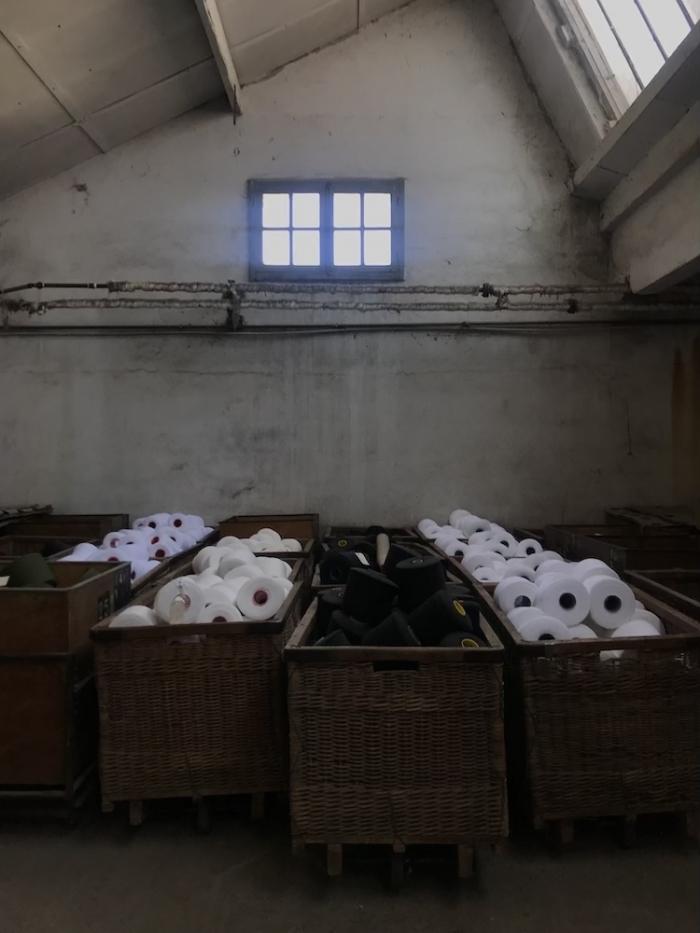
—What prompted you to start production in France, and what do you find appealing about it?
I have always liked French vintage, but fundamentally, it was my experience in my previous job that prompted me. When I was in university, I studied French as a second language, but I didn't want to be half-hearted about it, so I begged my parents to let me go to a language school in France instead of attending my coming-of-age ceremony. The school is located in the middle of France, and I had a great time every day. Because of that, I was able to work in a job related to production in France in my previous job, as I had a little understanding of French.
The characteristic of French production, like British production, is that the appearance when it is finished is completely different. I can't express it well. To put it simply, it's far less skillful than Japan, but it has a different expression. Japanese production is very meticulous, but as a result, it tends to finish quite flatly. However, French production feels more three-dimensional and seems to contain more air, which I find appealing.
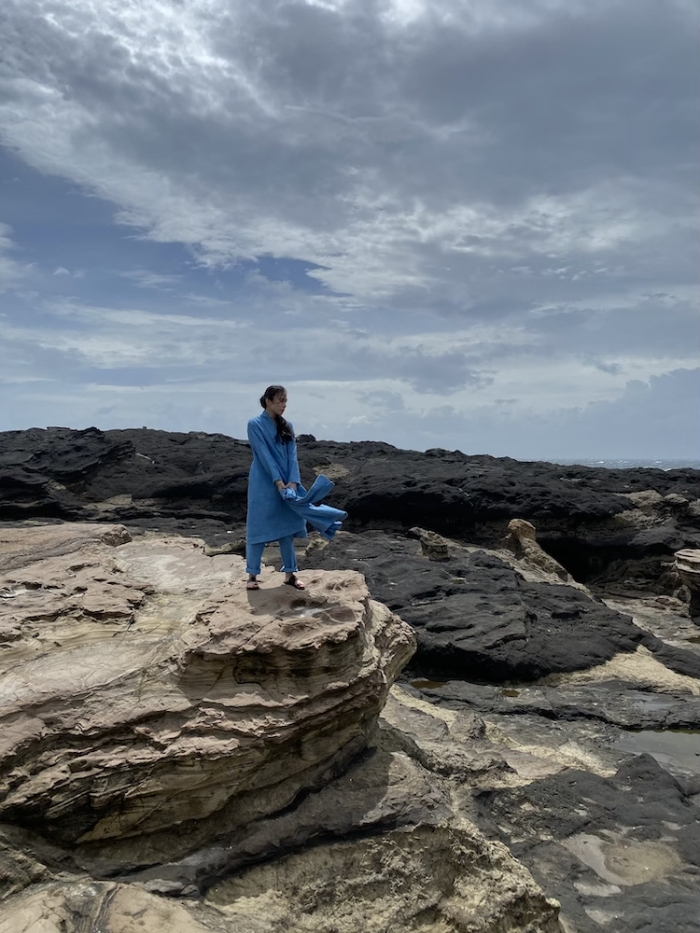
Also, we use a dyeing method called pastel dyeing for our spring/summer products at 'quitan.' It is a dyeing method that represents the blue color of France before indigo dyeing became mainstream, and I really love that color. Pastel is a color made from a plant like rapeseed, and it is a very old blue. Unlike indigo, it has less red and is a clear blue like the sky, which I consider one of the charms of France.
—I think your ability to view various cultures relatively is related to your experiences abroad. What do you think?
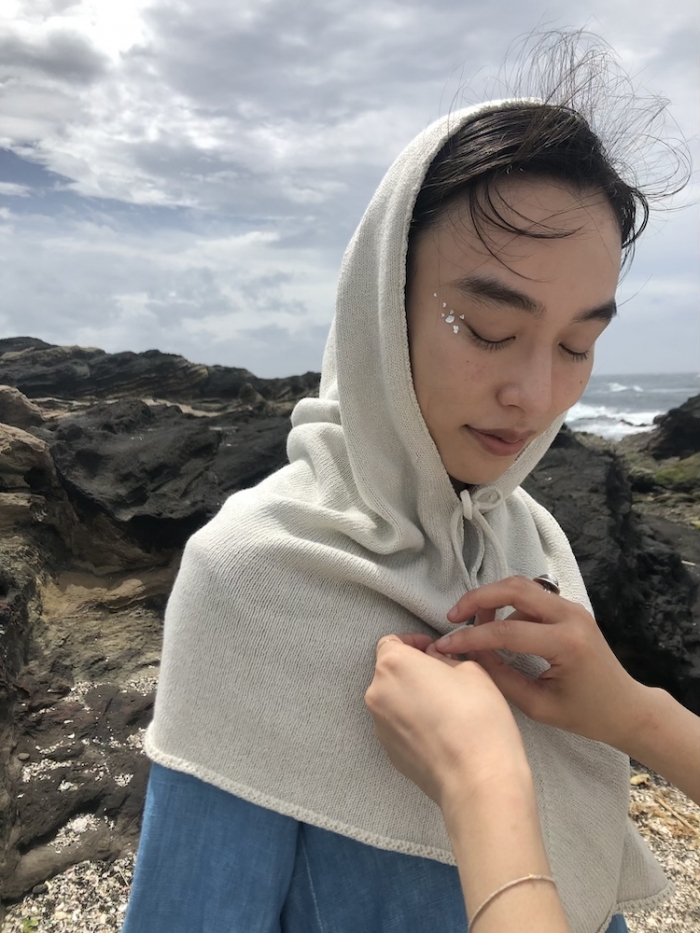
I hope so. I was born in Seattle and lived there until I was four, then returned to Japan and lived like a nomad, moving around various places in Japan due to my parents' work. During high school, I studied abroad in Canada for a year, and later went to France. I believe that through that lifestyle, I was able to experience things that one wouldn't notice or know just by traveling. In that sense, I hope I can stand in various perspectives.
—Could you tell us about a form of 'cultural exchange' that you encountered and were influenced by during those experiences?
One is the fabric from Turkmenistan that I love and have used in this collection. Turkmenistan is located along the Silk Road and is a country where many nomads live. These nomads weave fabrics like rugs using threads dyed with plant dyes and indigo dye while moving around. The looms of non-settled nomads are special; they anchor their base into the desert sand and pull the warp threads from there to weave. When they decide to move, they pull out that base and fold it up to take with them. However, to dye the threads, they absolutely need a pot. While plant dyeing might not require it, indigo definitely does. But since they are nomads, they don't carry pots. When I asked someone selling rugs how they dye the threads, they said they request the settled people in that area to dye the threads for them. I'm not sure if they pay money or trade goods, but they ask people from entirely different cultures where they have moved to dye the threads, and then they weave them into their daily life. I find that really wonderful.
Another simple example is that Canada is bilingual, with both English and French. Therefore, bilingual education is very advanced, and even in areas where only English speakers live, everything is basically labeled in both languages. I found that very simple yet kind. Packaging is also properly labeled in both languages, and I liked that there was no hierarchy. On the flip side, there are parts where there are conflicts, but I think it's surprisingly rare to see things labeled in both languages properly like that.
Recently, I found the class 'Blue Eyes/Brown Eyes' by Jane Elliott interesting. In that class, they separate students with blue eyes and brown eyes. Then, the brown-eyed students discriminate against the blue-eyed ones thoroughly. It's an experimental class aimed at experiencing and understanding discrimination against people of color. I thought that might also be a form of cultural exchange.
—Are there any other influences you have encountered?
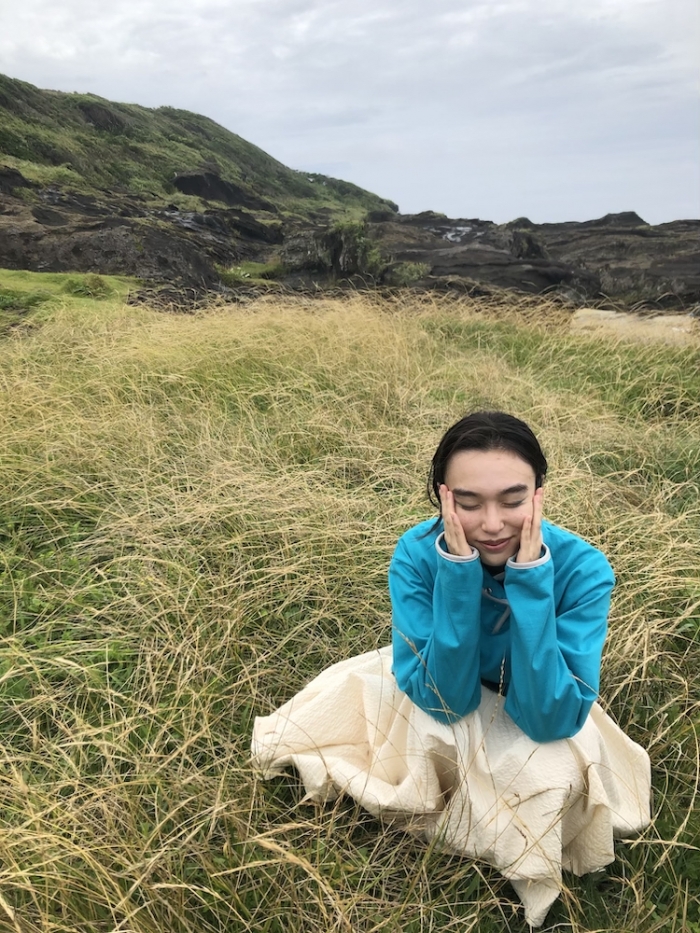
There is an anthropologist named Claude Lévi-Strauss, and he wrote a book called 'The Savage Mind,' which I really like. The book argues that the so-called 'primitive people,' whom we look down upon as 'savages,' possess a wild way of thinking, and that this way of thinking is actually fundamental and universal for humans, and it aims to scientifically verify that. I was greatly influenced by it.
In that book, there is a term 'bricolage,' which means DIY in French. It refers to making tools with whatever is available for immediate needs, and Lévi-Strauss uses this 'bricolage' to explain 'The Savage Mind.' My own way of rephrasing that is 'cultural exchange.'
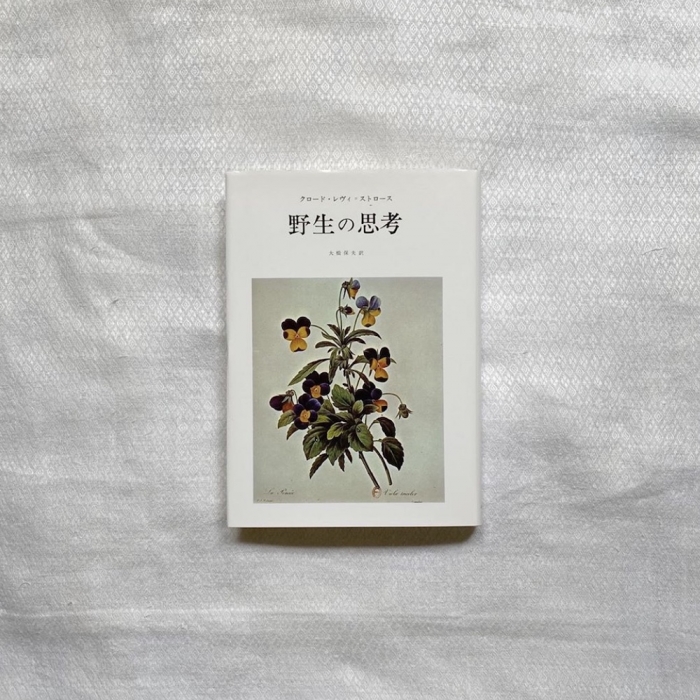 Claude Lévi-Strauss 'The Savage Mind'
—Is there anything 'bricolage'-like in 'quitan'?
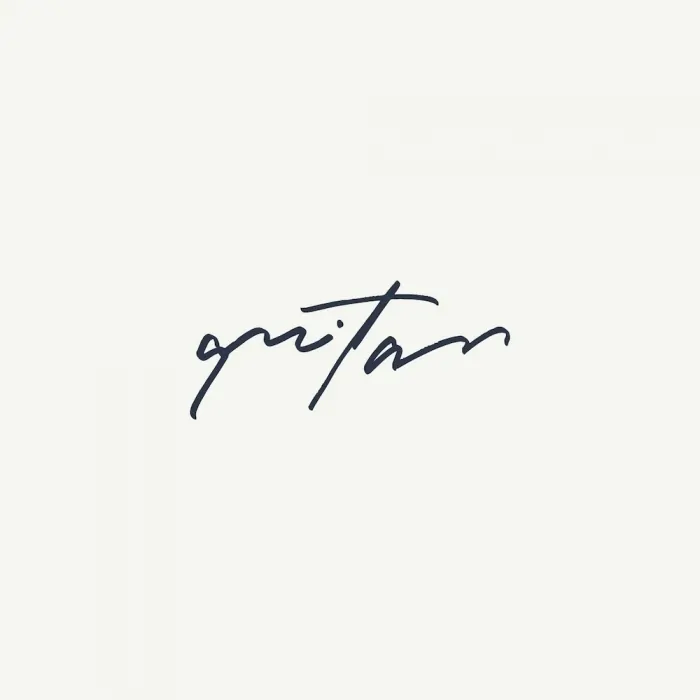
For example, the logo is already 'bricolage.' The letters of the 'quitan' logo were written by Ayane Watanabe from 'Kamigoto,' who said, 'Since it's cultural exchange, it shouldn't be written normally,' and wrote it starting from the back of the 'n,' following Arabic script, from right to left. She wrote it in many different patterns, and then I asked a designer named Hirofumi Abe, who lives in Berlin, to break it all down into separate parts, and we took the best pieces from that to create this logo.
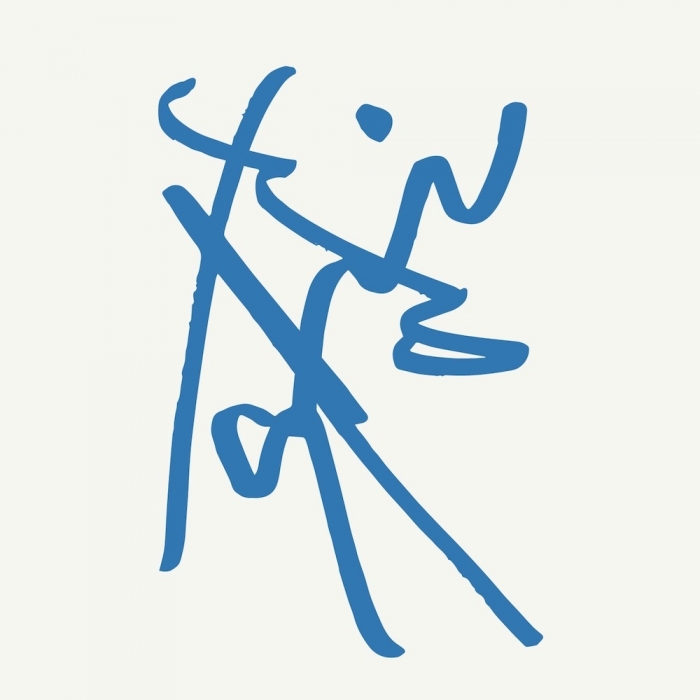
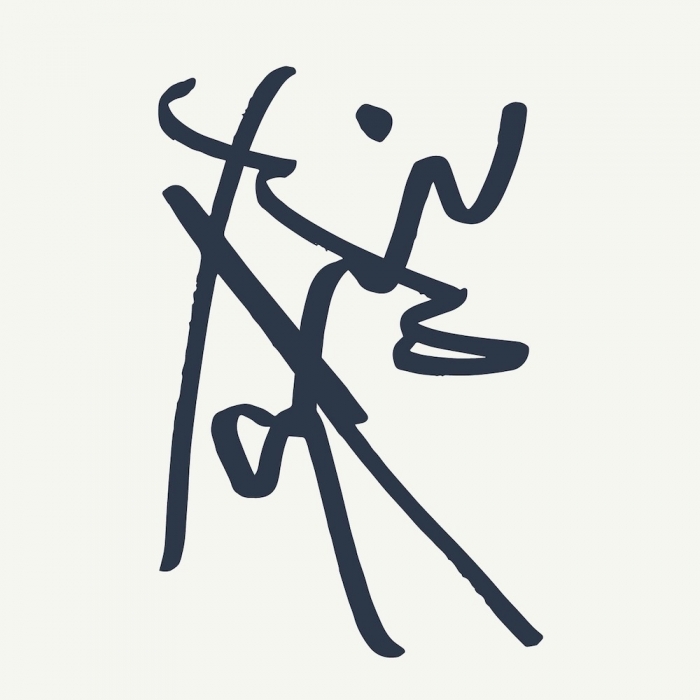
—What I found interesting about 'bricolage' is the idea of repeating 'destruction and reconstruction.' I feel this relates to the concept of 'sustainability' mentioned in 'quitan.' What are your thoughts on this, Miyata?
Recently, the term 'sustainability' has become quite mainstream, and when people hear 'sustainability,' they often think of eco-friendliness or environmental consideration first. Of course, that is true, but if you look at the United Nations' 'SDGs (Sustainable Development Goals),' it's really not just that. It includes things like gender neutrality, ensuring that everyone has a safe minimum standard of living, and having access to safe drinking water. I believe that continuing to work on these aspects is what 'sustainability' means. I hope to raise these questions through 'quitan.'
So, of course, I try to be as eco-friendly as possible. For example, I made bags from patchwork using leftover fabric from samples for striped and bordered cut-and-sew items. I think it’s quite difficult to use up all the fabric used in mass production until the very end, but I want to be as tidy as possible and use it up without waste. I currently only have the ability to do that, and I can't really do anything about regeneration yet. Since clothing production inevitably requires new creations, it means that I am increasing things. Therefore, I am careful to be as tidy as possible. The lifestyle of nomads also involves neatly folding the space they lived in and restoring it to its original state before moving to the next place, so that cycle of life seems advanced in a way, and I think that mindset is 'wild thinking' and is nice.
.jpg) —In 'The Savage Mind,' there is a passage that says, 'Bricolage always leaves something of oneself in the work.' What do you think that means for you, Miyata?
—In 'The Savage Mind,' there is a passage that says, 'Bricolage always leaves something of oneself in the work.' What do you think that means for you, Miyata?
I see it as ethnicity or quirks, and I think there are times when we intentionally leave something behind and times when we unconsciously do so... But in my case, I have moved around too much, and since I have been called a jack-of-all-trades since high school, I think there is a tendency not to narrow it down to one thing. To be honest, I can't narrow it down to 'French production.' Whether it's France, India, or Japan, I might have a habit of docking things without narrowing them down. I might be told that I'm indecisive. I have a belief that all things are interconnected. What that is might be something we realize later with time. However, I do have some quirks, like I prefer the pocket placement to be a bit towards the back, so that might be it.
—This isn't a criticism, but I think the wild also has a cruel aspect of survival of the fittest. How do you perceive that side, Miyata?
That's quite difficult, and I always think about it. I question the introduction of a new sociality forcefully, leading to the breakdown of that community. However, of course, life should be equal, and that stance doesn't change. I think that while having culture within a community, nonsensical aspects will be stripped away. If there is a strain there, I believe we should help, but whether that is truly a good thing can only be understood through results. For example, I want to protect natural materials and hand-dyeing, but if it causes suffering, I think it's better not to do it. I believe it's better to find ways to coexist and grow together.
Everyone needs a livable environment, and when I think about that, I don't believe we must return to the wild. I think 'The Savage Mind' is a theory that suggests there are lessons to be learned from the thinking aspects of the lives of 'primitive people.' I question the idea of trying to replicate everything. I like it, so I don't deny it at all. However, it's absolutely impossible to return to that state. I wouldn't be able to live without my phone. Therefore, I think it's fine to 'bricolage' and gather what is needed when necessary, finding the shape of one's life. Although that's difficult. But I think people who can do that are probably more attractive.
—What do you hope people who pick up 'quitan' products will feel and do?
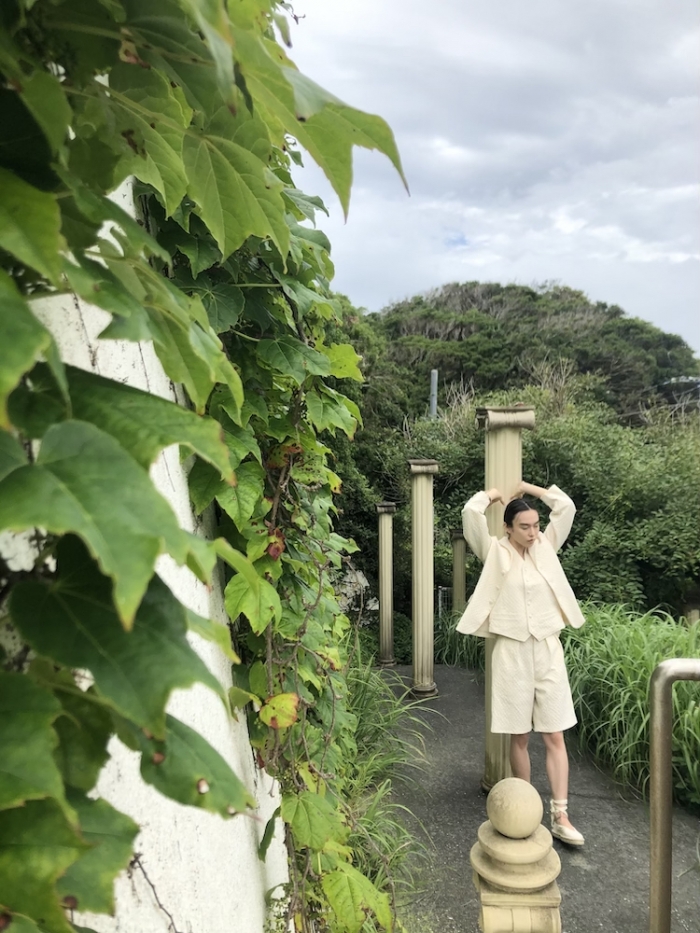
Rather than wanting to control, I want to raise various questions. What I do is merely a hypothesis, so I hope that each person who picks it up can come up with their own answers. I often discuss this with the logo designer and others, and since we are all from the same generation, we call ourselves the 'questioning generation.' Senior designers have laid a solid foundation for expressing their thoughts, so I think what our generation should do is to ask questions. Generationally, I feel that we are finally able to question the doubts we have felt so far through something. And I am relatively in an environment where I can do that easily, so I think it's good to constantly ask various things from various angles. For me, fashion is the tool for questioning. I think fashion is easy to convey as a tool for questioning and is gentle.
For example, the answers to eco-friendliness. I’m really struggling with it and still haven't made up my mind. Eco-friendly products tend to be expensive, which I find very strange—not bad, just strange. So, I think I might experiment with pricing to raise questions about that. Recently, I think personal judgment is being questioned regarding how to use social media—what is good and what is not. I want to hear how various people feel about that. Of course, the results should be good, but I believe that first knowing and thinking is essential for that to emerge.
Text/Edit_Yuki Fujio
The products for the debut spring/summer season of 'quitan' are scheduled to be rolled out sequentially starting around January next year.
Interviews with Miyata are also published on Anglobal Community Mart. Please take a look.
・Nice to meet you, QUITAN. 'Designer Sae Miyata and Salad Bowl' VOLUME.1
・Nice to meet you, QUITAN. 'Connecting Lifestyles Around the World' VOLUME.2
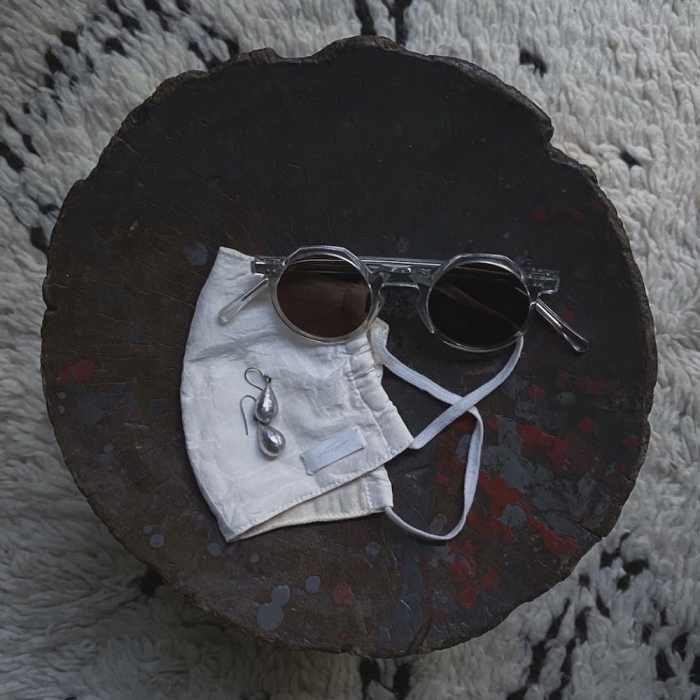
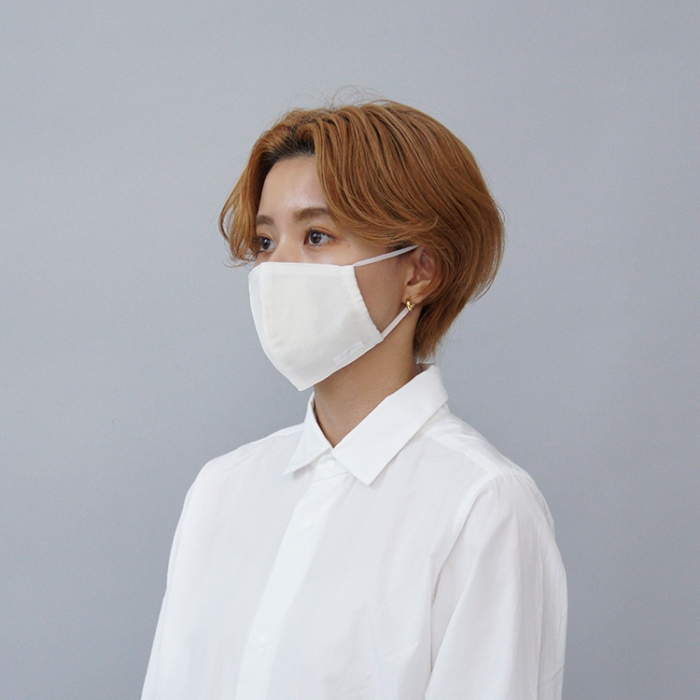
At Dice and Dice, we are selling 'quitan' masks ahead of time. These masks use hand-spun and hand-woven cotton-silk khadi on the surface, and the lining that touches the skin is made of organic cotton W-gauze.
<quitan / Mask - Cotton / Silk Khadi product page here>
—First, could you tell us about the origin and meaning of the brand name 'quitan'?
There is a word '綺譚 (kitan)' which means a mysterious yet beautiful story. There is a novel by Kaho Nashiki called 'Kamori Kitan,' which features various kappa and is a mysterious tale. I love the beautiful and fresh writing in this novel, which led me to the word 'kitan.' I tried to spell 'quitan' using sounds from French. I believe starting a brand is like embarking on a journey. I hope to encounter 'kitan' along the way, progressing through each season. The back cover of 'Kamori Kitan' says, 'It is a record of a free-spirited exchange.' Reading that excited me, and I thought, 'This is it,' so I borrowed the phrase 'cultural exchange' as the brand's concept.
Kaho Nashiki 'Kamori Kitan'
Summary on the back cover of 'Kamori Kitan'—The phrase 'cultural exchange.' I interpreted this as 'different cultures mixing together to create new cultures.' Is this interpretation correct?
I believe there is certainly a meaning of different cultures mixing to create new cultures. However, to be honest, I intentionally avoid stating it that way. My interpretation of 'cultural exchange' is more of a suggestion or a question: 'Why not get to know different cultures?' I hope it serves as a starting point for understanding people and cultures that are different from oneself. When encountering different people or cultures, perhaps new cultures may emerge from that mixing, or we might simply coexist with the recognition of 'Oh, that's how it is.' I find it interesting that there are various possibilities in that.
I mentioned in the concept that I want to connect points into lines. For example, by doing craftsmanship in a way that is close to one-person operation, I can experience the process up to delivery myself, which allows me to feel the points connecting into lines. We are doing things that are not usually done, like assembling fabric made in Japan at a factory in France. I hope that the points can connect into lines in a form of coexistence, rather than encroaching on each other.
—What prompted you to start production in France, and what do you find appealing about it?
I have always liked French vintage, but fundamentally, it was my experience in my previous job that prompted me. When I was in university, I studied French as a second language, but I didn't want to be half-hearted about it, so I begged my parents to let me go to a language school in France instead of attending my coming-of-age ceremony. The school is located in the middle of France, and I had a great time every day. Because of that, I was able to work in a job related to production in France in my previous job, as I had a little understanding of French.
The characteristic of French production, like British production, is that the appearance when it is finished is completely different. I can't express it well. To put it simply, it's far less skillful than Japan, but it has a different expression. Japanese production is very meticulous, but as a result, it tends to finish quite flatly. However, French production feels more three-dimensional and seems to contain more air, which I find appealing.
Also, we use a dyeing method called pastel dyeing for our spring/summer products at 'quitan.' It is a dyeing method that represents the blue color of France before indigo dyeing became mainstream, and I really love that color. Pastel is a color made from a plant like rapeseed, and it is a very old blue. Unlike indigo, it has less red and is a clear blue like the sky, which I consider one of the charms of France.
—I think your ability to view various cultures relatively is related to your experiences abroad. What do you think?
I hope so. I was born in Seattle and lived there until I was four, then returned to Japan and lived like a nomad, moving around various places in Japan due to my parents' work. During high school, I studied abroad in Canada for a year, and later went to France. I believe that through that lifestyle, I was able to experience things that one wouldn't notice or know just by traveling. In that sense, I hope I can stand in various perspectives.
—Could you tell us about a form of 'cultural exchange' that you encountered and were influenced by during those experiences?
One is the fabric from Turkmenistan that I love and have used in this collection. Turkmenistan is located along the Silk Road and is a country where many nomads live. These nomads weave fabrics like rugs using threads dyed with plant dyes and indigo dye while moving around. The looms of non-settled nomads are special; they anchor their base into the desert sand and pull the warp threads from there to weave. When they decide to move, they pull out that base and fold it up to take with them. However, to dye the threads, they absolutely need a pot. While plant dyeing might not require it, indigo definitely does. But since they are nomads, they don't carry pots. When I asked someone selling rugs how they dye the threads, they said they request the settled people in that area to dye the threads for them. I'm not sure if they pay money or trade goods, but they ask people from entirely different cultures where they have moved to dye the threads, and then they weave them into their daily life. I find that really wonderful.
Another simple example is that Canada is bilingual, with both English and French. Therefore, bilingual education is very advanced, and even in areas where only English speakers live, everything is basically labeled in both languages. I found that very simple yet kind. Packaging is also properly labeled in both languages, and I liked that there was no hierarchy. On the flip side, there are parts where there are conflicts, but I think it's surprisingly rare to see things labeled in both languages properly like that.
Recently, I found the class 'Blue Eyes/Brown Eyes' by Jane Elliott interesting. In that class, they separate students with blue eyes and brown eyes. Then, the brown-eyed students discriminate against the blue-eyed ones thoroughly. It's an experimental class aimed at experiencing and understanding discrimination against people of color. I thought that might also be a form of cultural exchange.
—Are there any other influences you have encountered?
There is an anthropologist named Claude Lévi-Strauss, and he wrote a book called 'The Savage Mind,' which I really like. The book argues that the so-called 'primitive people,' whom we look down upon as 'savages,' possess a wild way of thinking, and that this way of thinking is actually fundamental and universal for humans, and it aims to scientifically verify that. I was greatly influenced by it.
In that book, there is a term 'bricolage,' which means DIY in French. It refers to making tools with whatever is available for immediate needs, and Lévi-Strauss uses this 'bricolage' to explain 'The Savage Mind.' My own way of rephrasing that is 'cultural exchange.'
Claude Lévi-Strauss 'The Savage Mind'—Is there anything 'bricolage'-like in 'quitan'?
For example, the logo is already 'bricolage.' The letters of the 'quitan' logo were written by Ayane Watanabe from 'Kamigoto,' who said, 'Since it's cultural exchange, it shouldn't be written normally,' and wrote it starting from the back of the 'n,' following Arabic script, from right to left. She wrote it in many different patterns, and then I asked a designer named Hirofumi Abe, who lives in Berlin, to break it all down into separate parts, and we took the best pieces from that to create this logo.
—What I found interesting about 'bricolage' is the idea of repeating 'destruction and reconstruction.' I feel this relates to the concept of 'sustainability' mentioned in 'quitan.' What are your thoughts on this, Miyata?
Recently, the term 'sustainability' has become quite mainstream, and when people hear 'sustainability,' they often think of eco-friendliness or environmental consideration first. Of course, that is true, but if you look at the United Nations' 'SDGs (Sustainable Development Goals),' it's really not just that. It includes things like gender neutrality, ensuring that everyone has a safe minimum standard of living, and having access to safe drinking water. I believe that continuing to work on these aspects is what 'sustainability' means. I hope to raise these questions through 'quitan.'
So, of course, I try to be as eco-friendly as possible. For example, I made bags from patchwork using leftover fabric from samples for striped and bordered cut-and-sew items. I think it’s quite difficult to use up all the fabric used in mass production until the very end, but I want to be as tidy as possible and use it up without waste. I currently only have the ability to do that, and I can't really do anything about regeneration yet. Since clothing production inevitably requires new creations, it means that I am increasing things. Therefore, I am careful to be as tidy as possible. The lifestyle of nomads also involves neatly folding the space they lived in and restoring it to its original state before moving to the next place, so that cycle of life seems advanced in a way, and I think that mindset is 'wild thinking' and is nice.
—In 'The Savage Mind,' there is a passage that says, 'Bricolage always leaves something of oneself in the work.' What do you think that means for you, Miyata? I see it as ethnicity or quirks, and I think there are times when we intentionally leave something behind and times when we unconsciously do so... But in my case, I have moved around too much, and since I have been called a jack-of-all-trades since high school, I think there is a tendency not to narrow it down to one thing. To be honest, I can't narrow it down to 'French production.' Whether it's France, India, or Japan, I might have a habit of docking things without narrowing them down. I might be told that I'm indecisive. I have a belief that all things are interconnected. What that is might be something we realize later with time. However, I do have some quirks, like I prefer the pocket placement to be a bit towards the back, so that might be it.
—This isn't a criticism, but I think the wild also has a cruel aspect of survival of the fittest. How do you perceive that side, Miyata?
That's quite difficult, and I always think about it. I question the introduction of a new sociality forcefully, leading to the breakdown of that community. However, of course, life should be equal, and that stance doesn't change. I think that while having culture within a community, nonsensical aspects will be stripped away. If there is a strain there, I believe we should help, but whether that is truly a good thing can only be understood through results. For example, I want to protect natural materials and hand-dyeing, but if it causes suffering, I think it's better not to do it. I believe it's better to find ways to coexist and grow together.
Everyone needs a livable environment, and when I think about that, I don't believe we must return to the wild. I think 'The Savage Mind' is a theory that suggests there are lessons to be learned from the thinking aspects of the lives of 'primitive people.' I question the idea of trying to replicate everything. I like it, so I don't deny it at all. However, it's absolutely impossible to return to that state. I wouldn't be able to live without my phone. Therefore, I think it's fine to 'bricolage' and gather what is needed when necessary, finding the shape of one's life. Although that's difficult. But I think people who can do that are probably more attractive.
—What do you hope people who pick up 'quitan' products will feel and do?
Rather than wanting to control, I want to raise various questions. What I do is merely a hypothesis, so I hope that each person who picks it up can come up with their own answers. I often discuss this with the logo designer and others, and since we are all from the same generation, we call ourselves the 'questioning generation.' Senior designers have laid a solid foundation for expressing their thoughts, so I think what our generation should do is to ask questions. Generationally, I feel that we are finally able to question the doubts we have felt so far through something. And I am relatively in an environment where I can do that easily, so I think it's good to constantly ask various things from various angles. For me, fashion is the tool for questioning. I think fashion is easy to convey as a tool for questioning and is gentle.
For example, the answers to eco-friendliness. I’m really struggling with it and still haven't made up my mind. Eco-friendly products tend to be expensive, which I find very strange—not bad, just strange. So, I think I might experiment with pricing to raise questions about that. Recently, I think personal judgment is being questioned regarding how to use social media—what is good and what is not. I want to hear how various people feel about that. Of course, the results should be good, but I believe that first knowing and thinking is essential for that to emerge.
Text/Edit_Yuki Fujio
The products for the debut spring/summer season of 'quitan' are scheduled to be rolled out sequentially starting around January next year.
Interviews with Miyata are also published on Anglobal Community Mart. Please take a look.
・Nice to meet you, QUITAN. 'Designer Sae Miyata and Salad Bowl' VOLUME.1
・Nice to meet you, QUITAN. 'Connecting Lifestyles Around the World' VOLUME.2
At Dice and Dice, we are selling 'quitan' masks ahead of time. These masks use hand-spun and hand-woven cotton-silk khadi on the surface, and the lining that touches the skin is made of organic cotton W-gauze.
<quitan / Mask - Cotton / Silk Khadi product page here>