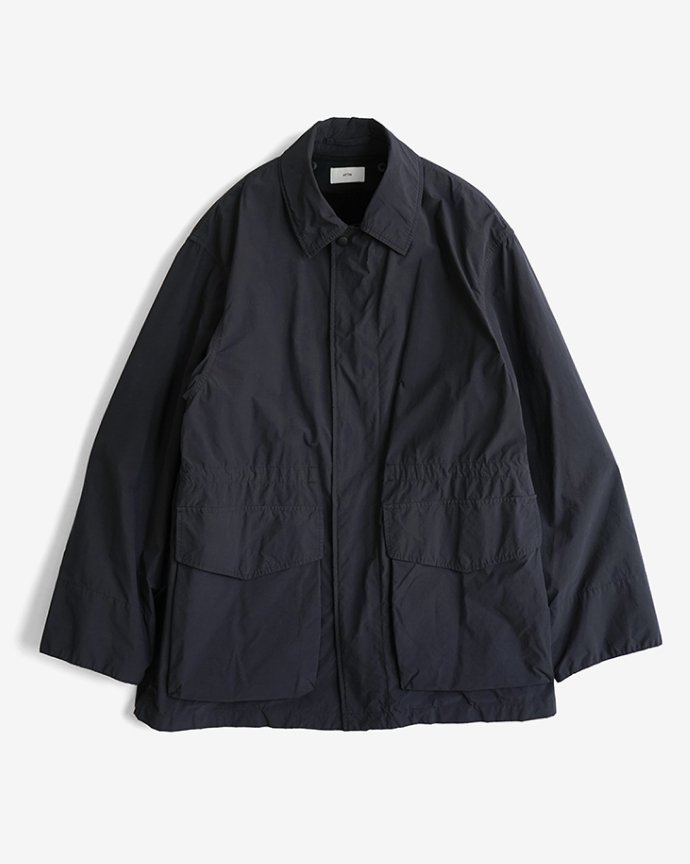
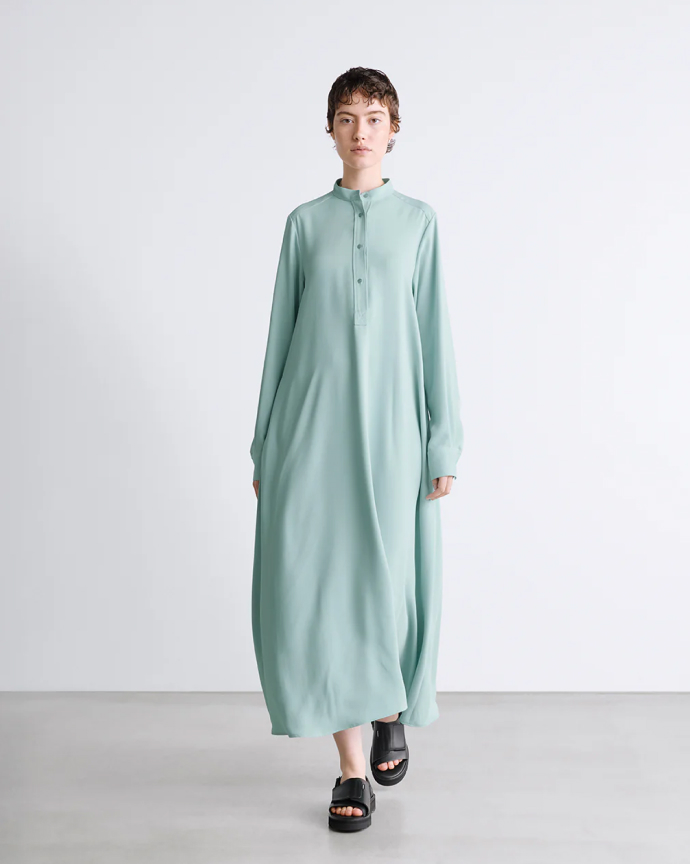
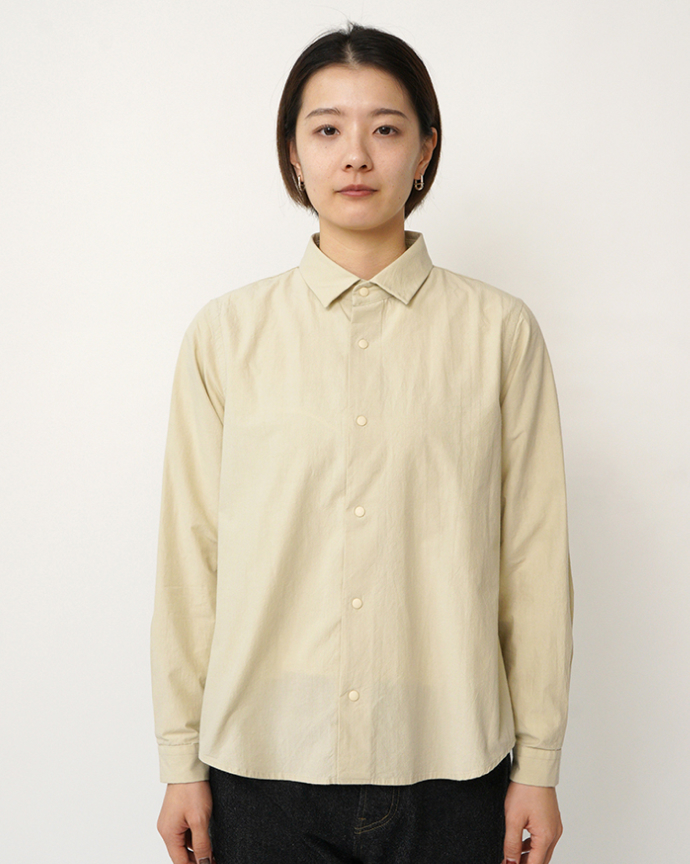
The carefully woven collection of "quitan" has started to gradually come together at Dice&Dice. Fabrics, dyeing, and various shapes. Each piece carries a story like a fairy tale. Here, we have the designer, Victoria Sae Miyata, who is the author of these stories, narrate the background of the products, which can be seen as a summary of the tales.
■ Double Collar Shirt / Double Stand Collar Shirt / Double Collar Coveralls
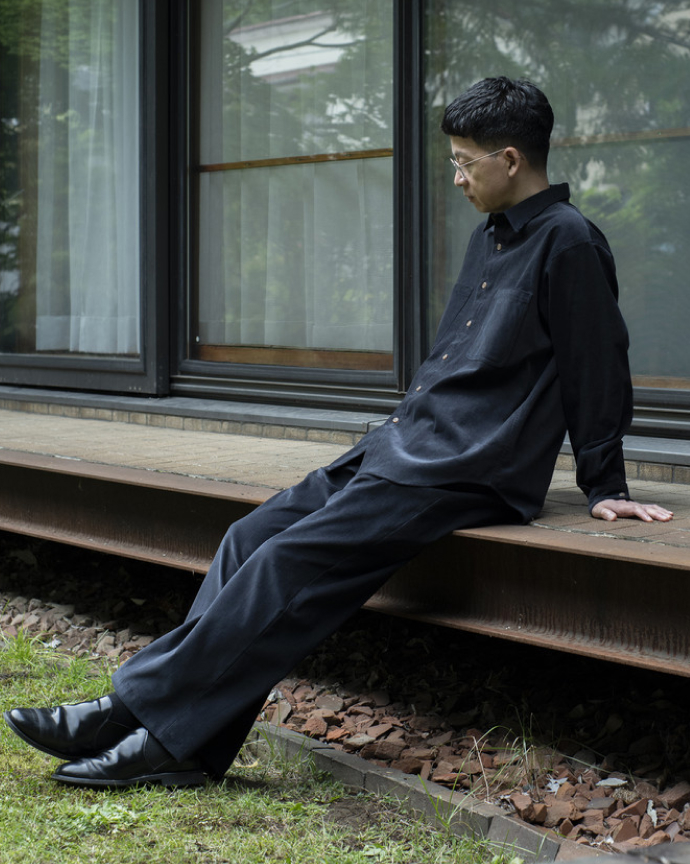
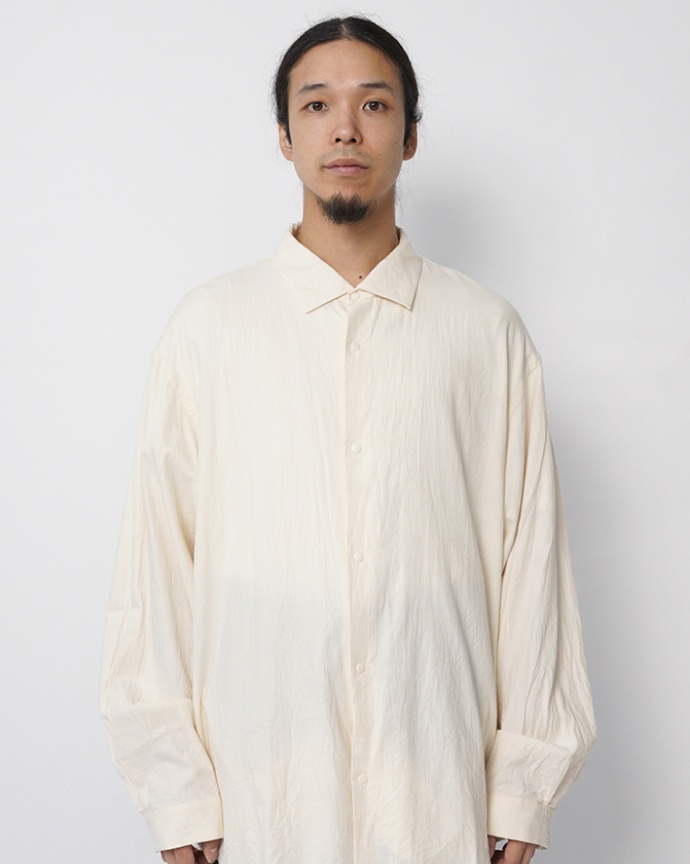
Made from a cotton-silk typewriter fabric that is well-constructed and has a crisp feel. Instead of going through the bleaching process from the freshly woven state, we intentionally applied a strong wash. This resulted in a fabric that retains the original color of the cotton-silk material, with a slightly raised, rustic texture. This is completely my playful design, as the collar is double-layered to an almost excessive degree. In addition to ECRU, there is also DARK NAVY, which is dyed using a product dyeing process. While preparing the base with reactive dyeing, we introduce logwood, a natural dye used for dyeing brown and black, at a low temperature. This creates a deep navy with a wavering quality. I loved the material so much that I chose covered buttons.
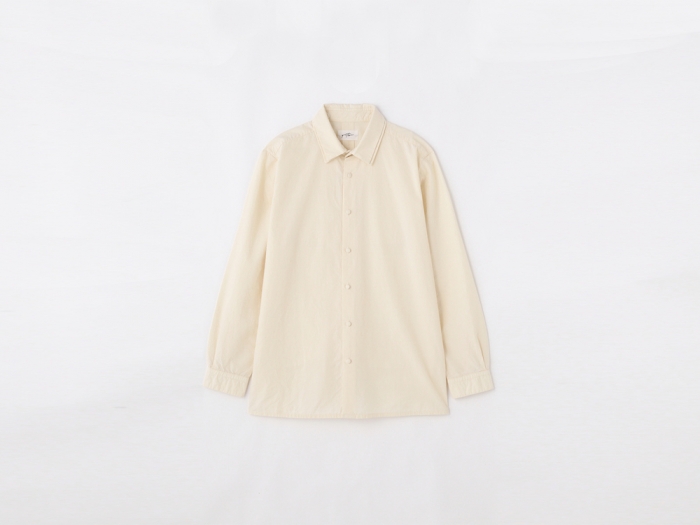
Double Collar Shirt - ECRU ¥25,000 ( Unisex )
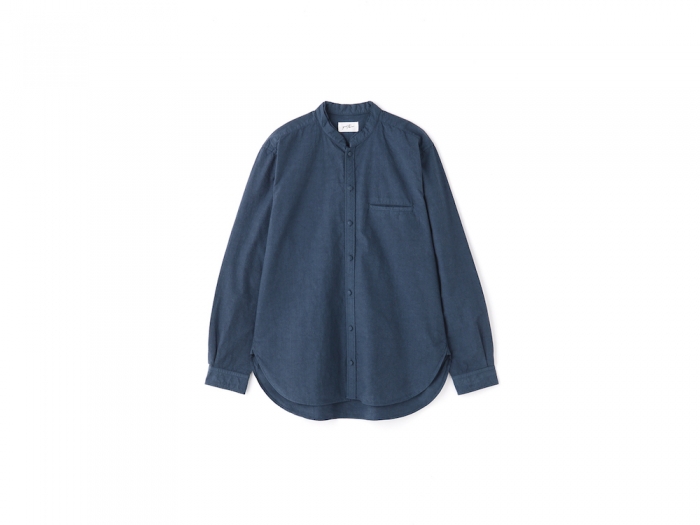
Double Stand Collar Shirt - DARK NAVY ¥27,000 ( Unisex / Colors : ECRU ¥25,000 / DARK NAVY )
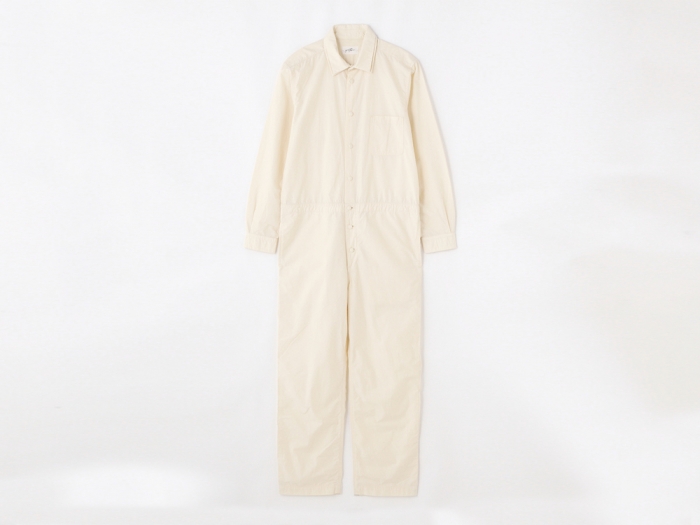
Double Collar Coveralls - ECRU ¥45,000 ( Unisex / Colors : ECRU / DARK NAVY ¥47,000 )
■ Wrap Skirt
A satin fabric with just the right amount of sheen, hand-dyed at a dyeing studio in Tokushima. To create a gradient, the darker parts are dyed multiple times. The inspiration came from the tie-dyed wrap skirts worn by the ethnic group in the Raharia region of northwest India. It is constructed closely resembling an apron, without any additional accessories.
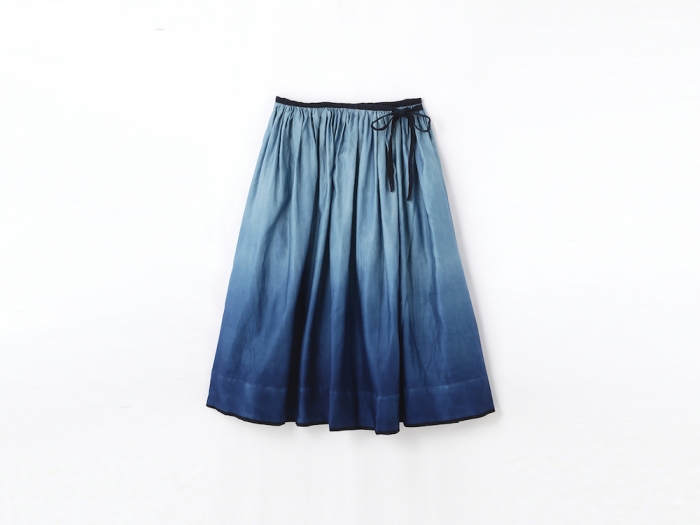
Wrap Skirt ¥40,000 ( Women's )
■ T-shirt
"quitan" / "process"
This is made from a cotton-cashmere blend. The material is soft and has a slight drape due to the cashmere mix, but we added a bit more cotton to give it a slightly bouncy texture. The shape is based on old French military underwear, featuring a slightly elongated silhouette. Although it is based on underwear, care has been taken to ensure it can be worn comfortably on its own. This applies to other items as well; I hope to eliminate preconceived notions about sizes and gender, so I intentionally avoided using S, M, L labels. Therefore, those who prefer a looser fit can choose a larger size, and I encourage you to freely select your favorite silhouette. The embroidery is done by artisans in Kiryu, Gunma Prefecture, using an old hand-crank sewing machine, with each piece carefully embroidered. The "quitan" logo was created by deconstructing letters drawn multiple times, using the keyword of cultural exchange to create a bricolage. Inspired by Arabic script, it is written from right to left, so the embroidery is also applied from the right. The prominently featured design of "process" was inspired by Aboriginal pictographs, born from the process of shaping quitan. "A new composition made up of three men, three women, and many children"—it resembles stones, mountains, and rivers. By reconstructing what once represented humans in nature, I want to express a perspective where nature becomes visible through people. A new tribal scene. letters written by Aya Watanabe (Kamigoto) bricolaged/constructed by Hirofumi Abe
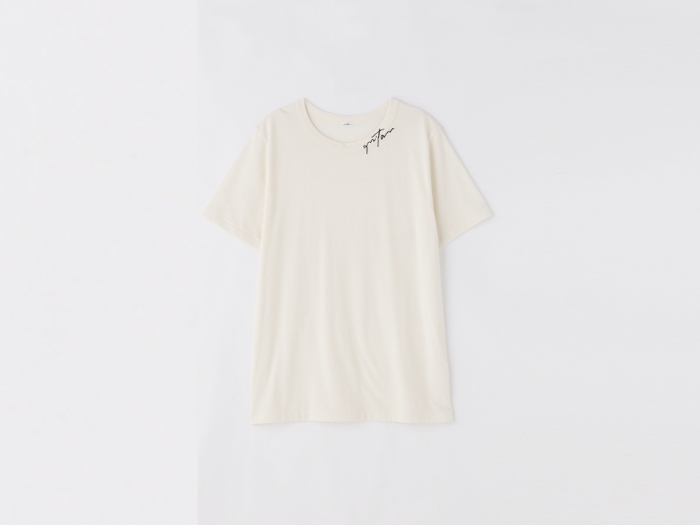
T-shirt "quitan" ¥13,000 ( Unisex )
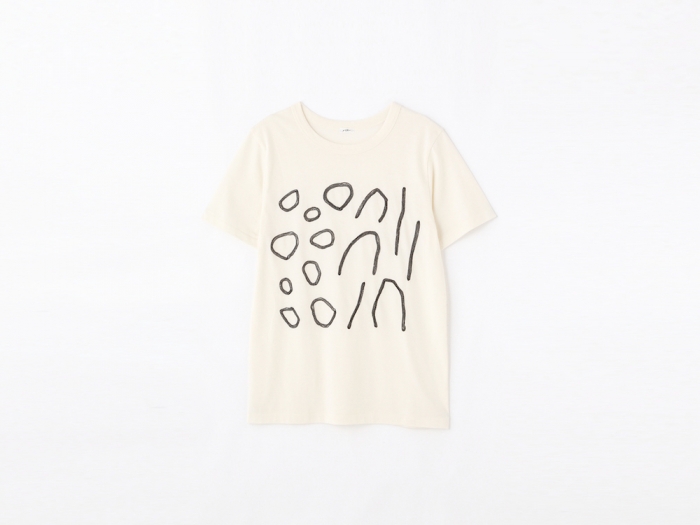
T-shirt "process" ¥20,000 ( Unisex )
■ Turkmen Stripe
Jacket / Vest / Work Pants
This is the first fabric I created when making the collection. The nuances of the fabric from Turkmenistan's traditional costumes have been arranged to resemble a black and indigo shadow stripe. The indigo warp, black warp, and indigo weft are all of different counts. The indigo is pre-dyed, and since it is dyed with a light color, it will fade with wear, making the stripes more pronounced. This type of stripe is called "Tōzan stripe," which is a pattern that was transmitted from India to Japan long ago, and it was valued for its ability to look refined even in cotton clothing, resembling silk kimonos. I found it interesting that something originating in India has been passed down and used in various countries like Turkmenistan and Japan. The jacket is designed to be somewhat boxy, but the sleeves are slightly forward to create a three-dimensional shape for ease of wear. I intentionally added a gusset under the armpit, inspired by the construction of Asian clothing. The reason for the fully lined interior is that there is a difference in shrinkage rates between the lining and the outer fabric, so when washed, the inner and outer fabrics shrink differently. This allows air to enter and creates a puffiness, which is why I added the lining. The pants replicate the shape of old European work pants. They incorporate vintage details and patterns, such as a deep rise and a V-opening at the back, while using covered buttons to create a clean impression like slacks. I believe this has resulted in a universal shape that can be worn by anyone.
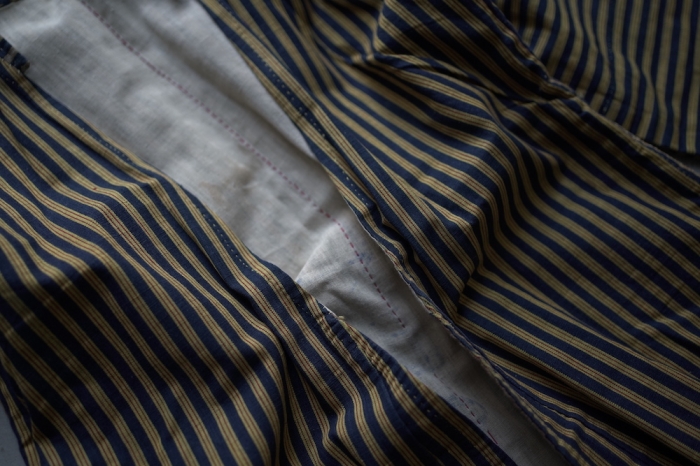
Sample
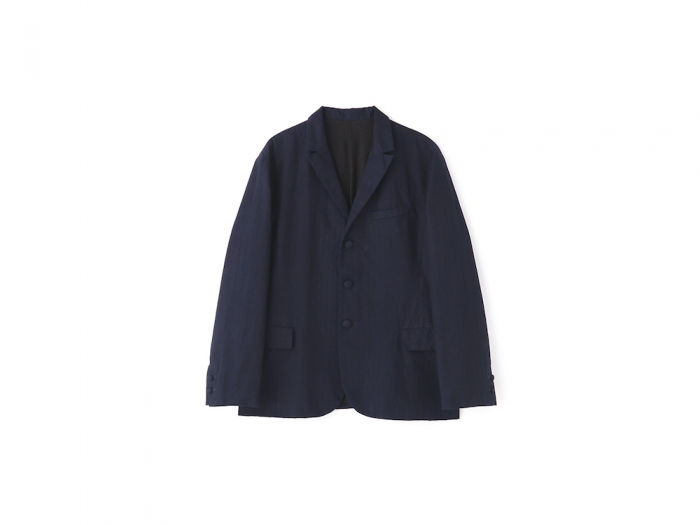
Jacket - Turkmen Stripe ¥53,000 ( Unisex )
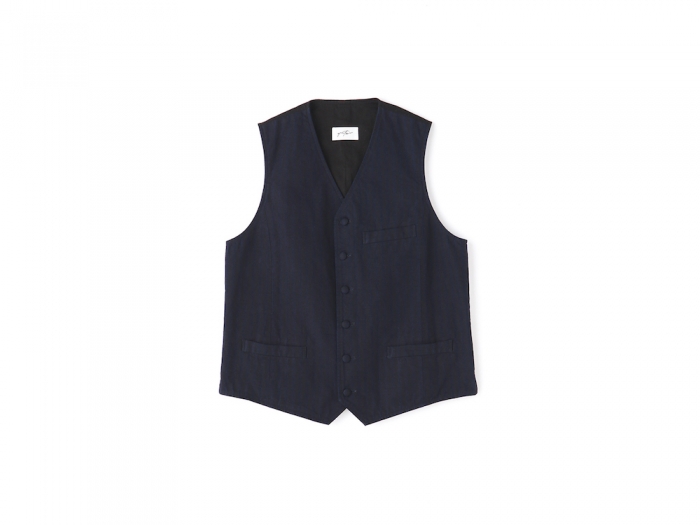
Vest - Turkmen Stripe ¥33,000 ( Unisex )
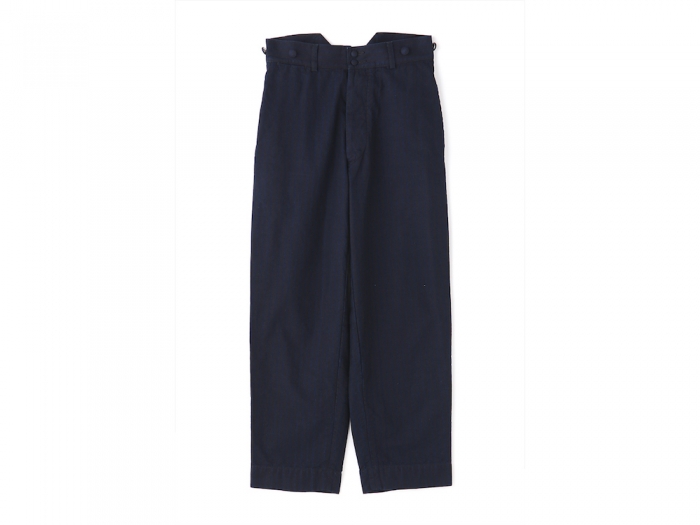
Work Pants - Turkmen Stripe ¥36,000 ( Unisex )
■ Pique de Provence
Jacket / Vest / Work Pants / Circuler Skirt
In southern France, there is a traditional fabric called Pique de Provence, which is a jacquard woven material. This fabric was recreated in Japan based on materials from around 1890 to the 1900s. It is woven in the Bishu region of Aichi Prefecture. This is a bagged jacquard, often referred to as puffed jacquard, where threads run on the back, and by using strongly twisted threads on the weft, when water passes through, the tension is applied only to the back threads, causing them to shrink and create this texture. The lining is made from organic cotton, which has a slightly smooth texture for easy wear. The circuler skirt is made with a perfectly round cut. It has six panels, but the fabric is alternately taken from different directions. This creates varied grain directions, resulting in a light-reflecting movement.
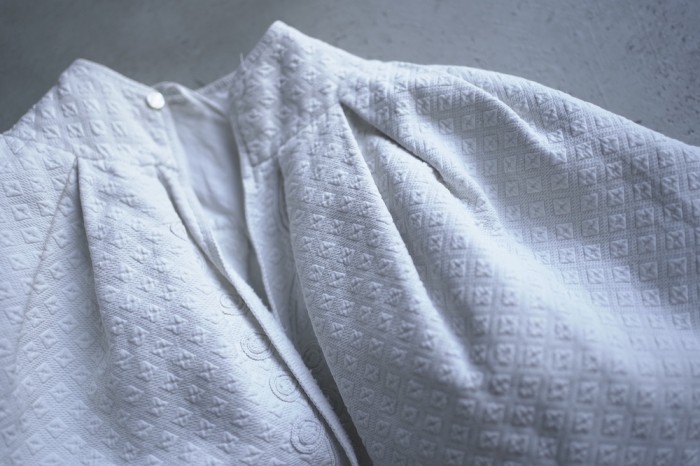
Sample
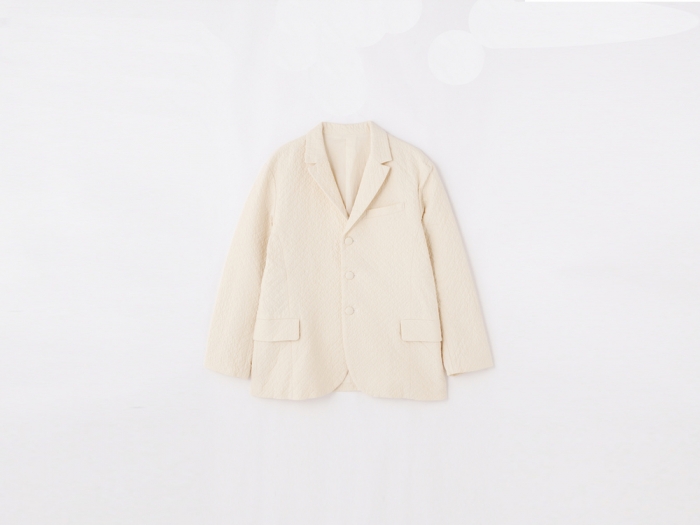
Jacket - Pique de Provence ¥53,000 ( Unisex )
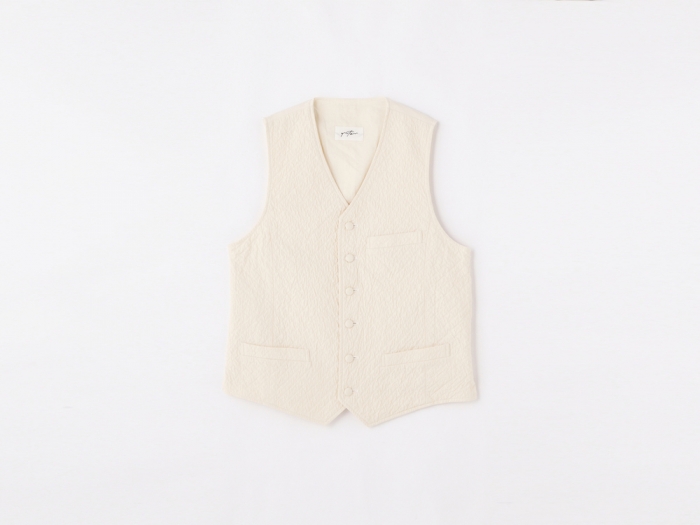
Vest - Pique de Provence ¥33,000 ( Unisex )
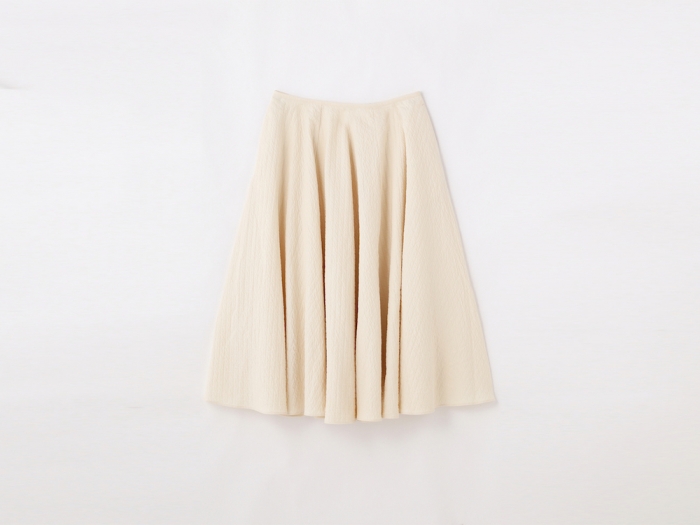
Circuler Skirt - Pique de Provence ¥46,000 ( Women's )
■ Hemp Twill
Armish Dress / Snow Patrol Pant / Naval Thai Pant
This is also a summer material woven by a wool weaving factory in Bishu. It is a cotton-hemp blend, with two strands of hemp used for the weft, while the warp is woven with black cotton thread. Bishu textiles have a background in wool weaving, and since they are woven slowly in wide widths, many of them have a very gentle texture due to the air they contain. Although the yarn is woven quite tightly, the fabric has a gentle feel. The dress is inspired by the simple garments of Amish women, resembling a layered look with a scarf draped over the shoulder, but constructed with minimal details. The snow pants are based on the British military's mountain troops' overpants. The specifications have not changed much from vintage designs, and they retain the characteristic design of British military pants with pockets at the front. The material is somewhat relaxed, so I chose this fabric for comfortable wear. The Thai pants are based on the stitching work and deep rise of US marine pants, resulting in a relaxed pair of Thai pants. It is a shape that resembles a combination of marine and Thai pants.
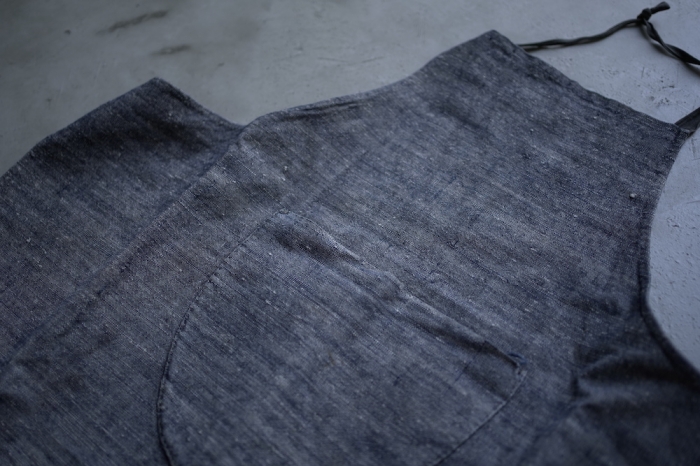
Sample
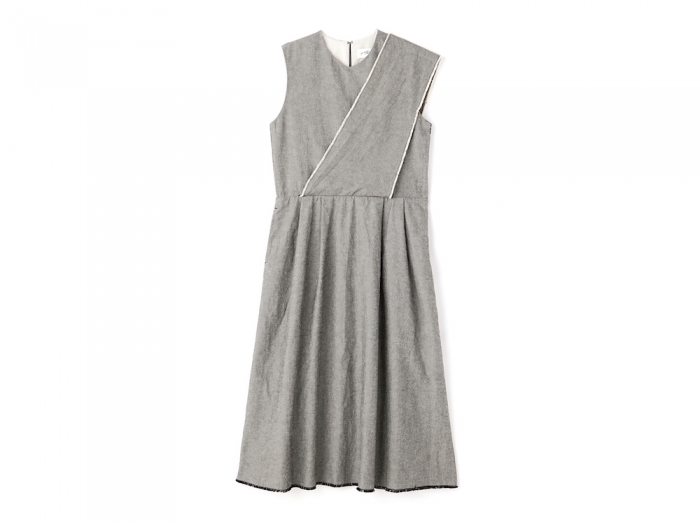
Armish Dress - Cotton / Hemp Twill ¥46,000 ( Women's )
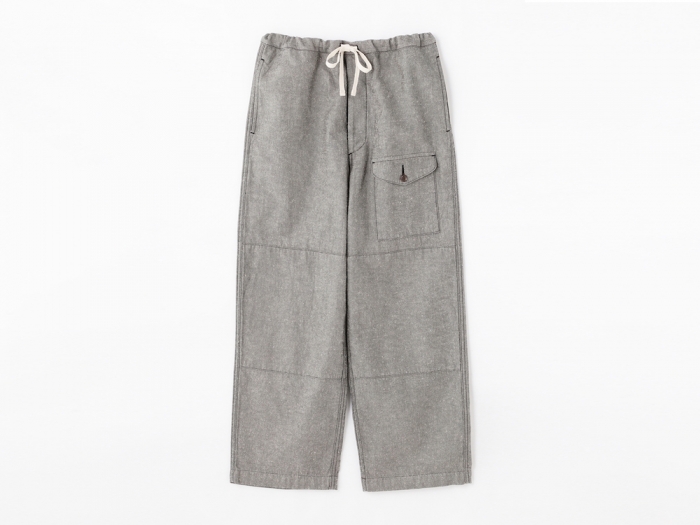
Snow Patrol Pant - Cotton / Hemp Twill ¥39,000 ( Unisex )
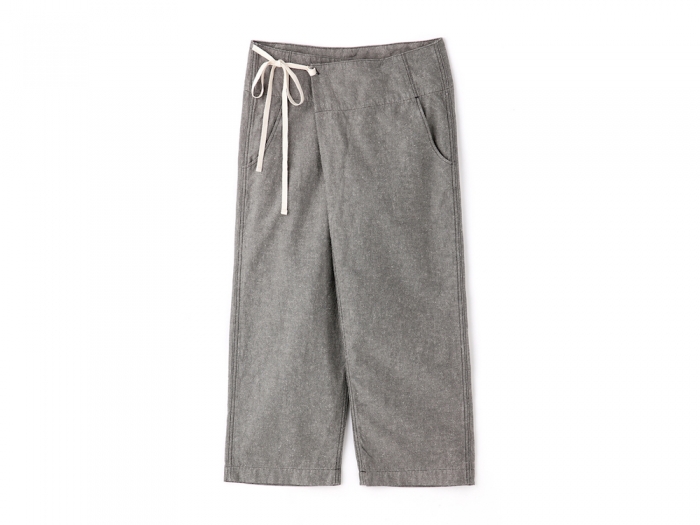
Naval Thai Pant - Cotton / Hemp Twill ¥36,000 ( Unisex )
■ USN OEKO TEX® Denim
Half Sleeve Shirt / Naval Thai Pant / Work Pant
This started with the idea of recreating the denim fabric from the 40s US NAVY. Therefore, a slightly lighter 9.75-ounce fabric is used, and instead of creating vertical fades with wear, I wanted to achieve an overall faded look, so I used gray weft threads instead of natural ones. This denim fabric has passed the Eco-Tex certification, which is a world standard for environmental consideration, covering all processes from yarn creation to dyeing and finishing. In creating and mass-producing denim, I thought about how to avoid overproduction and not make more than necessary, so I intentionally worked with constraints to comply with Eco-Tex certification. For products made with denim, all materials used, including accessories, are Eco-Tex certified except for the labels. The half-sleeve shirt is shaped like a shirt, but there are no seams on the sleeves. Asian clothing and Japanese kimonos often have a flat construction, and the missing parts are supplemented with square pieces. The woven fabric is originally square, so when creating with square pieces, the finishing is very good and logical. I was inspired by this approach to arrive at this shape.
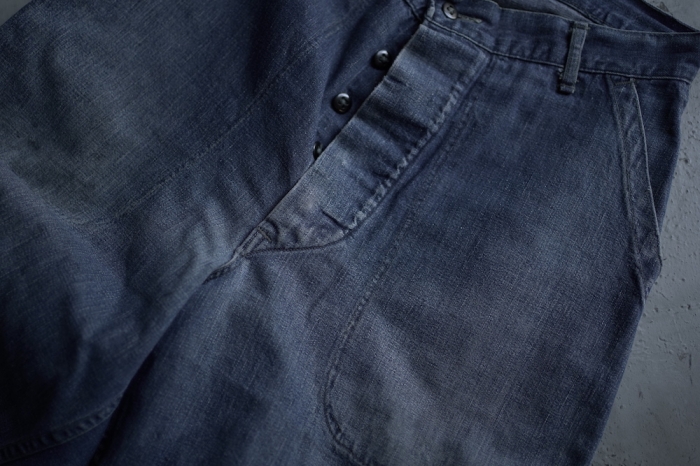
Sample
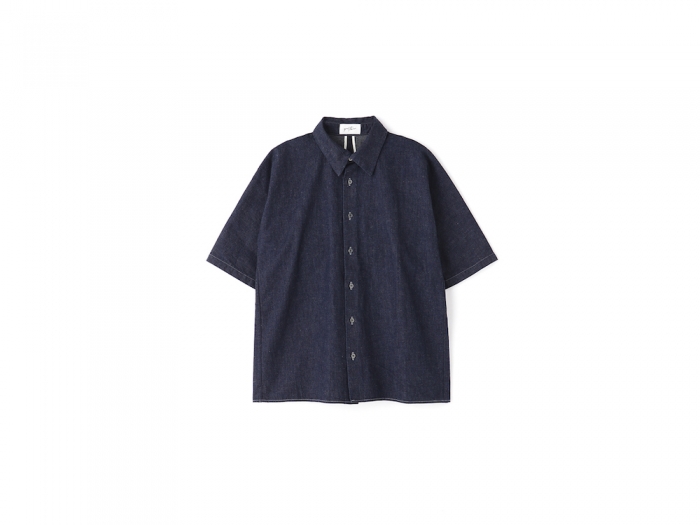
Half Sleeve Shirt - USN OEKO TEX® Denim ¥26,000 ( Unisex )
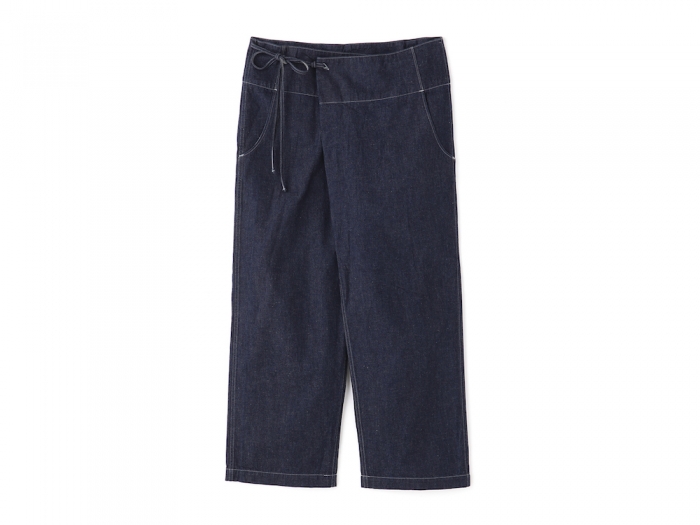
Naval Thai Pant - USN OEKO TEX® Denim ¥29,000 ( Unisex )
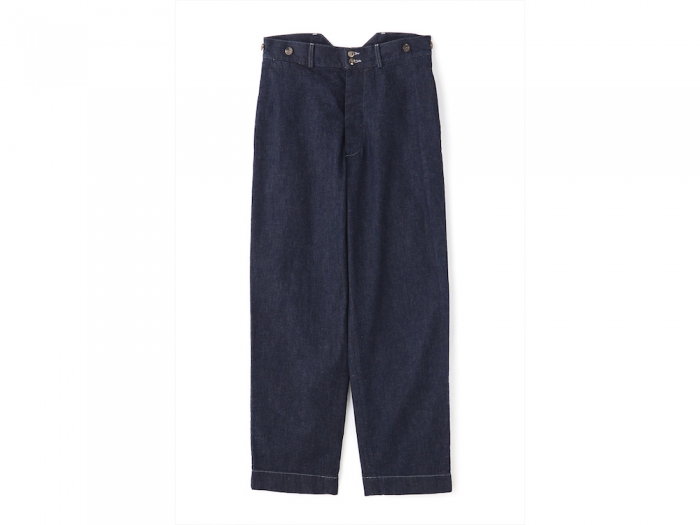
Work Pant - USN OEKO TEX® Denim ¥26,000 ( Unisex )
■ Mixed Stripe
V-Front T-shirt / Egiptian Guide Dress / Easy Pant
This is a multi-striped fabric made by connecting leftover yarns. The colors are assorted as the yarns are used randomly. It has a stripe feel reminiscent of the Silk Road, and I really like this fabric. This cut-and-sew also features a square body with sleeves attached at right angles, filling in the missing parts with squares. When worn, the sleeves are quite comfortable, and the construction is efficient with minimal waste. The dress was inspired by a photographic reference from about 100 years ago. It recreates a long dress worn by a boy working as a guide in Egypt.
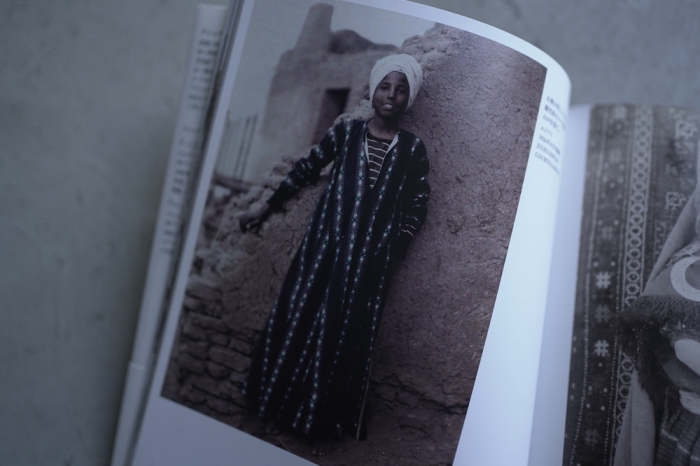
Sample
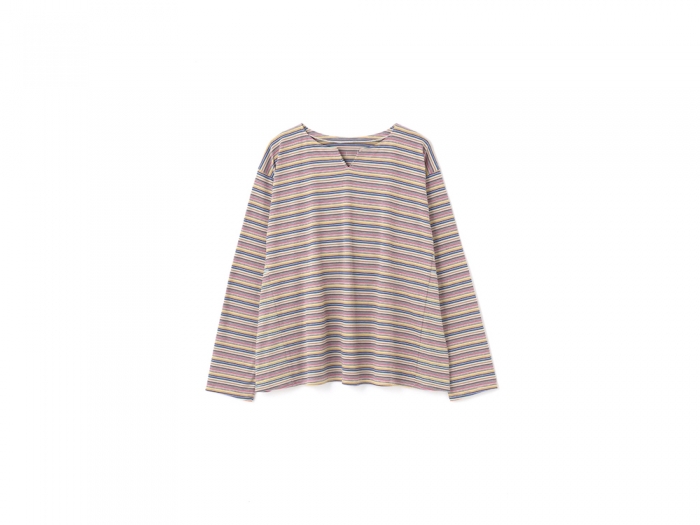
V-Front T-shirt - Mixed Stripe ¥16,000 ( Unisex )
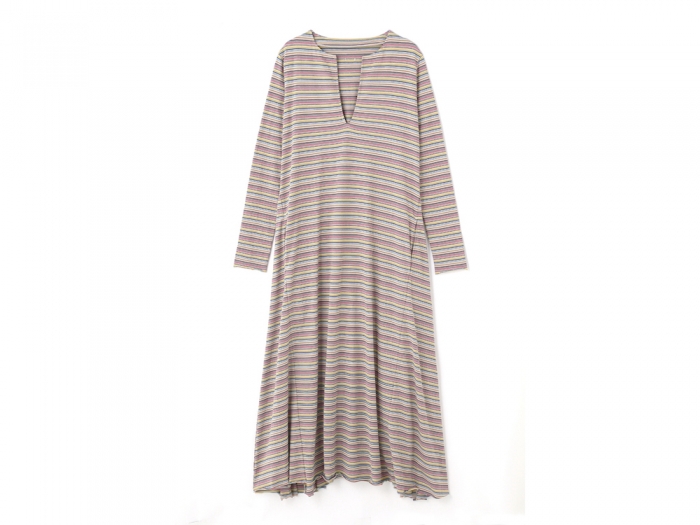
Egiptian Guide Dress - Mixed Stripe ¥26,000 ( Women's )
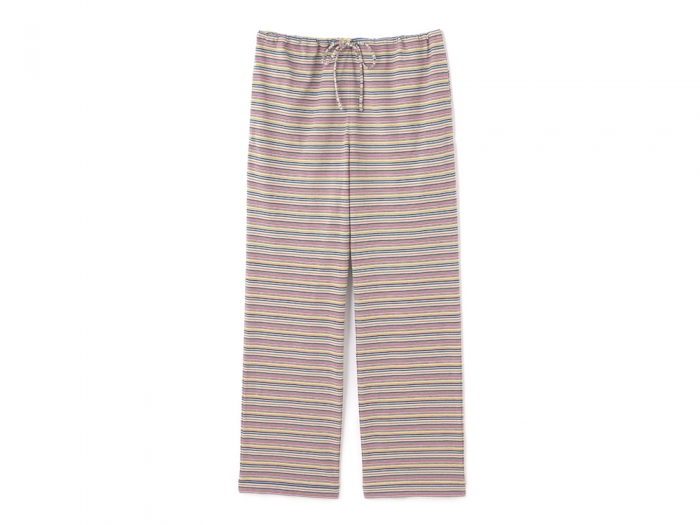
Easy Pant - Mixed Stripe ¥18,000 ( Unisex )
■ Knit
V-Back Knit / Knitted Vest / Knitted Hood
This knit fabric is made by a historical manufacturer in Yamagata Prefecture, which has been in operation for about 70 years. The material is 100% cotton, but it is finished with a strong twist yarn for a crisp texture, making it suitable for summer wear. All of this is product-dyed and dyed in two baths. The indigo (DARK INDIGO) has a slight overlay of indigo. Care has been taken to ensure that the colors have a three-dimensional, dynamic quality without being flat. The knit shape features a collar that rises about 2.5 cm along the neck. It is designed to be worn either way, but the original specification has a slit at the back. This back slit is inspired by the back stitching of Japanese kimonos. Kimonos always have seams at the back, which is a structural necessity, but seams are "eyes". Therefore, it seems to have a protective meaning, guarding against bad things coming from behind. I wanted to add this feature for protection. For children's kimonos, there are no seams at the back, so they intentionally add embroidery, which I find kind. I have also added embroidery to shirts that originally have seams. The vest is inspired by the feel of woven vests from the French army and knitted vests from the American Red Cross, while adding an arrangement to the front opening, allowing the collar to rise about 1.5 cm along the neck. It is designed to look good even when worn over a T-shirt in a slightly larger size, and I aimed for a look that allows women to wear it as a standalone piece in summer.
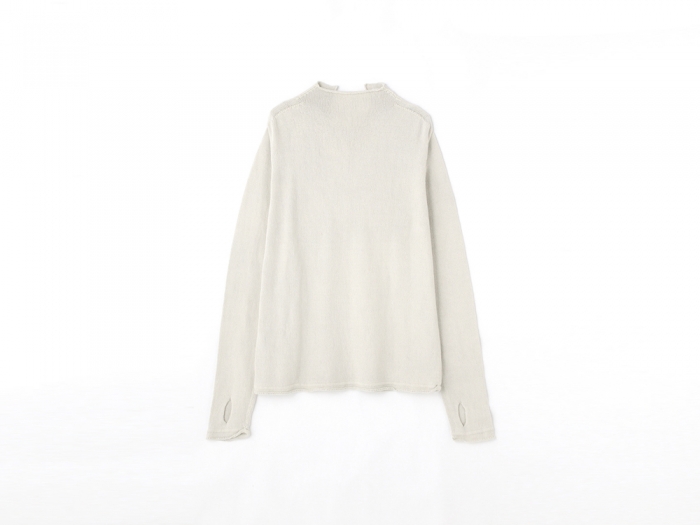
V-Back Knit ¥43,000 ( Unisex / Colors : ECRU / TINT / DARK INDIGO )
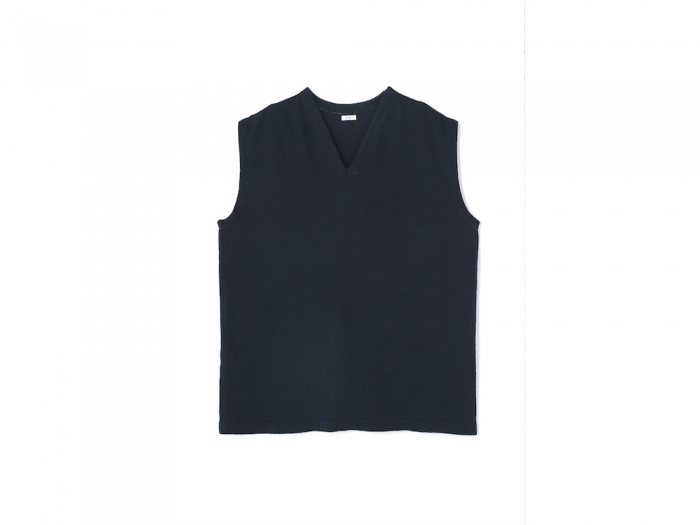
Knitted Vest ¥33,000 ( Unisex / Colors : ECRU / TINT / DARK INDIGO )
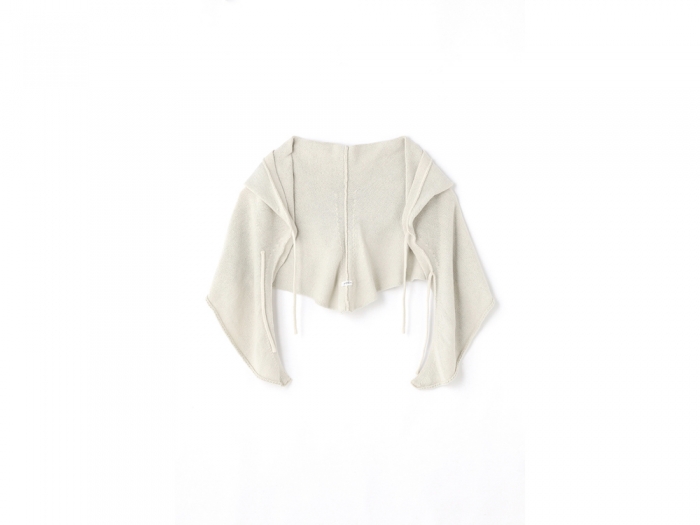
Knitted Hood ¥26,000 ( Unisex / Colors : TINT / DARK INDIGO )
■ Pleated Dress
Inspired by the beautiful gathers of antique aprons worn during French grape festivals, this dress is made from a heavy linen material. It recreates that beauty in a delicate camisole dress, coexisting the warmth of handwork with a lightness that floats in the air.
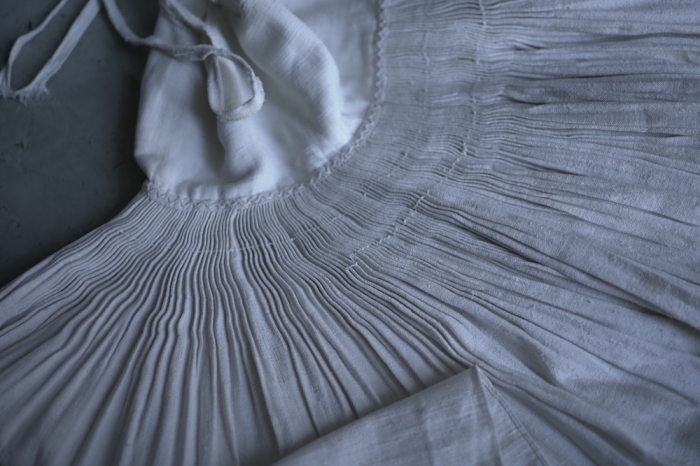
Sample
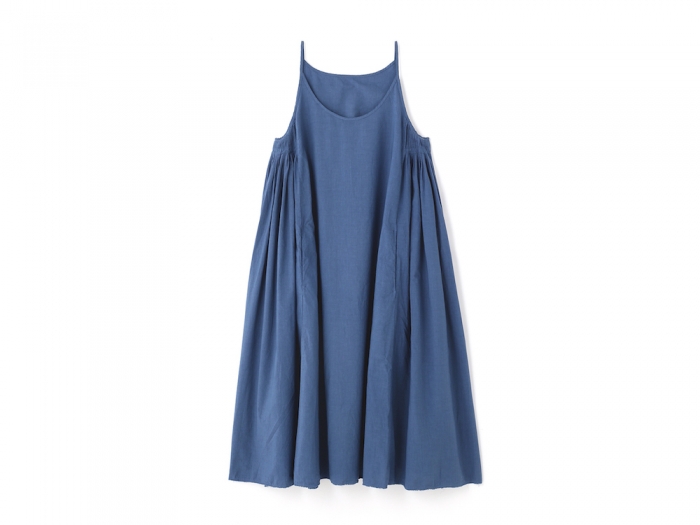
Pleated Dress ¥46,000 ( Women's )
■ Pojagi Bag
Learning from the Korean jogakbo (pojagi), I created a bag made from leftover fabric from this first collection of quitan.
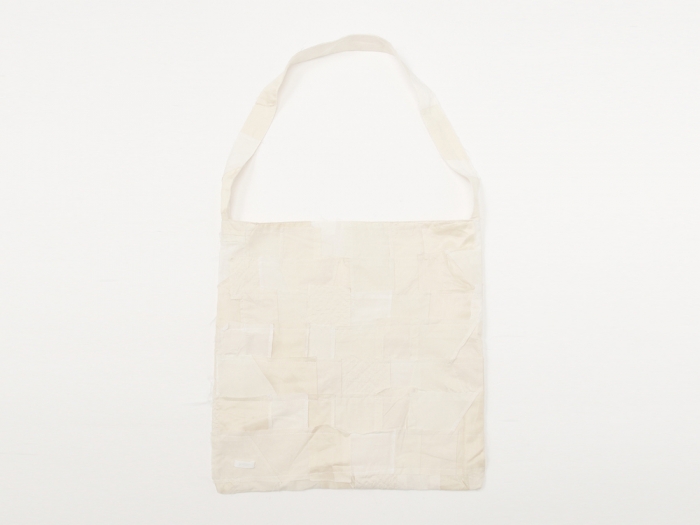
Pojagi Bag ¥13,000 ( Unisex )
■ Jamdani
Henley Shirt / Easy Pant / Frilled Tunic / Angarkha Dress / Pleated Dress / Stole
This jamdani fabric is woven at a weaving factory on the outskirts of Kolkata in West Bengal, India. It is hand-spun and hand-woven, resulting in a gauze-like texture. The patterns are created by weaving thick threads into the weft by hand. Jamdani sarees are worn by wrapping a long piece of fabric around the body, so the starting part that gets wrapped inside does not have a pattern, and the pattern gradually appears as it approaches the edge. I found this to be very efficient, so I learned from it and designed the fabric to have a pattern only on half of the edge, leaving the other half without a pattern, which is where scissors are likely to be used. Therefore, I try to create it in a way that does not disrupt the handwork of the patterns as much as possible. The longer hem of the dress is due to the edge design. The tunic is also made in the same manner, with sleeves attached at right angles, filling in the missing parts. The Angarkha Dress is a traditional Indian wrap dress. Originally, it was a long garment for men, often worn with a small hat made of the same fabric.
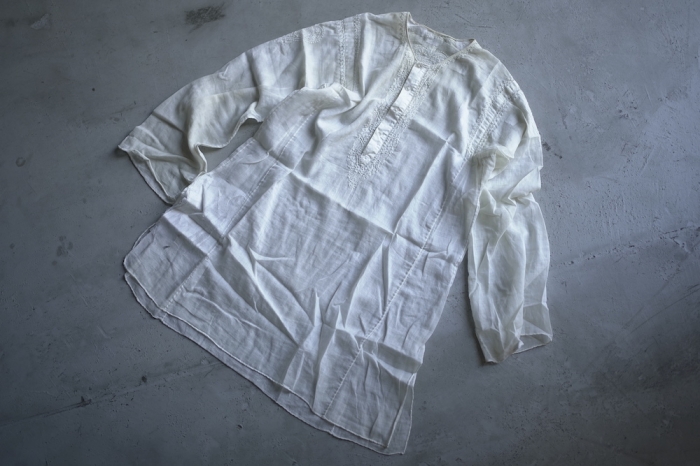
Sample
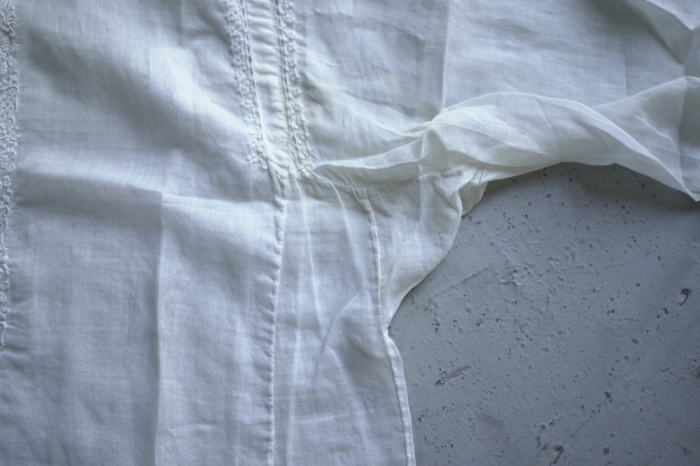
Sample
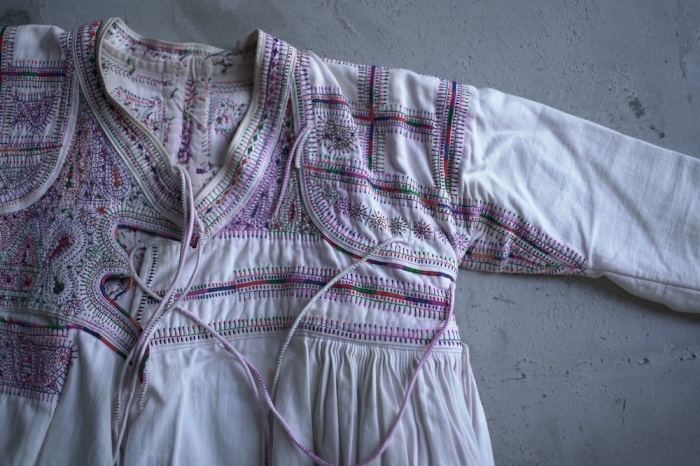
Sample
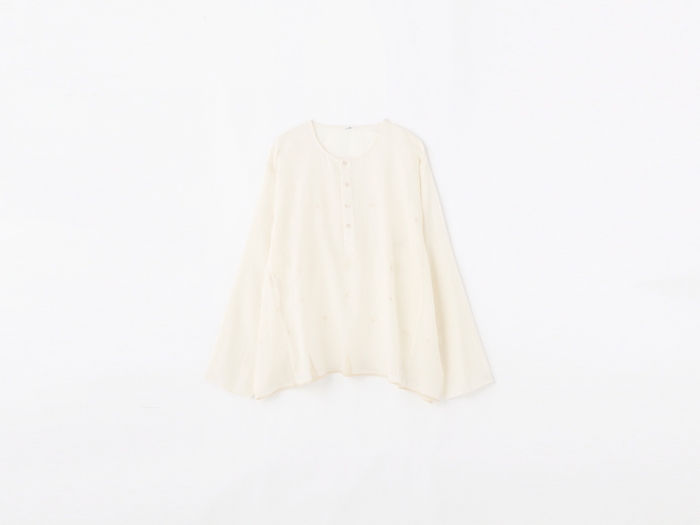
Henley Shirt - Jamdani ¥30,000 ( Unisex )
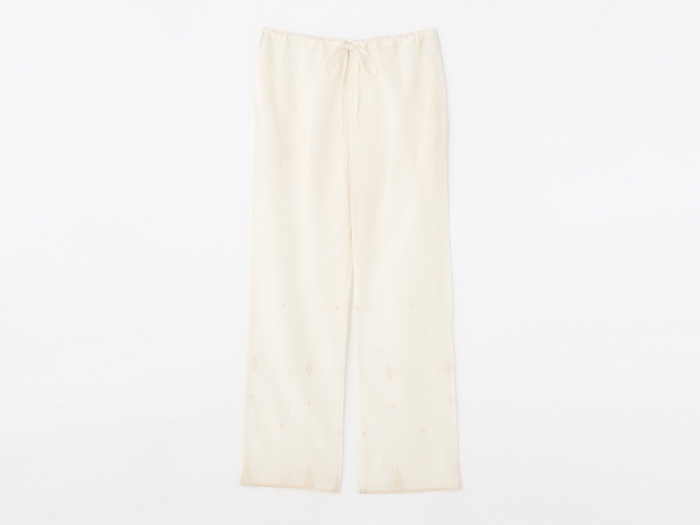
Easy Pant - Jamdani ¥33,000 ( Unisex )
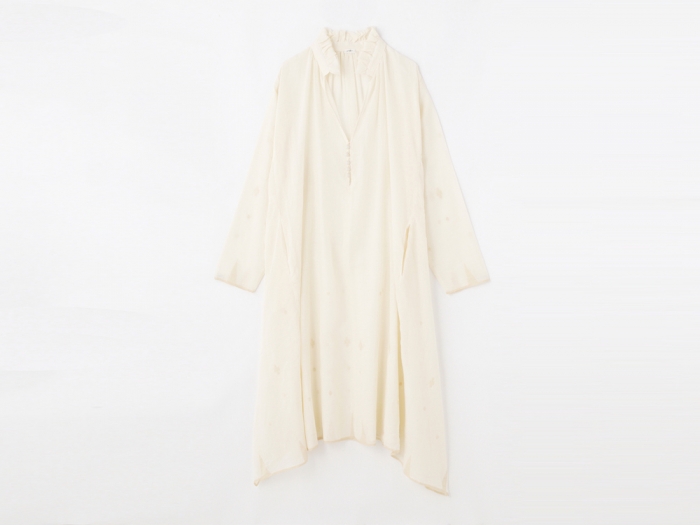
Frilled Tunic - Jamdani ¥56,000 ( Women's )
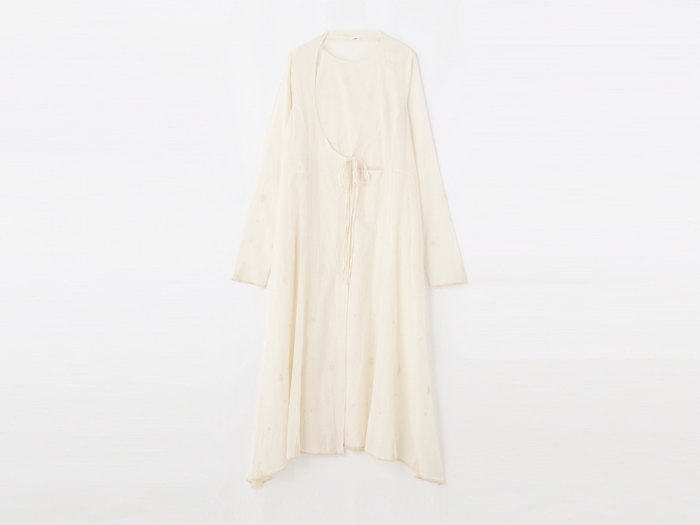
Angarkha Dress - Jamdani ¥63,000 ( Women's )
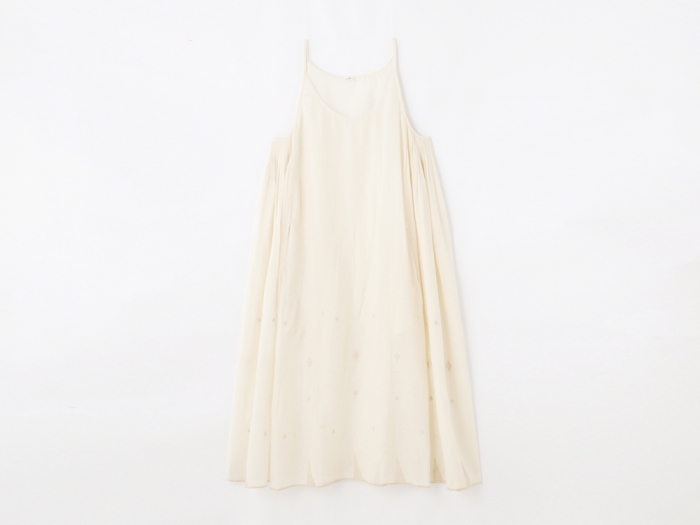
Pleated Dress - Jamdani ¥56,000 ( Women's )
■Cotton Silk Khadi
Henley Shirt / Easy Pant / Frilled Tunic / Travel Tetra
This fabric is the same material used for the masks sold last season. It is a plain weave material made from hand-spun and hand-woven cotton silk in India, and it is referred to as khadi. Traditionally, khadi refers to 100% cotton fabric promoted by Gandhi to protect their handwork during the British colonial period, so it is not strictly khadi, but I respectfully call it khadi since it is also hand-spun and hand-woven in India. Since 100% silk would be too weak, I mixed cotton to give it some elasticity, similar to the cotton-cashmere T-shirt. This is also dyed in two baths using charcoal. For the turquoise color, a little mulberry leaf is added to create a green overlay on the light blue. The easy pants are inspired by military inner pants, aiming for a relaxed feel. A petticoat is essential, but they are comfortable and highly recommended. The tetra-shaped pouch is inspired by the tetra pack of coffee milk. Although we cannot travel much now, I hope you don't forget to dream of travel, so I made it a size that is easy to store small items like contact lens cases or other travel essentials.
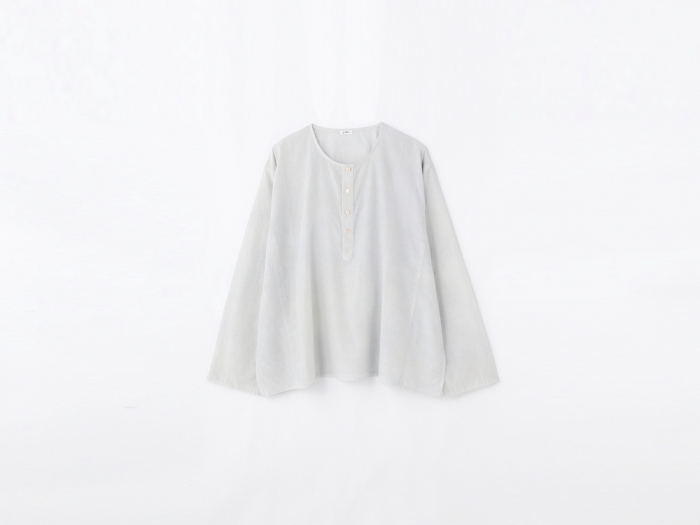
Henley Shirt ¥33,000 ( Unisex / Colors : TURQUOISE / TINT )
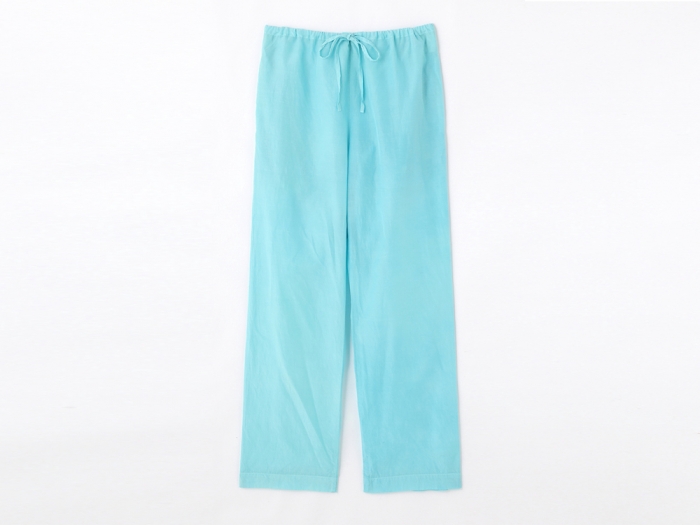
Easy Pant - Cotton ¥35,000 ( Unisex / Colors : TURQUOISE / TINT )
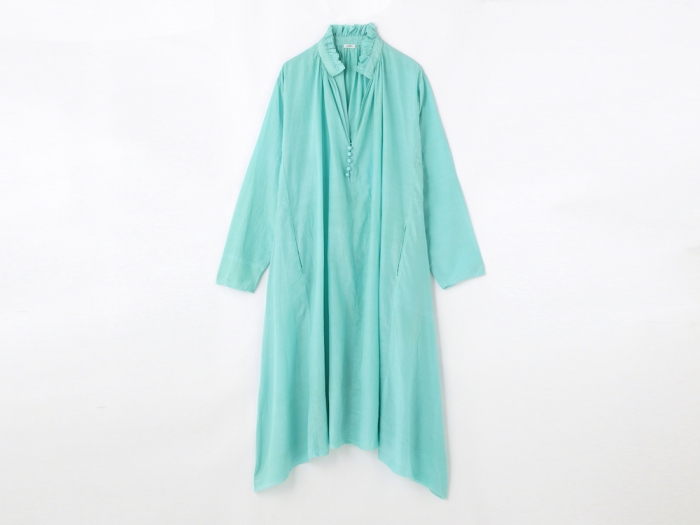
Frilled Tunic - Cotton ¥59,000 ( Women's / Colors : TURQUOISE / TINT )
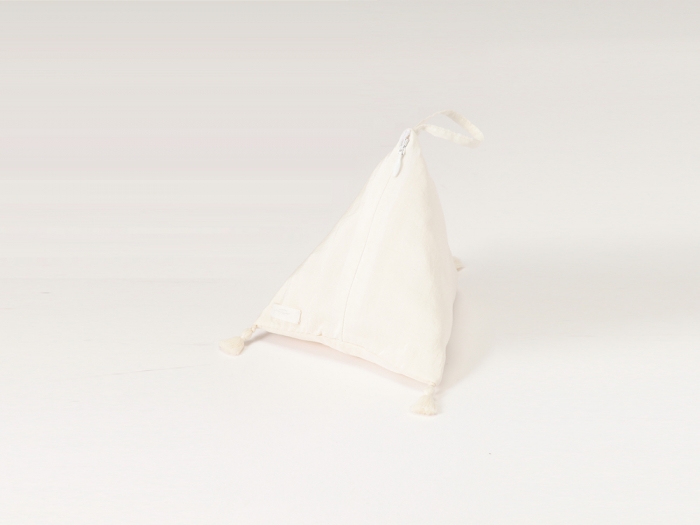
Travel Tetra "Small" ¥9,000 / "Medium" ¥12,000 ( Unisex / Colors : TURQUOISE / WHITE )
■ Made in FRANCE
Manteau "L'armée Française" / Veste "Amish" / Pantalon "Cricket" / Tunique "Col Châle"
The fabric uses what is known as French linen, and the sewing is done in a factory in France. The vibrant blue product dyeing was done at a dyeing factory located on the outskirts of southern France, where the Garonne River flows, using a traditional French dyeing method called pastel dyeing. Indigo dyeing became mainstream as it was easier to handle, but before that, blue dyeing in France was done using pastel dyeing. Pastel is a type of plant in the mustard family that blooms yellow flowers, and like indigo dyeing, it is used to create the dye source, which is then dipped into a pot, and when the dyed material comes into contact with air, it oxidizes and turns blue. This is a very ancient dyeing method; a friend of a carpet maker showed me that there are carpets dyed with pastel dye dating back about 3500 years. People in ancient times also dyed blue using pastel. Blue is said to be a very noble color, and it seems that clothing worn by nobility was also dyed using this pastel method. This dyeing method has deep roots in France, but it has completely declined as an industry. There are a few dyeing factories trying to revive it, and this is one of them.
・Manteau "L'armée Française"
This is inspired by a coat from the French army in the 1940s. True to French style, the collar is attached directly to the collar opening without a collar stand. The shape of the collar is rounded like that of work jackets from the same period in France, and the neckline is designed to be slightly lower in the front for ease of wear.
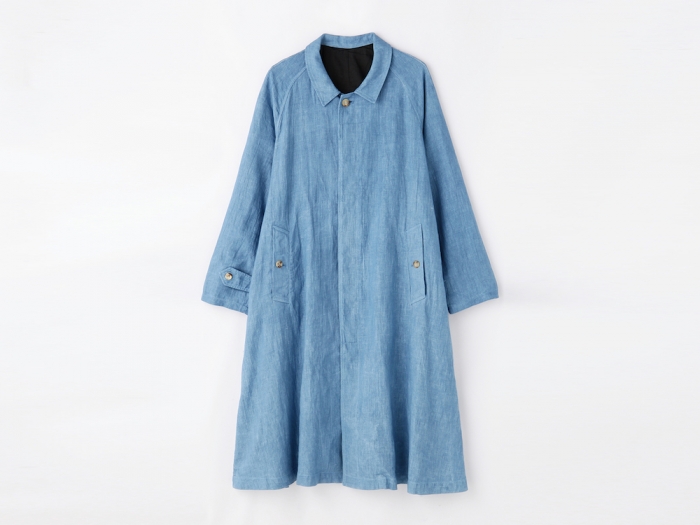
Manteau "L'armée Française" ¥79,000 ( Unisex )
・Veste "Amish"
This is based on an Amish jacket. The Amish are very cool people, but they have unique and strict rules. It seems that using buttons or accessories when wearing clothes is absolutely forbidden, and some women even use pins to secure their dresses. I had to add buttons for practicality, but I minimized the elements in the pockets and back pattern to follow the characteristics of Amish clothing.
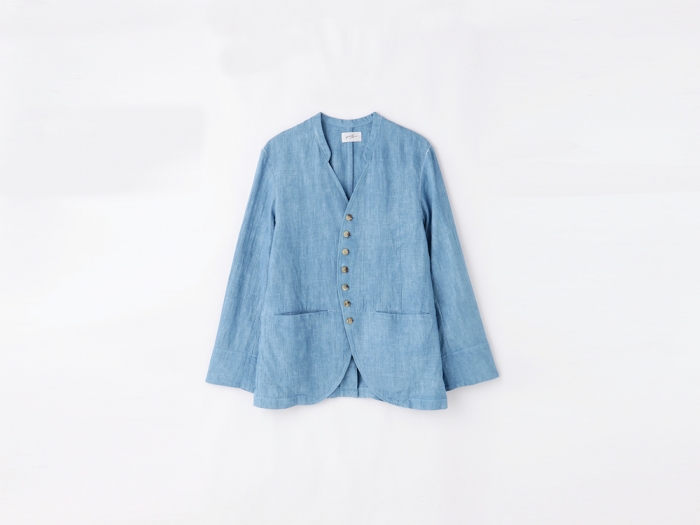
Veste "Amish" ¥60,000 ( Unisex )
・Pantalon "Cricket"
This is based on British cricket pants. It retains details from old British sports pants, such as a flap on the coin pocket. Although it has a fairly formal appearance, the fabric makes it quite comfortable to wear, which I really like.
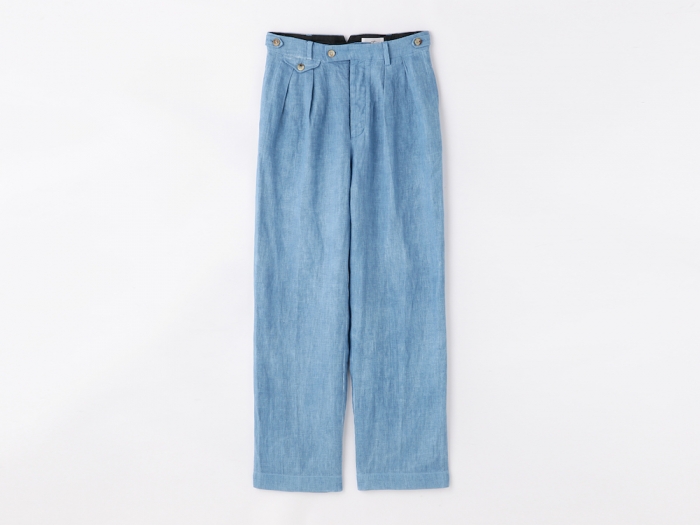
Pantalon "Cricket" ¥49,000 ( Unisex )
■ Made in FRANCE
T-shirt "V-Back" / Cache Cœur "Sportif" / Pantalon "Easy" / T-shirt "V-Front" / Robe "Egiptienne"
These are made in a small town with a history of 100 years, located at the entrance to the Basque region in France, by a cut-and-sew manufacturer. They clearly state that they are not Basque people, so I refer to it as the entrance. The Pyrenees mountains are visible right in front, with a small stream flowing nearby, making it a very picturesque factory that embodies the landscape one imagines when thinking of French factories. They handle all processes from color creation, yarn dyeing, knitting, cutting, to sewing under one roof. This factory has decided to only produce colors using chemical dyes for environmental consideration. They are particularly skilled at color matching, and even famous manufacturers rely on this factory for yarn dyeing.
・T-shirt "V-Back"
I reduced the size range to sizes 00, 0, 1, and 2. Size 00 is designed to fit children around 130-140 cm as well as women who prefer a compact silhouette. The pitch is set quite large at 4 cm, aiming for a universal standard that can accommodate as many people as possible from children to adults. The fabric thickness is slightly lighter than the standard Basque shirt, but thicker than summer's flimsy materials, making it comfortable to wear alone and suitable for layering when it's a bit chilly.
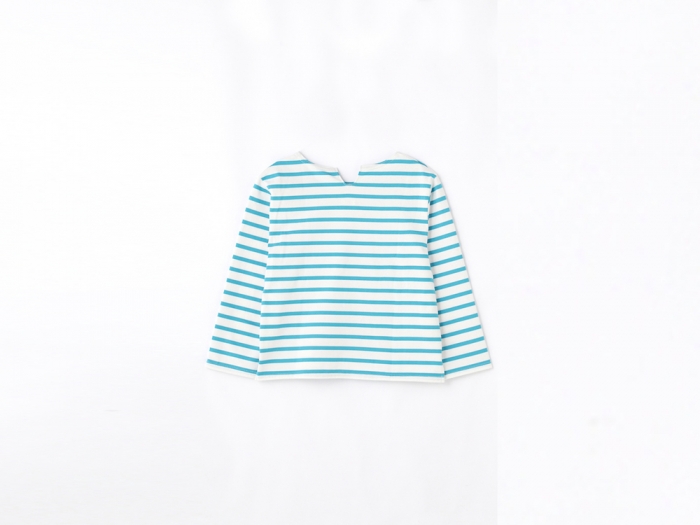
T-shirt "V-Back" - WHITE , TURQUOISE ¥19,000 ( Unisex / Colors : TURQUOISE / TINT / WHITE / WHITE , TURQUOISE )
・Cache Cœur "Sportif"
This is a slightly sporty top. It was created by arranging a wrap design based on vintage outdoor wear. The solid texture of the fabric matches well.
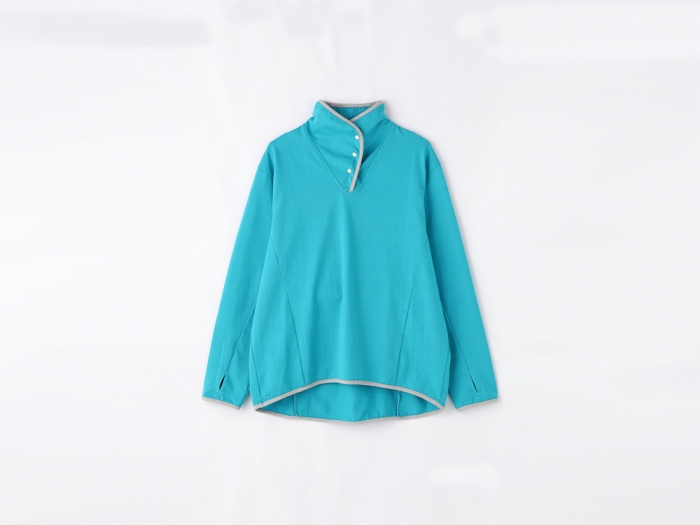
Cache Cœur "Sportif" - TURQUOISE ¥25,000 ( Unisex / Colors : TURQUOISE / TINT / WHITE / WHITE , TURQUOISE )
・Robe "Egiptienne"
This is made from 100% linen. It is quite lightweight and has a sheer texture. The refreshing touch upon wearing and the slightly uneven texture are its characteristics. This is also produced in France, but the shape recreates a long dress worn by a boy who worked as a guide in Egypt, as seen in a photograph from about 100 years ago.
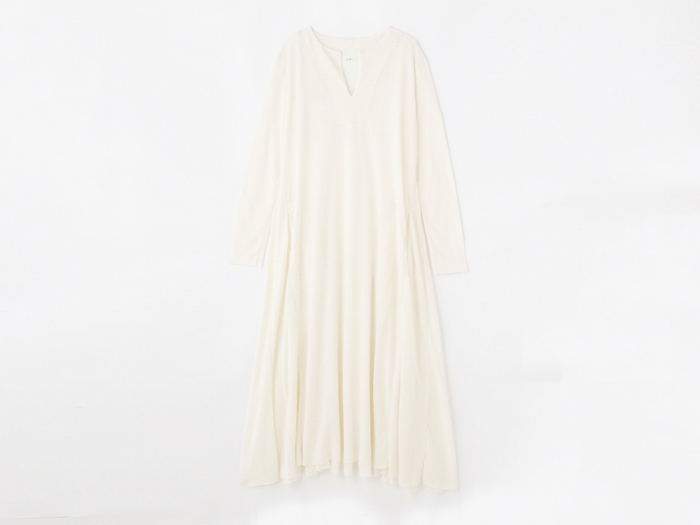
Robe "Egiptienne" - WHITE ¥43,000 ( Women's / Colors : WHITE / DARK NAVY / STRIPE )
■ Espadrilles "Basic" / "Room" / "Ballet"
Espadrilles are handmade one by one by artisans in a factory located at the foot of the Pyrenees mountains, in an area called Mountain Basque. The soles are woven using traditional methods of making rope. In addition to the classic espadrille shape ("Basic"), I have also created a slipper-style room shoe and a sandal shape ("Room") that can be worn as well, and a design inspired by ballet toe shoes, where long laces are wrapped around the ankle ("Ballet"). The fabrics used are the Turkmen Stripe and Pique de Provence, which are also used in other items. Additionally, I reused airbags from cars that were never used and became waste. Airbags have irregular shapes, and the fabric can be taken from different places, so I used them to create espadrilles without waste. It seems that cars are designed so that all parts can be recycled, but airbags are the only ones that cannot be reused or burned, so they can only be buried. It is best if airbags do not activate and fulfill their purpose, but it feels sad and not truly kind to people or the planet that a tool meant to protect lives becomes waste that cannot be recycled. I wanted to express this intention in a tangible form, and I am very pleased with the stylish finish that has a slight transparency.
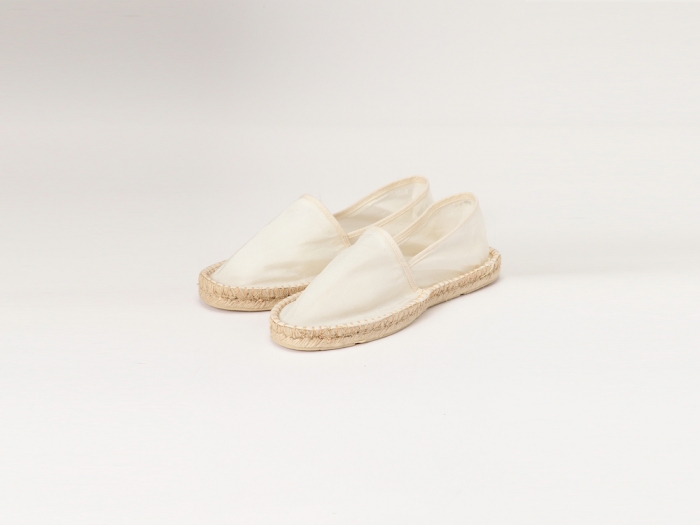
Espadrilles "Basic" - Air Bag ¥12,000 ( Unisex / Fabrics : Air Bag / Pique de Provence / Turkmen Stripe )
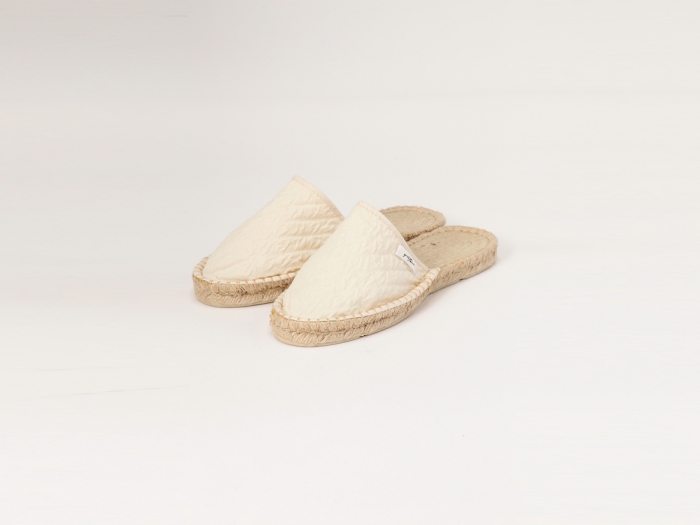
Espadrilles "Room" - Pique de Provence ¥10,000 ( Unisex / Fabrics : Air Bag / Pique de Provence / Turkmen Stripe )
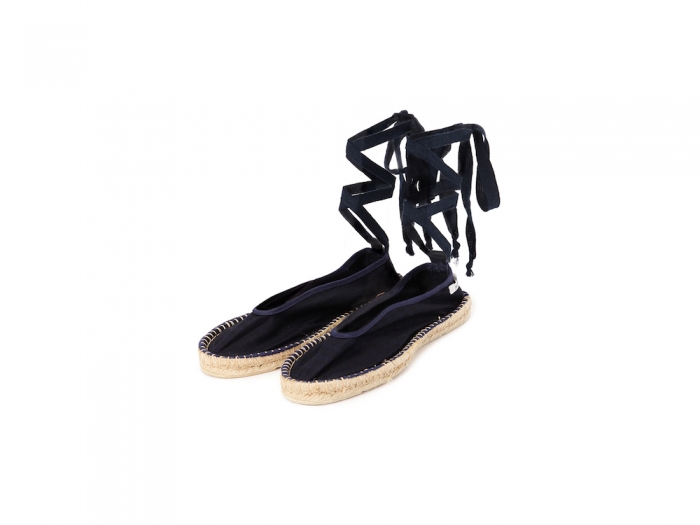
Espadrilles "Ballet" - Turkmen Stripe ¥15,000 ( Unisex / Fabrics : Air Bag / Pique de Provence / Turkmen Stripe )
Visit the Dice&Dice ONLINE STORE for "quitan" here
Read past interviews about "quitan" here
Read articles about "quitan" at the Anglo Global Community Mart here
■ Double Collar Shirt / Double Stand Collar Shirt / Double Collar Coveralls
Made from a cotton-silk typewriter fabric that is well-constructed and has a crisp feel. Instead of going through the bleaching process from the freshly woven state, we intentionally applied a strong wash. This resulted in a fabric that retains the original color of the cotton-silk material, with a slightly raised, rustic texture. This is completely my playful design, as the collar is double-layered to an almost excessive degree. In addition to ECRU, there is also DARK NAVY, which is dyed using a product dyeing process. While preparing the base with reactive dyeing, we introduce logwood, a natural dye used for dyeing brown and black, at a low temperature. This creates a deep navy with a wavering quality. I loved the material so much that I chose covered buttons.
Double Collar Shirt - ECRU ¥25,000 ( Unisex )
Double Stand Collar Shirt - DARK NAVY ¥27,000 ( Unisex / Colors : ECRU ¥25,000 / DARK NAVY )
Double Collar Coveralls - ECRU ¥45,000 ( Unisex / Colors : ECRU / DARK NAVY ¥47,000 )
■ Wrap Skirt
A satin fabric with just the right amount of sheen, hand-dyed at a dyeing studio in Tokushima. To create a gradient, the darker parts are dyed multiple times. The inspiration came from the tie-dyed wrap skirts worn by the ethnic group in the Raharia region of northwest India. It is constructed closely resembling an apron, without any additional accessories.
Wrap Skirt ¥40,000 ( Women's )
■ T-shirt
"quitan" / "process"
This is made from a cotton-cashmere blend. The material is soft and has a slight drape due to the cashmere mix, but we added a bit more cotton to give it a slightly bouncy texture. The shape is based on old French military underwear, featuring a slightly elongated silhouette. Although it is based on underwear, care has been taken to ensure it can be worn comfortably on its own. This applies to other items as well; I hope to eliminate preconceived notions about sizes and gender, so I intentionally avoided using S, M, L labels. Therefore, those who prefer a looser fit can choose a larger size, and I encourage you to freely select your favorite silhouette. The embroidery is done by artisans in Kiryu, Gunma Prefecture, using an old hand-crank sewing machine, with each piece carefully embroidered. The "quitan" logo was created by deconstructing letters drawn multiple times, using the keyword of cultural exchange to create a bricolage. Inspired by Arabic script, it is written from right to left, so the embroidery is also applied from the right. The prominently featured design of "process" was inspired by Aboriginal pictographs, born from the process of shaping quitan. "A new composition made up of three men, three women, and many children"—it resembles stones, mountains, and rivers. By reconstructing what once represented humans in nature, I want to express a perspective where nature becomes visible through people. A new tribal scene. letters written by Aya Watanabe (Kamigoto) bricolaged/constructed by Hirofumi Abe
T-shirt "quitan" ¥13,000 ( Unisex )
T-shirt "process" ¥20,000 ( Unisex )
■ Turkmen Stripe
Jacket / Vest / Work Pants
This is the first fabric I created when making the collection. The nuances of the fabric from Turkmenistan's traditional costumes have been arranged to resemble a black and indigo shadow stripe. The indigo warp, black warp, and indigo weft are all of different counts. The indigo is pre-dyed, and since it is dyed with a light color, it will fade with wear, making the stripes more pronounced. This type of stripe is called "Tōzan stripe," which is a pattern that was transmitted from India to Japan long ago, and it was valued for its ability to look refined even in cotton clothing, resembling silk kimonos. I found it interesting that something originating in India has been passed down and used in various countries like Turkmenistan and Japan. The jacket is designed to be somewhat boxy, but the sleeves are slightly forward to create a three-dimensional shape for ease of wear. I intentionally added a gusset under the armpit, inspired by the construction of Asian clothing. The reason for the fully lined interior is that there is a difference in shrinkage rates between the lining and the outer fabric, so when washed, the inner and outer fabrics shrink differently. This allows air to enter and creates a puffiness, which is why I added the lining. The pants replicate the shape of old European work pants. They incorporate vintage details and patterns, such as a deep rise and a V-opening at the back, while using covered buttons to create a clean impression like slacks. I believe this has resulted in a universal shape that can be worn by anyone.
Sample
Jacket - Turkmen Stripe ¥53,000 ( Unisex )
Vest - Turkmen Stripe ¥33,000 ( Unisex )
Work Pants - Turkmen Stripe ¥36,000 ( Unisex )
■ Pique de Provence
Jacket / Vest / Work Pants / Circuler Skirt
In southern France, there is a traditional fabric called Pique de Provence, which is a jacquard woven material. This fabric was recreated in Japan based on materials from around 1890 to the 1900s. It is woven in the Bishu region of Aichi Prefecture. This is a bagged jacquard, often referred to as puffed jacquard, where threads run on the back, and by using strongly twisted threads on the weft, when water passes through, the tension is applied only to the back threads, causing them to shrink and create this texture. The lining is made from organic cotton, which has a slightly smooth texture for easy wear. The circuler skirt is made with a perfectly round cut. It has six panels, but the fabric is alternately taken from different directions. This creates varied grain directions, resulting in a light-reflecting movement.
Sample
Jacket - Pique de Provence ¥53,000 ( Unisex )
Vest - Pique de Provence ¥33,000 ( Unisex )
Circuler Skirt - Pique de Provence ¥46,000 ( Women's )
■ Hemp Twill
Armish Dress / Snow Patrol Pant / Naval Thai Pant
This is also a summer material woven by a wool weaving factory in Bishu. It is a cotton-hemp blend, with two strands of hemp used for the weft, while the warp is woven with black cotton thread. Bishu textiles have a background in wool weaving, and since they are woven slowly in wide widths, many of them have a very gentle texture due to the air they contain. Although the yarn is woven quite tightly, the fabric has a gentle feel. The dress is inspired by the simple garments of Amish women, resembling a layered look with a scarf draped over the shoulder, but constructed with minimal details. The snow pants are based on the British military's mountain troops' overpants. The specifications have not changed much from vintage designs, and they retain the characteristic design of British military pants with pockets at the front. The material is somewhat relaxed, so I chose this fabric for comfortable wear. The Thai pants are based on the stitching work and deep rise of US marine pants, resulting in a relaxed pair of Thai pants. It is a shape that resembles a combination of marine and Thai pants.
Sample
Armish Dress - Cotton / Hemp Twill ¥46,000 ( Women's )
Snow Patrol Pant - Cotton / Hemp Twill ¥39,000 ( Unisex )
Naval Thai Pant - Cotton / Hemp Twill ¥36,000 ( Unisex )
■ USN OEKO TEX® Denim
Half Sleeve Shirt / Naval Thai Pant / Work Pant
This started with the idea of recreating the denim fabric from the 40s US NAVY. Therefore, a slightly lighter 9.75-ounce fabric is used, and instead of creating vertical fades with wear, I wanted to achieve an overall faded look, so I used gray weft threads instead of natural ones. This denim fabric has passed the Eco-Tex certification, which is a world standard for environmental consideration, covering all processes from yarn creation to dyeing and finishing. In creating and mass-producing denim, I thought about how to avoid overproduction and not make more than necessary, so I intentionally worked with constraints to comply with Eco-Tex certification. For products made with denim, all materials used, including accessories, are Eco-Tex certified except for the labels. The half-sleeve shirt is shaped like a shirt, but there are no seams on the sleeves. Asian clothing and Japanese kimonos often have a flat construction, and the missing parts are supplemented with square pieces. The woven fabric is originally square, so when creating with square pieces, the finishing is very good and logical. I was inspired by this approach to arrive at this shape.
Sample
Half Sleeve Shirt - USN OEKO TEX® Denim ¥26,000 ( Unisex )
Naval Thai Pant - USN OEKO TEX® Denim ¥29,000 ( Unisex )
Work Pant - USN OEKO TEX® Denim ¥26,000 ( Unisex )
■ Mixed Stripe
V-Front T-shirt / Egiptian Guide Dress / Easy Pant
This is a multi-striped fabric made by connecting leftover yarns. The colors are assorted as the yarns are used randomly. It has a stripe feel reminiscent of the Silk Road, and I really like this fabric. This cut-and-sew also features a square body with sleeves attached at right angles, filling in the missing parts with squares. When worn, the sleeves are quite comfortable, and the construction is efficient with minimal waste. The dress was inspired by a photographic reference from about 100 years ago. It recreates a long dress worn by a boy working as a guide in Egypt.
Sample
V-Front T-shirt - Mixed Stripe ¥16,000 ( Unisex )
Egiptian Guide Dress - Mixed Stripe ¥26,000 ( Women's )
Easy Pant - Mixed Stripe ¥18,000 ( Unisex )
■ Knit
V-Back Knit / Knitted Vest / Knitted Hood
This knit fabric is made by a historical manufacturer in Yamagata Prefecture, which has been in operation for about 70 years. The material is 100% cotton, but it is finished with a strong twist yarn for a crisp texture, making it suitable for summer wear. All of this is product-dyed and dyed in two baths. The indigo (DARK INDIGO) has a slight overlay of indigo. Care has been taken to ensure that the colors have a three-dimensional, dynamic quality without being flat. The knit shape features a collar that rises about 2.5 cm along the neck. It is designed to be worn either way, but the original specification has a slit at the back. This back slit is inspired by the back stitching of Japanese kimonos. Kimonos always have seams at the back, which is a structural necessity, but seams are "eyes". Therefore, it seems to have a protective meaning, guarding against bad things coming from behind. I wanted to add this feature for protection. For children's kimonos, there are no seams at the back, so they intentionally add embroidery, which I find kind. I have also added embroidery to shirts that originally have seams. The vest is inspired by the feel of woven vests from the French army and knitted vests from the American Red Cross, while adding an arrangement to the front opening, allowing the collar to rise about 1.5 cm along the neck. It is designed to look good even when worn over a T-shirt in a slightly larger size, and I aimed for a look that allows women to wear it as a standalone piece in summer.
V-Back Knit ¥43,000 ( Unisex / Colors : ECRU / TINT / DARK INDIGO )
Knitted Vest ¥33,000 ( Unisex / Colors : ECRU / TINT / DARK INDIGO )
Knitted Hood ¥26,000 ( Unisex / Colors : TINT / DARK INDIGO )
■ Pleated Dress
Inspired by the beautiful gathers of antique aprons worn during French grape festivals, this dress is made from a heavy linen material. It recreates that beauty in a delicate camisole dress, coexisting the warmth of handwork with a lightness that floats in the air.
Sample
Pleated Dress ¥46,000 ( Women's )
■ Pojagi Bag
Learning from the Korean jogakbo (pojagi), I created a bag made from leftover fabric from this first collection of quitan.
Pojagi Bag ¥13,000 ( Unisex )
■ Jamdani
Henley Shirt / Easy Pant / Frilled Tunic / Angarkha Dress / Pleated Dress / Stole
This jamdani fabric is woven at a weaving factory on the outskirts of Kolkata in West Bengal, India. It is hand-spun and hand-woven, resulting in a gauze-like texture. The patterns are created by weaving thick threads into the weft by hand. Jamdani sarees are worn by wrapping a long piece of fabric around the body, so the starting part that gets wrapped inside does not have a pattern, and the pattern gradually appears as it approaches the edge. I found this to be very efficient, so I learned from it and designed the fabric to have a pattern only on half of the edge, leaving the other half without a pattern, which is where scissors are likely to be used. Therefore, I try to create it in a way that does not disrupt the handwork of the patterns as much as possible. The longer hem of the dress is due to the edge design. The tunic is also made in the same manner, with sleeves attached at right angles, filling in the missing parts. The Angarkha Dress is a traditional Indian wrap dress. Originally, it was a long garment for men, often worn with a small hat made of the same fabric.
Sample
Sample
Sample
Henley Shirt - Jamdani ¥30,000 ( Unisex )
Easy Pant - Jamdani ¥33,000 ( Unisex )
Frilled Tunic - Jamdani ¥56,000 ( Women's )
Angarkha Dress - Jamdani ¥63,000 ( Women's )
Pleated Dress - Jamdani ¥56,000 ( Women's )
■Cotton Silk Khadi
Henley Shirt / Easy Pant / Frilled Tunic / Travel Tetra
This fabric is the same material used for the masks sold last season. It is a plain weave material made from hand-spun and hand-woven cotton silk in India, and it is referred to as khadi. Traditionally, khadi refers to 100% cotton fabric promoted by Gandhi to protect their handwork during the British colonial period, so it is not strictly khadi, but I respectfully call it khadi since it is also hand-spun and hand-woven in India. Since 100% silk would be too weak, I mixed cotton to give it some elasticity, similar to the cotton-cashmere T-shirt. This is also dyed in two baths using charcoal. For the turquoise color, a little mulberry leaf is added to create a green overlay on the light blue. The easy pants are inspired by military inner pants, aiming for a relaxed feel. A petticoat is essential, but they are comfortable and highly recommended. The tetra-shaped pouch is inspired by the tetra pack of coffee milk. Although we cannot travel much now, I hope you don't forget to dream of travel, so I made it a size that is easy to store small items like contact lens cases or other travel essentials.
Henley Shirt ¥33,000 ( Unisex / Colors : TURQUOISE / TINT )
Easy Pant - Cotton ¥35,000 ( Unisex / Colors : TURQUOISE / TINT )
Frilled Tunic - Cotton ¥59,000 ( Women's / Colors : TURQUOISE / TINT )
Travel Tetra "Small" ¥9,000 / "Medium" ¥12,000 ( Unisex / Colors : TURQUOISE / WHITE )
■ Made in FRANCE
Manteau "L'armée Française" / Veste "Amish" / Pantalon "Cricket" / Tunique "Col Châle"
The fabric uses what is known as French linen, and the sewing is done in a factory in France. The vibrant blue product dyeing was done at a dyeing factory located on the outskirts of southern France, where the Garonne River flows, using a traditional French dyeing method called pastel dyeing. Indigo dyeing became mainstream as it was easier to handle, but before that, blue dyeing in France was done using pastel dyeing. Pastel is a type of plant in the mustard family that blooms yellow flowers, and like indigo dyeing, it is used to create the dye source, which is then dipped into a pot, and when the dyed material comes into contact with air, it oxidizes and turns blue. This is a very ancient dyeing method; a friend of a carpet maker showed me that there are carpets dyed with pastel dye dating back about 3500 years. People in ancient times also dyed blue using pastel. Blue is said to be a very noble color, and it seems that clothing worn by nobility was also dyed using this pastel method. This dyeing method has deep roots in France, but it has completely declined as an industry. There are a few dyeing factories trying to revive it, and this is one of them.
・Manteau "L'armée Française"
This is inspired by a coat from the French army in the 1940s. True to French style, the collar is attached directly to the collar opening without a collar stand. The shape of the collar is rounded like that of work jackets from the same period in France, and the neckline is designed to be slightly lower in the front for ease of wear.
Manteau "L'armée Française" ¥79,000 ( Unisex )
・Veste "Amish"
This is based on an Amish jacket. The Amish are very cool people, but they have unique and strict rules. It seems that using buttons or accessories when wearing clothes is absolutely forbidden, and some women even use pins to secure their dresses. I had to add buttons for practicality, but I minimized the elements in the pockets and back pattern to follow the characteristics of Amish clothing.
Veste "Amish" ¥60,000 ( Unisex )
・Pantalon "Cricket"
This is based on British cricket pants. It retains details from old British sports pants, such as a flap on the coin pocket. Although it has a fairly formal appearance, the fabric makes it quite comfortable to wear, which I really like.
Pantalon "Cricket" ¥49,000 ( Unisex )
■ Made in FRANCE
T-shirt "V-Back" / Cache Cœur "Sportif" / Pantalon "Easy" / T-shirt "V-Front" / Robe "Egiptienne"
These are made in a small town with a history of 100 years, located at the entrance to the Basque region in France, by a cut-and-sew manufacturer. They clearly state that they are not Basque people, so I refer to it as the entrance. The Pyrenees mountains are visible right in front, with a small stream flowing nearby, making it a very picturesque factory that embodies the landscape one imagines when thinking of French factories. They handle all processes from color creation, yarn dyeing, knitting, cutting, to sewing under one roof. This factory has decided to only produce colors using chemical dyes for environmental consideration. They are particularly skilled at color matching, and even famous manufacturers rely on this factory for yarn dyeing.
・T-shirt "V-Back"
I reduced the size range to sizes 00, 0, 1, and 2. Size 00 is designed to fit children around 130-140 cm as well as women who prefer a compact silhouette. The pitch is set quite large at 4 cm, aiming for a universal standard that can accommodate as many people as possible from children to adults. The fabric thickness is slightly lighter than the standard Basque shirt, but thicker than summer's flimsy materials, making it comfortable to wear alone and suitable for layering when it's a bit chilly.
T-shirt "V-Back" - WHITE , TURQUOISE ¥19,000 ( Unisex / Colors : TURQUOISE / TINT / WHITE / WHITE , TURQUOISE )
・Cache Cœur "Sportif"
This is a slightly sporty top. It was created by arranging a wrap design based on vintage outdoor wear. The solid texture of the fabric matches well.
Cache Cœur "Sportif" - TURQUOISE ¥25,000 ( Unisex / Colors : TURQUOISE / TINT / WHITE / WHITE , TURQUOISE )
・Robe "Egiptienne"
This is made from 100% linen. It is quite lightweight and has a sheer texture. The refreshing touch upon wearing and the slightly uneven texture are its characteristics. This is also produced in France, but the shape recreates a long dress worn by a boy who worked as a guide in Egypt, as seen in a photograph from about 100 years ago.
Robe "Egiptienne" - WHITE ¥43,000 ( Women's / Colors : WHITE / DARK NAVY / STRIPE )
■ Espadrilles "Basic" / "Room" / "Ballet"
Espadrilles are handmade one by one by artisans in a factory located at the foot of the Pyrenees mountains, in an area called Mountain Basque. The soles are woven using traditional methods of making rope. In addition to the classic espadrille shape ("Basic"), I have also created a slipper-style room shoe and a sandal shape ("Room") that can be worn as well, and a design inspired by ballet toe shoes, where long laces are wrapped around the ankle ("Ballet"). The fabrics used are the Turkmen Stripe and Pique de Provence, which are also used in other items. Additionally, I reused airbags from cars that were never used and became waste. Airbags have irregular shapes, and the fabric can be taken from different places, so I used them to create espadrilles without waste. It seems that cars are designed so that all parts can be recycled, but airbags are the only ones that cannot be reused or burned, so they can only be buried. It is best if airbags do not activate and fulfill their purpose, but it feels sad and not truly kind to people or the planet that a tool meant to protect lives becomes waste that cannot be recycled. I wanted to express this intention in a tangible form, and I am very pleased with the stylish finish that has a slight transparency.
Espadrilles "Basic" - Air Bag ¥12,000 ( Unisex / Fabrics : Air Bag / Pique de Provence / Turkmen Stripe )
Espadrilles "Room" - Pique de Provence ¥10,000 ( Unisex / Fabrics : Air Bag / Pique de Provence / Turkmen Stripe )
Espadrilles "Ballet" - Turkmen Stripe ¥15,000 ( Unisex / Fabrics : Air Bag / Pique de Provence / Turkmen Stripe )
Visit the Dice&Dice ONLINE STORE for "quitan" here
Read past interviews about "quitan" here
Read articles about "quitan" at the Anglo Global Community Mart here