

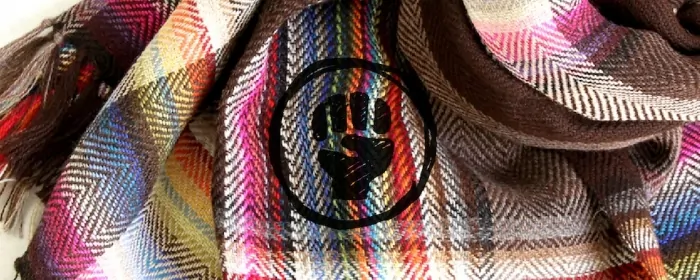
The brand 'THE INOUE BROTHERS...' handled by Dice and Dice.
In September 2015, the two who came to Dice and Dice Tokyo shared with us about alpaca products born in Bolivia and Peru.
We wanted to convey this in its original form to our customers, so we wrote it down as text.
Please take a look at the wonderful events behind the products.
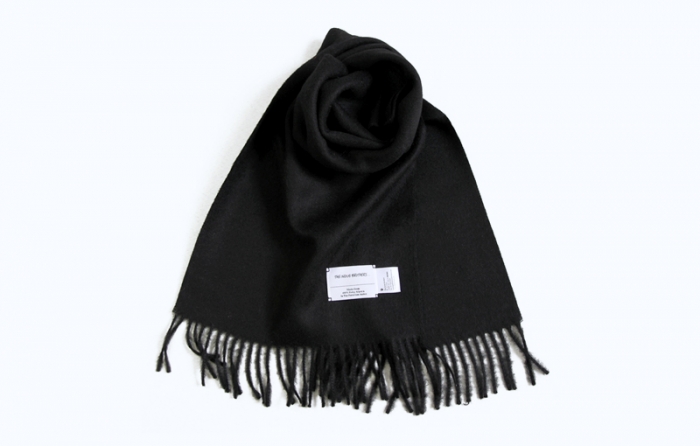
The method of "direct trade" enriches the lives of producers.
"In Peru, we are making alpaca products for the world's top brands. However, the farmers who live alongside the wonderful animal that provides this amazing material, alpaca, were among the poorest people in South America. Why is that? Because the agents in between mixed all the fibers, bought them by weight, and later sorted them to sell the good parts at high prices while selling the bad parts at slightly lower prices, pocketing the profits that arose in between. So in a way, they were exploiting the farmers...
The 'direct trade' we adopted eliminates all intermediaries, cuts out all the profits and costs involved, and establishes a direct relationship with the farmers to buy the fibers. Next, we take that directly to the production site for manufacturing.
We directly conveyed to the farmers through seminars how to shear the fibers, the differences in quality, and price differences. As a result, the farmers started selling us the best alpaca.
This year marks the 9th year of our dealings, and thanks to that trust, the farmers' profits have increased, and we can obtain wonderful alpaca. Moreover, since we can eliminate all unnecessary costs, we can offer products to our customers at a fair price. This is the best part of direct trade."
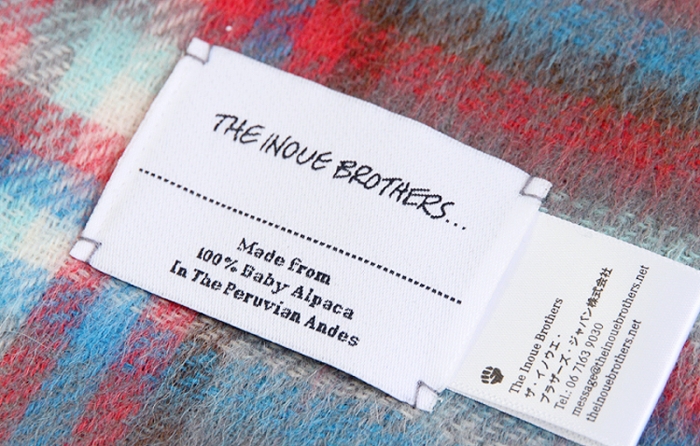
Creating products with the best materials.
"There are two ways to evaluate animal hair fibers: one is touch, or hand feel.
The other is the fineness of the fiber. The finer it is, the higher the quality. This fineness is measured in microns, at a scale of one-thousandth of a millimeter. The top quality in the world, including cashmere, is generally around 16 to 19 microns. In alpaca, this is what is called royal alpaca, which is the top quality. However, royal alpaca is too scarce to be used by brands that mass-produce.
Our slogan is, 'Style cannot be mass-produced.' Coolness cannot be mass-produced, so we use royal alpaca and baby alpaca extensively. We are almost the only brand making products from royal alpaca.
We are definitely providing the world's highest quality, the world's best alpaca. I believe there are no products made from such good alpaca anywhere in the world.
Moreover, thanks to direct trade, we can introduce these wonderful products at the most appropriate and best prices, which is a characteristic of our INOUE BROTHERS products."
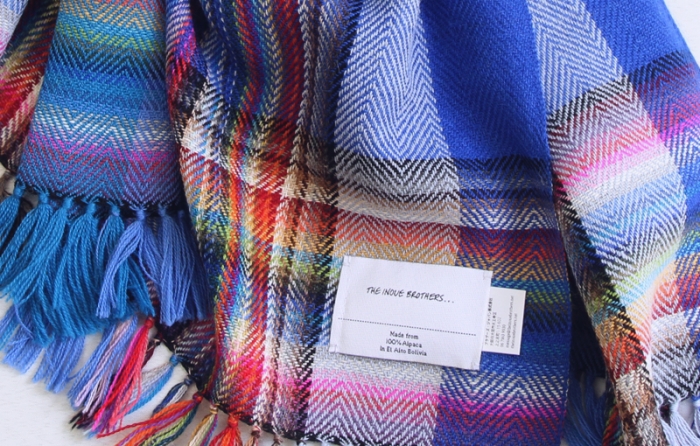
Baby alpaca is the most suitable for daily wear.
"As we gradually created products, we began to understand which alpaca is best based on the knitting method.
Of course, the best touch is royal alpaca. But for everyday wear, baby alpaca is really good. It's a bit sturdier than royal alpaca, so it's fine for daily wear.
The formation of pilling is measured on a scale from 1 to 5, with regular cashmere being around 2. The smaller the number, the softer it is, and thus it pills more easily. So it's natural that it pills quickly when worn. The royal alpaca we use is around 4, so it takes quite a bit of wear before it pills. Compared to cashmere, it has the same softness but is twice as sturdy and pills less easily.
Baby alpaca is the second softest after royal, with a rating of 4 to 5. Therefore, this product is very resistant to pilling, which is impressive. It's a quality used even when working in Peru and Bolivia. Indigenous people also use it to carry items in beautifully woven blankets made from this material."
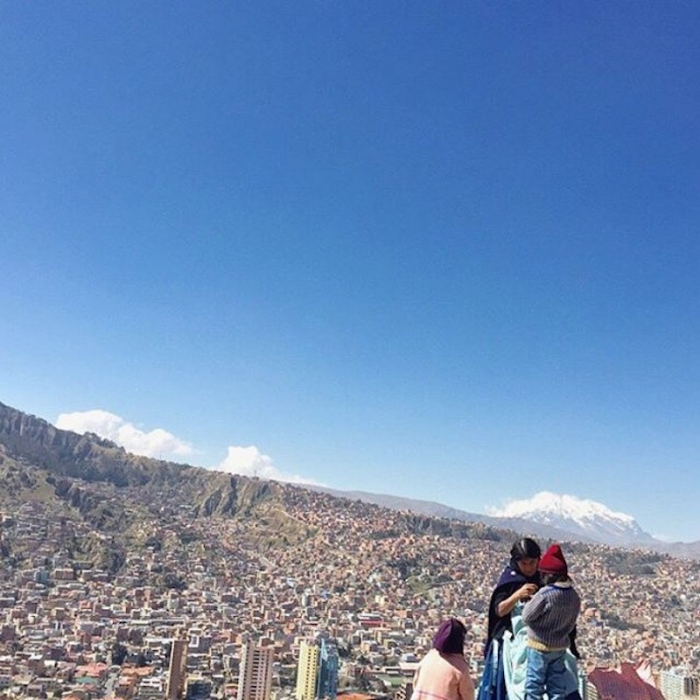
The power of natural materials.
"The amazing thing about alpaca as a material is that it comes from animals living at altitudes over 4000 meters, which means the fibers have air spaces within them.
In the Andes, mornings are usually around minus 10 to 15 degrees. It snows and is very cold. But during the day, it can rise to plus 5 to 10 degrees. So, regardless of the season, they have to live in an environment where the temperature changes by 20 to 25 degrees throughout the day.
Therefore, alpaca wool has natural functionality, providing thermal effects. It keeps you warm when it's cold, but when you suddenly enter a hot environment, it allows your body temperature to escape. That is the characteristic of alpaca."
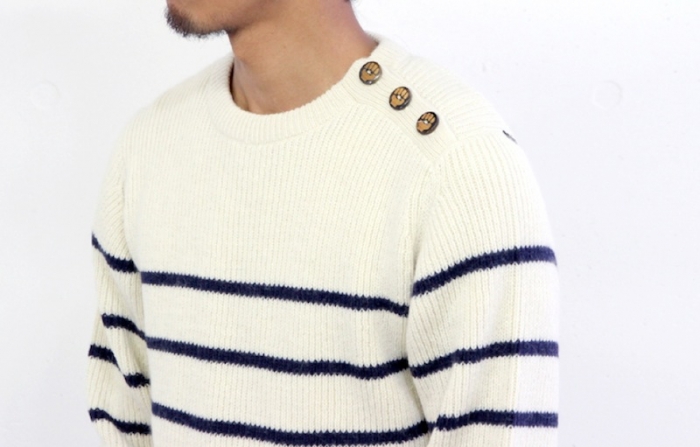
Everything is made from natural materials.
"Nowadays, in fashion, there are various materials ranging from natural to high-tech.
We truly want everyone to know about natural things and the power of nature, so we use only natural materials for everything, including buttons and trimmings.
The leather trimmings and horn buttons serve as reinforcements, and they are all made from cow horns and skins that are used for food.
Paying attention to such details in our production is part of our brand policy."
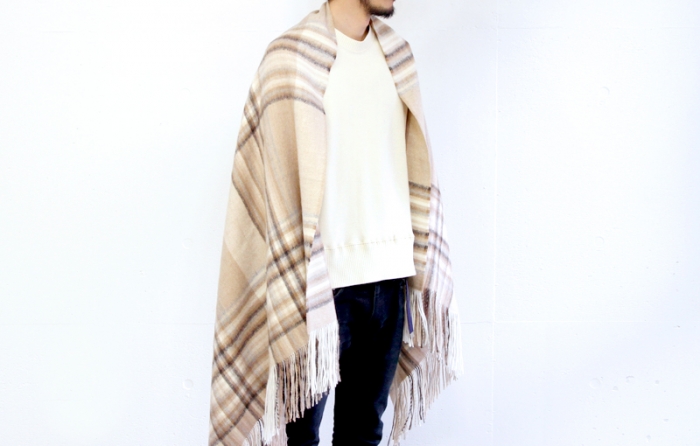
New Luxury.
"From a design perspective, there are two important things we value, which we named ourselves. The first is 'Classic Modern,' modernizing while utilizing classic elements.
The second is 'New Luxury,' which means that true luxury cannot exist unless everyone involved is happy.
We want farmers and those who sew to receive fair profits, and while our products may be a bit more expensive due to their high quality, we eliminate all unnecessary costs and only pay for the quality itself. That is what I believe true luxury is.
Diamonds and gold can sometimes be associated with exploitation and suffering. Black diamonds, for instance, can be a cause of civil wars.
Such things should never be called luxury, and that is what we believe."
The most important project.
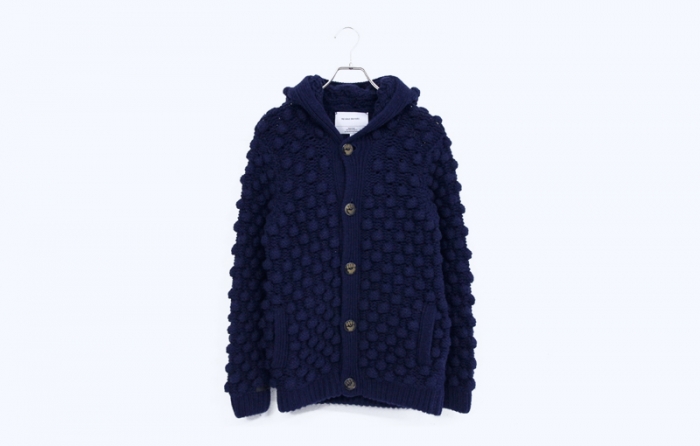
"We have been working on this hand-knitting project from the beginning, and it is a special project. This item is different from others; everything is hand-knitted.
Women specializing in hand-knitting who live in the Andes are often fired from factories when they become pregnant. They don't want to pay salaries during pregnancy, and once the child is born, many situations make it difficult for them to work properly, so they are quickly taken off the job.
Among the women who have been fired, many have excellent hand-knitting skills but no jobs available... We met a network that brings together such women.
There is a system that allows women to do hand-knitting work at home, enabling them to take care of their children and manage household tasks while knitting when they have time and receive a salary. It’s a wonderful project.
We call our project 'Professional Mother,' and thanks to this project, mothers who have struggled the most can now find work.
This is the most important project for us, but since we are committed to making it by hand and with royal alpaca, the price inevitably becomes higher. Therefore, it is only a small part of the entire collection, but for those who are knitting this, it is a very important project, and we want to continue it little by little."
How was the story from the production site that you don't often get to hear?
The charm of alpaca, which is different from cashmere and silk.
Enjoy the products of 'THE INOUE BROTHERS...' filled with the thoughts of the makers!
(Dice and Dice)
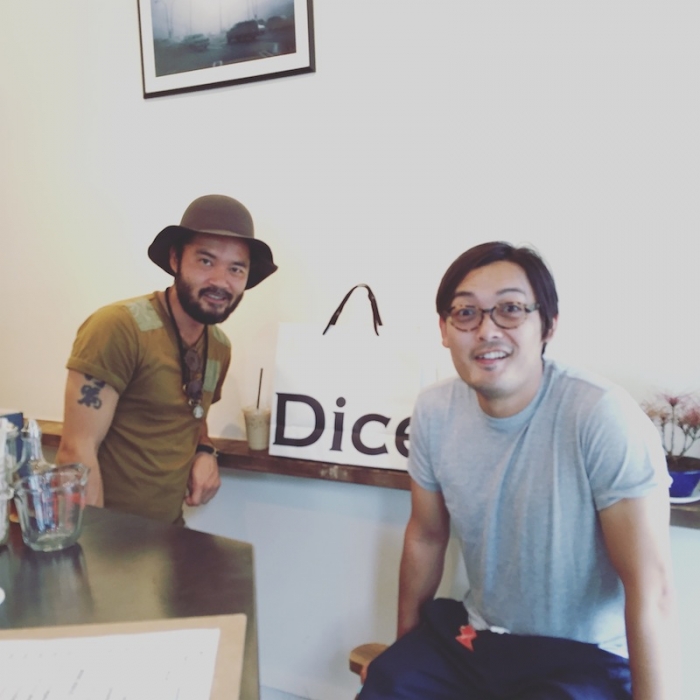
THE INOUE BROTHERS...
(Inoue Brothers)
Satoru Inoue & Kiyoshi Inoue
Satoru was born in 1978, and Kiyoshi in 1980.
Both were born and raised in Copenhagen, Denmark. The designs born from their love for the 'delicacy of Japan' and 'simplicity of Scandinavia,' which are the characteristics of 'The Inoue Brothers,' are called 'Scandinasian' design. Satoru works as a graphic designer based in Copenhagen, while Kiyoshi works as a hair designer based in London. They spend most of their income on the activities of 'The Inoue Brothers.'
Here is the special site featuring recommended products and coordination by our staff.
Here are the products from Inoue Brothers.
In September 2015, the two who came to Dice and Dice Tokyo shared with us about alpaca products born in Bolivia and Peru.
We wanted to convey this in its original form to our customers, so we wrote it down as text.
Please take a look at the wonderful events behind the products.
The method of "direct trade" enriches the lives of producers.
"In Peru, we are making alpaca products for the world's top brands. However, the farmers who live alongside the wonderful animal that provides this amazing material, alpaca, were among the poorest people in South America. Why is that? Because the agents in between mixed all the fibers, bought them by weight, and later sorted them to sell the good parts at high prices while selling the bad parts at slightly lower prices, pocketing the profits that arose in between. So in a way, they were exploiting the farmers...
The 'direct trade' we adopted eliminates all intermediaries, cuts out all the profits and costs involved, and establishes a direct relationship with the farmers to buy the fibers. Next, we take that directly to the production site for manufacturing.
We directly conveyed to the farmers through seminars how to shear the fibers, the differences in quality, and price differences. As a result, the farmers started selling us the best alpaca.
This year marks the 9th year of our dealings, and thanks to that trust, the farmers' profits have increased, and we can obtain wonderful alpaca. Moreover, since we can eliminate all unnecessary costs, we can offer products to our customers at a fair price. This is the best part of direct trade."
Creating products with the best materials.
"There are two ways to evaluate animal hair fibers: one is touch, or hand feel.
The other is the fineness of the fiber. The finer it is, the higher the quality. This fineness is measured in microns, at a scale of one-thousandth of a millimeter. The top quality in the world, including cashmere, is generally around 16 to 19 microns. In alpaca, this is what is called royal alpaca, which is the top quality. However, royal alpaca is too scarce to be used by brands that mass-produce.
Our slogan is, 'Style cannot be mass-produced.' Coolness cannot be mass-produced, so we use royal alpaca and baby alpaca extensively. We are almost the only brand making products from royal alpaca.
We are definitely providing the world's highest quality, the world's best alpaca. I believe there are no products made from such good alpaca anywhere in the world.
Moreover, thanks to direct trade, we can introduce these wonderful products at the most appropriate and best prices, which is a characteristic of our INOUE BROTHERS products."
Baby alpaca is the most suitable for daily wear.
"As we gradually created products, we began to understand which alpaca is best based on the knitting method.
Of course, the best touch is royal alpaca. But for everyday wear, baby alpaca is really good. It's a bit sturdier than royal alpaca, so it's fine for daily wear.
The formation of pilling is measured on a scale from 1 to 5, with regular cashmere being around 2. The smaller the number, the softer it is, and thus it pills more easily. So it's natural that it pills quickly when worn. The royal alpaca we use is around 4, so it takes quite a bit of wear before it pills. Compared to cashmere, it has the same softness but is twice as sturdy and pills less easily.
Baby alpaca is the second softest after royal, with a rating of 4 to 5. Therefore, this product is very resistant to pilling, which is impressive. It's a quality used even when working in Peru and Bolivia. Indigenous people also use it to carry items in beautifully woven blankets made from this material."
The power of natural materials.
"The amazing thing about alpaca as a material is that it comes from animals living at altitudes over 4000 meters, which means the fibers have air spaces within them.
In the Andes, mornings are usually around minus 10 to 15 degrees. It snows and is very cold. But during the day, it can rise to plus 5 to 10 degrees. So, regardless of the season, they have to live in an environment where the temperature changes by 20 to 25 degrees throughout the day.
Therefore, alpaca wool has natural functionality, providing thermal effects. It keeps you warm when it's cold, but when you suddenly enter a hot environment, it allows your body temperature to escape. That is the characteristic of alpaca."
Everything is made from natural materials.
"Nowadays, in fashion, there are various materials ranging from natural to high-tech.
We truly want everyone to know about natural things and the power of nature, so we use only natural materials for everything, including buttons and trimmings.
The leather trimmings and horn buttons serve as reinforcements, and they are all made from cow horns and skins that are used for food.
Paying attention to such details in our production is part of our brand policy."
New Luxury.
"From a design perspective, there are two important things we value, which we named ourselves. The first is 'Classic Modern,' modernizing while utilizing classic elements.
The second is 'New Luxury,' which means that true luxury cannot exist unless everyone involved is happy.
We want farmers and those who sew to receive fair profits, and while our products may be a bit more expensive due to their high quality, we eliminate all unnecessary costs and only pay for the quality itself. That is what I believe true luxury is.
Diamonds and gold can sometimes be associated with exploitation and suffering. Black diamonds, for instance, can be a cause of civil wars.
Such things should never be called luxury, and that is what we believe."
The most important project.
"We have been working on this hand-knitting project from the beginning, and it is a special project. This item is different from others; everything is hand-knitted.
Women specializing in hand-knitting who live in the Andes are often fired from factories when they become pregnant. They don't want to pay salaries during pregnancy, and once the child is born, many situations make it difficult for them to work properly, so they are quickly taken off the job.
Among the women who have been fired, many have excellent hand-knitting skills but no jobs available... We met a network that brings together such women.
There is a system that allows women to do hand-knitting work at home, enabling them to take care of their children and manage household tasks while knitting when they have time and receive a salary. It’s a wonderful project.
We call our project 'Professional Mother,' and thanks to this project, mothers who have struggled the most can now find work.
This is the most important project for us, but since we are committed to making it by hand and with royal alpaca, the price inevitably becomes higher. Therefore, it is only a small part of the entire collection, but for those who are knitting this, it is a very important project, and we want to continue it little by little."
How was the story from the production site that you don't often get to hear?
The charm of alpaca, which is different from cashmere and silk.
Enjoy the products of 'THE INOUE BROTHERS...' filled with the thoughts of the makers!
(Dice and Dice)
THE INOUE BROTHERS...
(Inoue Brothers)
Satoru Inoue & Kiyoshi Inoue
Satoru was born in 1978, and Kiyoshi in 1980.
Both were born and raised in Copenhagen, Denmark. The designs born from their love for the 'delicacy of Japan' and 'simplicity of Scandinavia,' which are the characteristics of 'The Inoue Brothers,' are called 'Scandinasian' design. Satoru works as a graphic designer based in Copenhagen, while Kiyoshi works as a hair designer based in London. They spend most of their income on the activities of 'The Inoue Brothers.'
Here is the special site featuring recommended products and coordination by our staff.
Here are the products from Inoue Brothers.