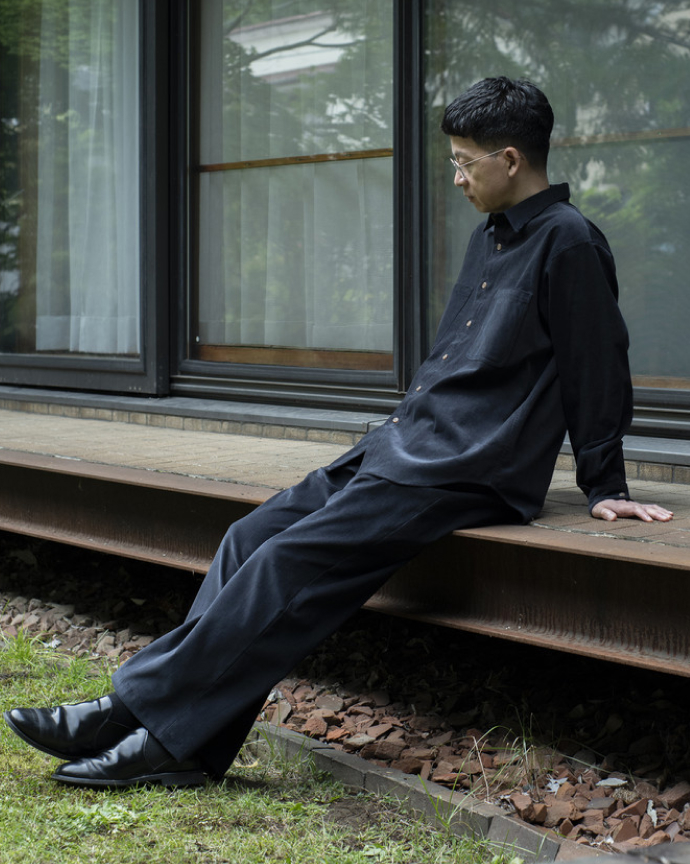







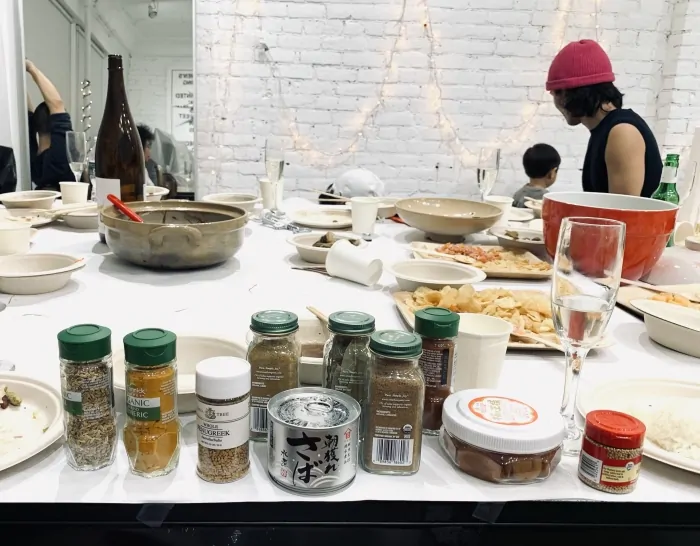
It was at the end of 2022 when I was invited by Takahiro Daimaru from OVERCOAT to the Christmas party of oomaru seisakusho 2. It was an intimate gathering mainly with employees, and as entertainment, there was a gift exchange in the form of "Secret Santa," and I was lucky enough to receive a gift from Mr. Daimaru himself! The contents of the heavy paper bag were a variety of spice jars, and it turned out to be all the ingredients for "Mackerel Curry." I spoke with Mr. Daimaru, who mentioned he has recently been into cooking.
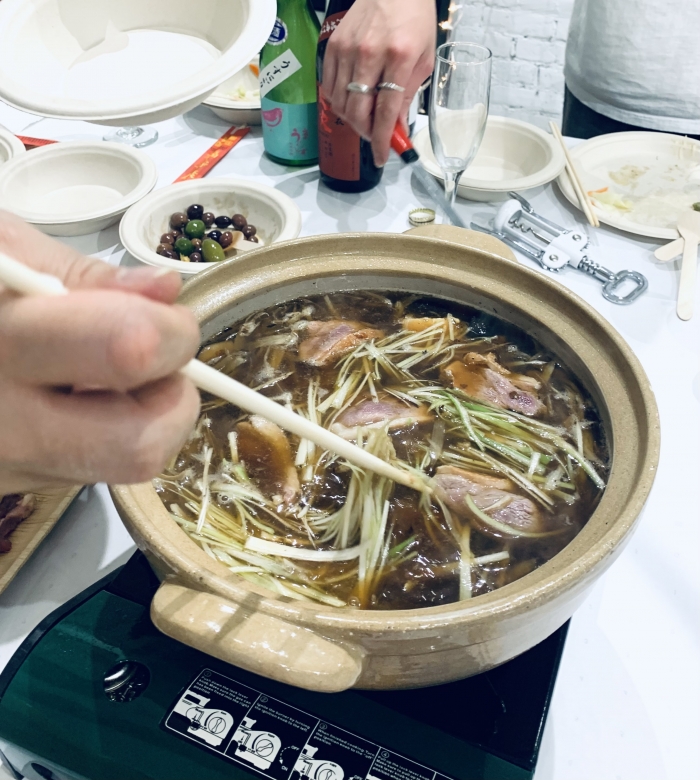
Akiko Ichikawa (hereafter A): Even though I received it, I haven't made the mackerel curry yet. The recipe seems quite difficult for me based on what I've read... The ingredients are listed in very precise grams, which surprised me (laughs). When I cook, I usually just eyeball the oil (苦笑).
Takahiro Daimaru (hereafter O): It's not that difficult. A tablespoon is 15g. You put in just under 5 tablespoons of oil, add mustard seeds, and temper them...
A: What does tempering mean?
O: It's about transferring the aroma of the mustard seeds into the oil. It's a common term when making spice curry... Curry in India is like miso soup, something you eat every day. There are various flavors depending on the region, and in South India, they use seafood, so there are curries that use mackerel as well. The key is how to remove the fishy smell from the mackerel. You soak it in sake and vinegar, but if you soak it too long, it becomes shime-saba, so just for exactly 5 minutes.
A: Have you been cooking for a long time?
O: Maybe for about the last two years. In New York, eating out can often be overpriced compared to the taste, so I thought I could make it better myself. I started with green tea, then coffee, and after that, white rice. Soaking rice in water for 20-30 minutes versus a whole day makes a huge difference in taste. Even rice you can buy in America can be delicious if soaked longer.
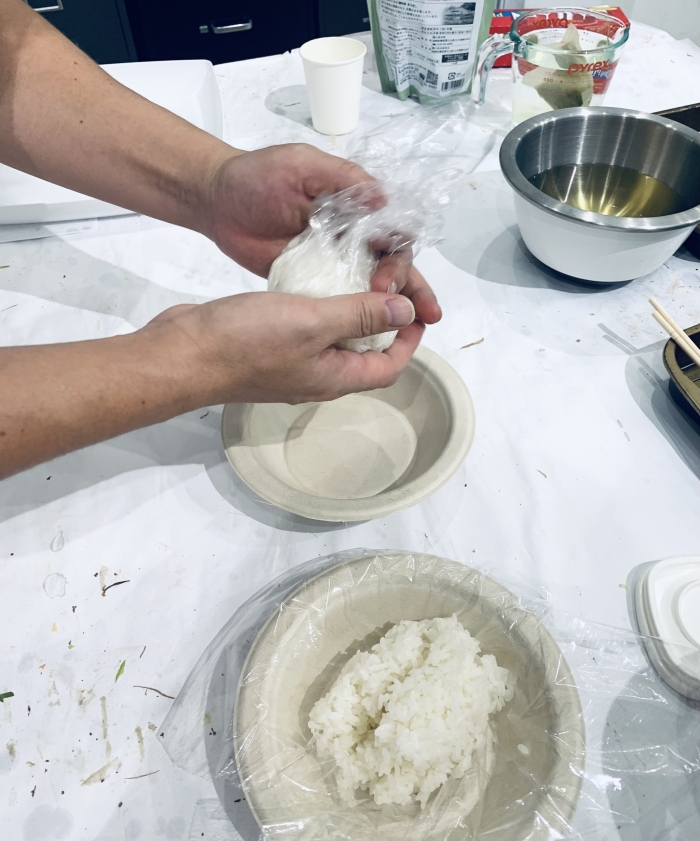
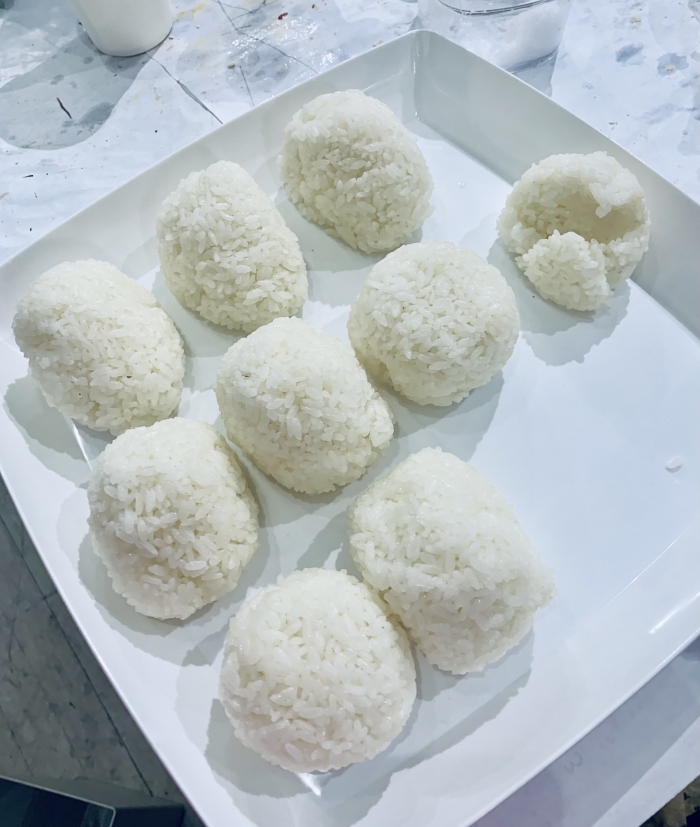
A: At the recent Christmas party, I learned how to make onigiri. It was really delicious!
O: I think onigiri should not be squeezed too tightly; it should fall apart in your mouth when you eat it. I think sushi is similar. I might be saying this in a pretentious way, and I could be wrong (laughs).
A: No, no, Mr. Daimaru's cooking is delicious. I believe the way you cook and perceive cooking is free.
A: It's nice that you can share delicious food with your family as the final product.
O: The busier you are, the more valuable that time becomes. It's like a routine to center yourself. In the morning, I play shogi for about 30 minutes. I play online, and then I also review the game afterwards. You have to think seriously in shogi, or you'll lose, so that time of concentration is pleasant. It might be similar to meditating in the morning.
A: Your day is rich. Even if you're busy, you still have some leeway.
O: Whether it's cooking or shogi, I create time to concentrate consciously. I might enjoy routine-izing it. In making clothes too, as I work diligently every day, originality gradually emerges. In the professional world, that is important, and ultimately, you need originality. For me, cooking and shogi are still at a level like meditation, and I don't have that originality yet.
There are many aspects to perfect in professional fields, like the meaning of curry spices or various strategies in shogi. The recent match between Yoshiharu Habu and Sota Fujii was incredible. Habu's strategy was unbelievably cool. In terms of clothing, it was unprecedented, like putting the sleeves on the right and left sides in reverse.

A: For example, in shogi, you move the pieces towards the goal of winning, but does playing shogi every day train a business mindset aimed at winning?
O: Both shogi and business are about the opponent, right? Shogi is also a psychological battle, and the logical process of advancing is important. The way pieces move on a 9x9 board has astronomical possibilities, yet there are limits. I feel that the way of thinking about how to be creative within those constraints is applicable to business as well.
A: What about cooking?
O: My idea in cooking is about adding umeboshi as a secret ingredient in curry. I think a professional's job is to exceed expectations, so I still have a long way to go in cooking (laughs).
Akiko Ichikawa (hereafter A): Even though I received it, I haven't made the mackerel curry yet. The recipe seems quite difficult for me based on what I've read... The ingredients are listed in very precise grams, which surprised me (laughs). When I cook, I usually just eyeball the oil (苦笑).
Takahiro Daimaru (hereafter O): It's not that difficult. A tablespoon is 15g. You put in just under 5 tablespoons of oil, add mustard seeds, and temper them...
A: What does tempering mean?
O: It's about transferring the aroma of the mustard seeds into the oil. It's a common term when making spice curry... Curry in India is like miso soup, something you eat every day. There are various flavors depending on the region, and in South India, they use seafood, so there are curries that use mackerel as well. The key is how to remove the fishy smell from the mackerel. You soak it in sake and vinegar, but if you soak it too long, it becomes shime-saba, so just for exactly 5 minutes.
A: Have you been cooking for a long time?
O: Maybe for about the last two years. In New York, eating out can often be overpriced compared to the taste, so I thought I could make it better myself. I started with green tea, then coffee, and after that, white rice. Soaking rice in water for 20-30 minutes versus a whole day makes a huge difference in taste. Even rice you can buy in America can be delicious if soaked longer.
A: At the recent Christmas party, I learned how to make onigiri. It was really delicious!
O: I think onigiri should not be squeezed too tightly; it should fall apart in your mouth when you eat it. I think sushi is similar. I might be saying this in a pretentious way, and I could be wrong (laughs).
A: No, no, Mr. Daimaru's cooking is delicious. I believe the way you cook and perceive cooking is free.
The busier you are, the more important it is to have a routine to center yourself.
O: Cooking requires concentration. If I'm going to do it, I want to do it seriously, not half-heartedly. I usually spend over an hour making dinner, and during that time, my mind resets.A: It's nice that you can share delicious food with your family as the final product.
O: The busier you are, the more valuable that time becomes. It's like a routine to center yourself. In the morning, I play shogi for about 30 minutes. I play online, and then I also review the game afterwards. You have to think seriously in shogi, or you'll lose, so that time of concentration is pleasant. It might be similar to meditating in the morning.
A: Your day is rich. Even if you're busy, you still have some leeway.
O: Whether it's cooking or shogi, I create time to concentrate consciously. I might enjoy routine-izing it. In making clothes too, as I work diligently every day, originality gradually emerges. In the professional world, that is important, and ultimately, you need originality. For me, cooking and shogi are still at a level like meditation, and I don't have that originality yet.
There are many aspects to perfect in professional fields, like the meaning of curry spices or various strategies in shogi. The recent match between Yoshiharu Habu and Sota Fujii was incredible. Habu's strategy was unbelievably cool. In terms of clothing, it was unprecedented, like putting the sleeves on the right and left sides in reverse.
A: For example, in shogi, you move the pieces towards the goal of winning, but does playing shogi every day train a business mindset aimed at winning?
O: Both shogi and business are about the opponent, right? Shogi is also a psychological battle, and the logical process of advancing is important. The way pieces move on a 9x9 board has astronomical possibilities, yet there are limits. I feel that the way of thinking about how to be creative within those constraints is applicable to business as well.
A: What about cooking?
O: My idea in cooking is about adding umeboshi as a secret ingredient in curry. I think a professional's job is to exceed expectations, so I still have a long way to go in cooking (laughs).