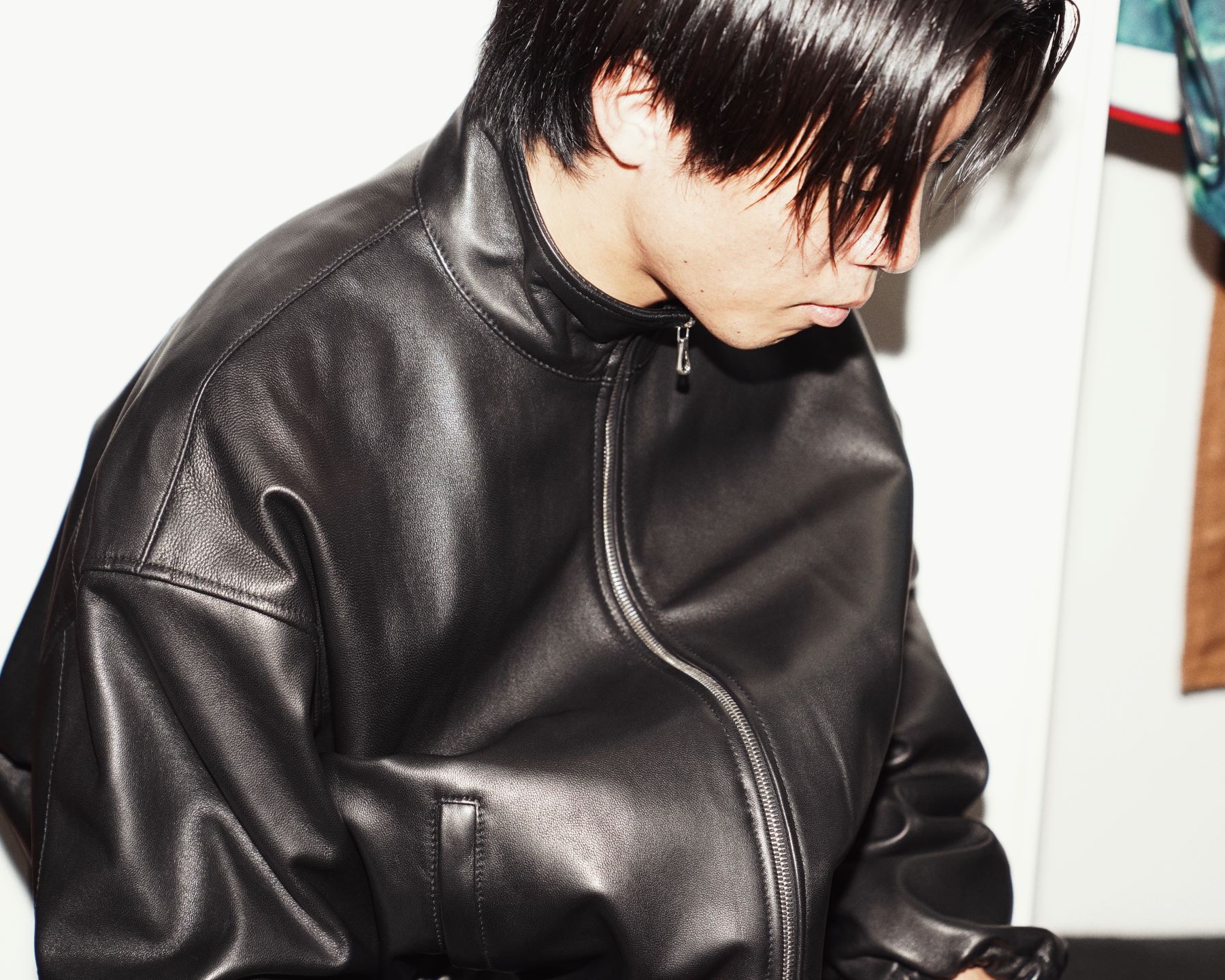


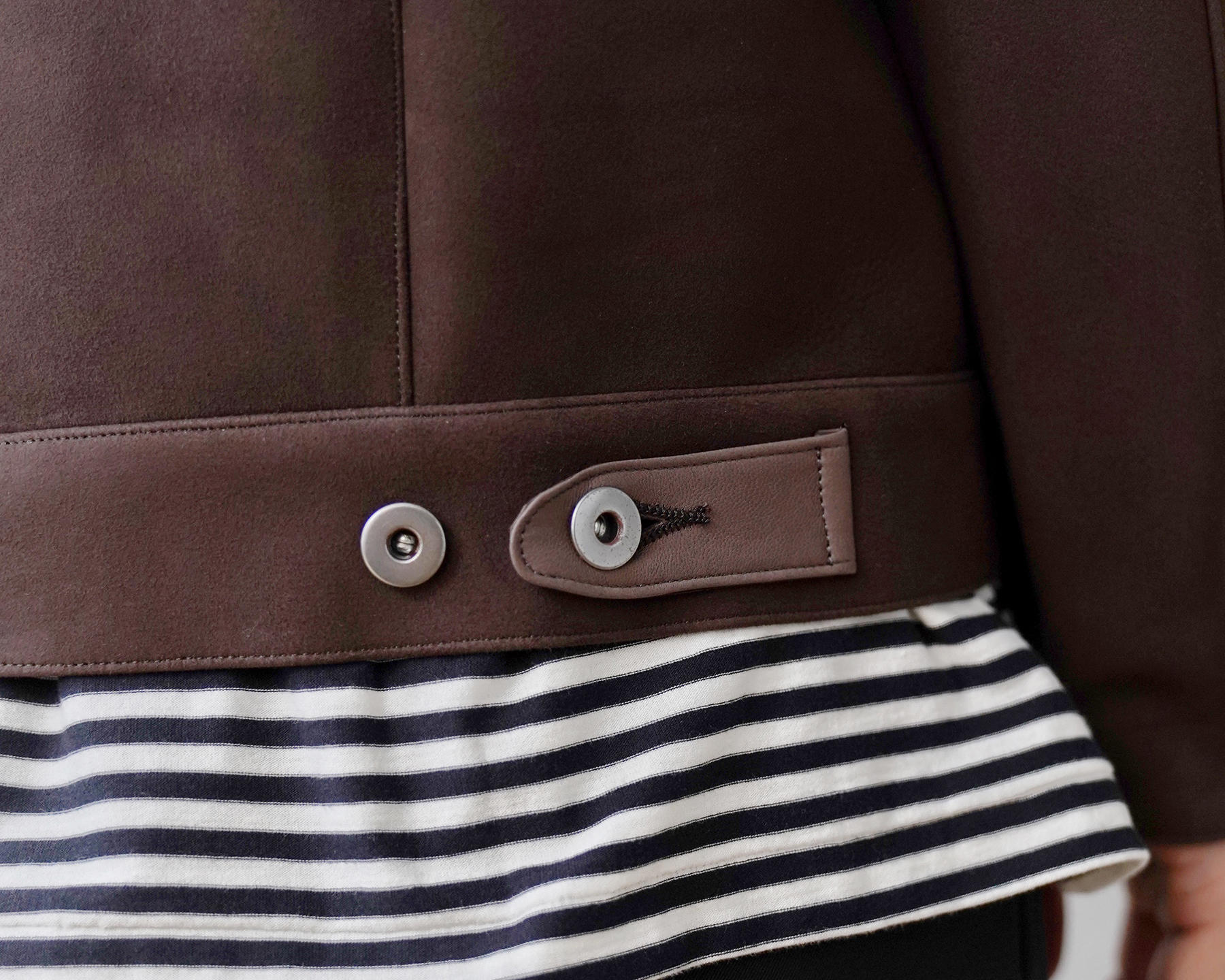


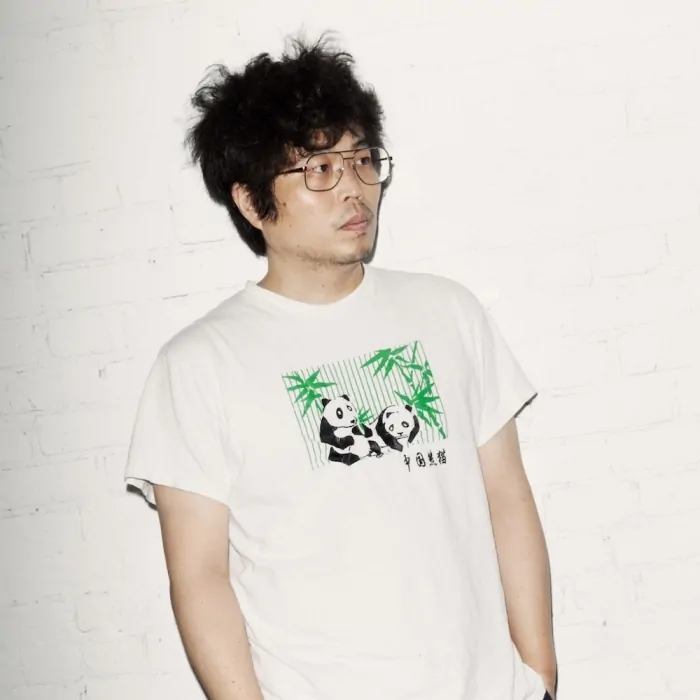
The designer of the New York-based brand OVERCOAT, Takahiro Daimaru, hails from Fukuoka. For this reason, Dice&Dice has always regarded Daimaru as a kind of relative or older brother in New York. Although we haven't been able to meet our 'older brother' much due to the pandemic, this time, under the invitation of director Yuichi Yoshida, Fukuoka and New York connected online. Akiko Ichikawa, who supports buying in New York, served as the moderator, hosting a digital roundtable discussion with Daimaru. We will deliver valuable stories from his time in Fukuoka, the core of his creations, and behind-the-scenes tales of the Dice&Dice exclusive eco-bag production in two parts: Part One and Part Two.
Part Two is here
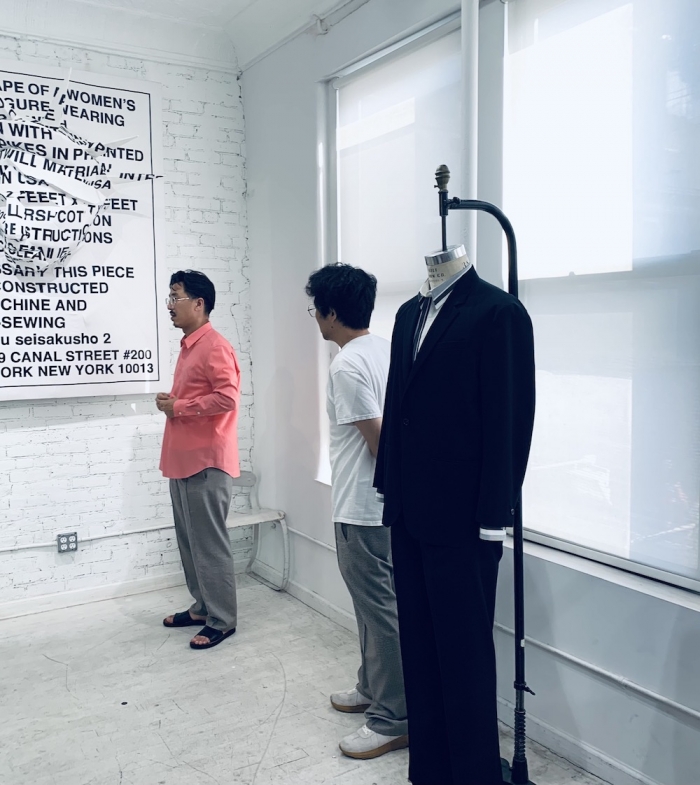
Ichikawa Akiko (A): Yoshida-san, do you remember the first time you visited the company where Daimaru-san was working to see the OVERCOAT collection, oomaru seisakusho 2? The office is on the second floor of a walk-up building in a mixed area of Canal Street in Chinatown, New York.
Yoshida Yuichi (Y): I've been on business trips to New York for many years, but I don't think I've ever been so shocked. I had heard from Akiko-san that there was an amazing designer in New York, and I understood that he was working with high-end brands that Dice didn't handle, but when I actually saw the products in front of me, the patterns were just incredible. My first impression when I tried it on was, "Wow, what is this amazing piece of clothing!"
A: The way the collection is presented is unique, too. When you enter the office, there’s a large ping-pong table that serves as the negotiation table. Both Daimaru-san and his partner in both business and private life, Sayuri Nagasawa, always provide service together. The performance of two people, who are completely different in gender, body type, and size, wearing the same size and design coat and showing how perfectly it fits their bodies is almost like magic.
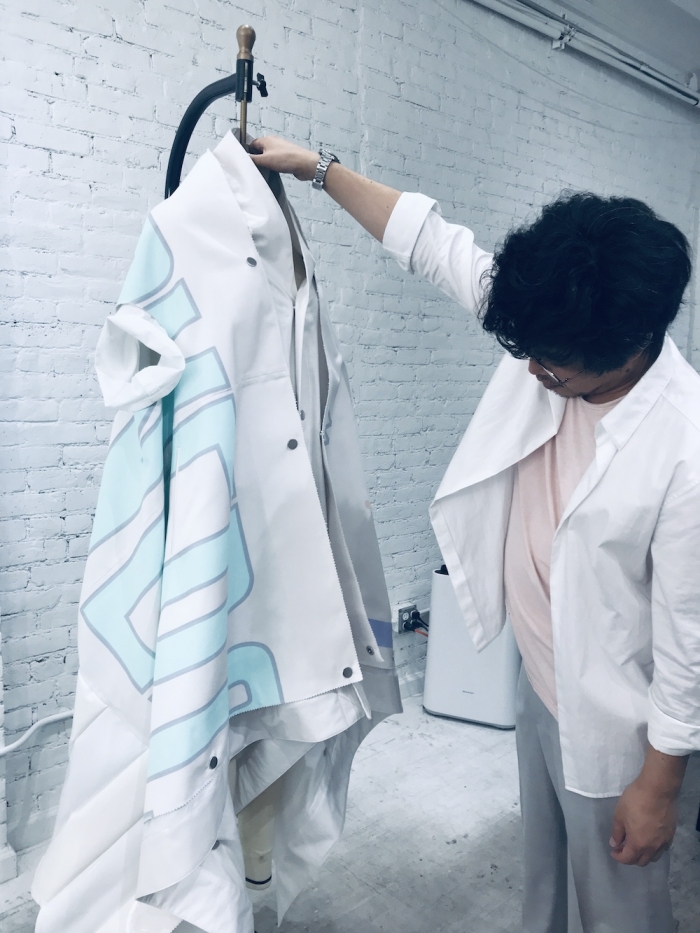
In the back of the room, there are drafting tables and sewing machines lined up, and the staff are quietly working surrounded by rolls of fabric and various materials. The freshly made coats created in such an atelier hanging on the rack always excites me with an overwhelming sense of presence.
Daimaru Takahiro (O): Speaking of Dice&Dice, it’s a legendary select shop that has been around since the 1980s, so as someone from Fukuoka, I have admired it since I started making clothes. I don’t remember what I bought, but I saved up little by little and often went to DICE, so I was really happy when someone from such a store approached me to see OVERCOAT.
A: What was it like when Daimaru-san awakened to fashion during his time in Fukuoka?
O: I probably started finding fashion interesting around the age of 16. At that time, I went to Dice and also saw the first store of United Arrows open. The vintage clothing scene was at its peak with the American casual boom, and then something like neo-punk emerged.
Y: What kind of outfits were you wearing back then, Daimaru-san?
O: I was wearing a pink military jacket. It was difficult to create clothes from scratch, so I would take apart and modify vintage clothing. Since I didn’t have much money, I bought cheap military items and once, I used several bottles of a very strong bleach, like the kind mothers use, and soaked a jacket in a bucket to see what would happen. It turned a bit pink, which I found very interesting. I even painted on top of that.
Although I entered a preparatory school, I didn’t want to follow that path, so I dropped out. During a period of wandering, I started thinking I wanted to make clothes. The reasons were vague; I think it was simply that I wanted to be popular or wear something different from others. One day, I went to Kinokuniya, bought a book, and started making clothes when I was 16. I still have it at my company; it was a book on men's clothing from Bunka Fashion College.
A: So it was a specialized book from the start.
O: At that time, there was no internet, so I didn’t even know about Bunka Fashion College. I didn’t know where to study, so I started self-taught. I didn’t even recognize it as fashion design, and my family was strongly opposed to it.
O: Although I started on my own, I wasn’t able to create well and had many questions, so I began to think I needed to study. A vintage shop I was friendly with told me, "There’s a sewing class nearby." I think she was in her 60s at the time, and she was a wonderful woman named Sugino who taught sewing to local people in a lovely house built by her late architect husband. The other students were all housewives, and it felt more like learning sewing than fashion design, but from the moment I met Ms. Sugino, she warmly welcomed me with, "Welcome!" At that time, I had a red-dyed bald head, a pink military jacket, and tight paisley pants I made myself, wearing traditional Japanese footwear.
A: If a young boy dressed like that suddenly came to your house, it would normally be surprising. But she welcomed you kindly.
O: Yes, she was really a good person. She was so kind that she would even serve tea and towels to the delivery person. At that time, I felt like I couldn’t go home much, so I sometimes had dinner there. While attending once a week and learning various basics, I was told there was a school called Bunka Fashion College in Tokyo.
A: So it was Ms. Sugino who paved the way for you to enter the fashion world.
O: Without a doubt, she was my first mentor. Looking back, I think I’ve lived my life almost exactly as she taught me. Going to Bunka Fashion College later and even when I graduated, I initially thought I would independently start my own brand, but she told me, "You should definitely get a job somewhere." At that time, I was really crazy and said, "I’m not interested in that," but she insisted, "At least apply to one company." So I did.
A: That was the company of that famous designer you worked for in Japan. It’s amazing that you only applied to that one company.
O: I hadn’t gone to school much, so I was disliked by the teachers, and my grades were bad, so I thought there was no way I would pass. Still, I sent my resume and portfolio, and for some reason, I gradually started passing. The selection process usually takes about a year, and I reported to my teacher by phone every time I passed the first and second selections.
A: About how many people apply, and how many are hired?
O: I think probably thousands apply. I believe the hiring quota for the design department is 1-2 people each year. I ended up making it to the final interview with 3 or 4 people and had a meeting with the designer himself. That night, I thought, "This is the end..." and called Ms. Sugino to report. Then, for some reason, she said to me, "Congratulations." I said, "It’s too early for congratulations; I haven’t passed yet," and she replied, "No, today is truly a celebration. For me, whether you pass or fail doesn’t matter; until now, you haven’t been able to continue anything, but this time you finally managed to see it through to the end, and that makes me happiest of all."
I thought I would hear back within 1-2 weeks after the final interview, but even after 2 months, there was no news, so I thought I must have failed. I figured she would be worried, so I thought I would just report to her, and one day I called. She lived alone, but for some reason, her son, who should have been in Kyoto, answered and said, "Mother can’t come to the phone right now." I hung up for a moment, but about 10 minutes later, I received a call back, and her son informed me, "Actually, my mother passed away from cancer."
Hearing that, I cried for the first time in my life. I had no idea she was sick, and I panicked when the teacher I had been talking to normally until two months ago suddenly disappeared. I thought I had to return to Fukuoka quickly, so I bought a plane ticket, which was expensive for me at the time, and rushed to the funeral. When I arrived, everyone, including relatives and doctors, knew about me.
Y: She must have talked about you to everyone.
O: That’s right. Everyone I met said, "So you’re Daimaru-kun." It was strange that at a funeral for someone I only knew, everyone else knew me. They all said, "She talked about you like you were her son." About a month after the funeral, I received the acceptance notice. I regret that she passed away without knowing about it.
A: But perhaps she had a premonition that you would pass. I think it was a truly happy moment for her to be able to say "Congratulations" to you for your hard work before she passed away.
O: Yes, in that sense, I learned that it’s important to sincerely face things and continue. The fashion industry can be tricky, and I think there are parts where this method wouldn’t work if you simply wanted to make money. However, I think the reason I am still drawn to this industry and continue to create is partly because of that last phone call where she praised me.
O: After that, I successfully got a job and was immersed in creating collections in the busiest department of the company. I really didn’t have any time off, to the point where I couldn’t even visit my teacher’s grave. After leaving the company, I was finally able to go.
My teacher’s grave is located on Omishima in the Seto Inland Sea, and there’s a beautiful cycling route called the Shimanami Kaido, so I decided to go by bike since I had the time. I bought a mama-chari bicycle for about 7900 yen at a supermarket called Life. Then I went straight down Route 246 and entered Route 1 from Gotemba...
A: That’s amazing, biking from Tokyo to visit your teacher’s grave! How many days did it take to arrive?
O: On a mama-chari, going slowly, I could cover about 70 km a day, and if I really pushed myself, I could go about 120 km. I think it’s about 1000 km to Omishima, so it probably took me 10 days to 2 weeks. That’s just a rough estimate. After that, when I stopped by my parents' house in Fukuoka, they were really shocked.
A: They must have been surprised to see their son coming home by bike! (laughs)
O: I thought they would be surprised because I was super tanned and looked really dark. When I suddenly appeared on my bike, my parents happened to be watering the garden, and they didn’t recognize me at all and gave me a very deep bow! (laughs)
Y&A: (laughs)
Y: That bike has another story afterward, right?
O: Yes. That bike happened to have a security registration number of 0729. I’m not that romantic, but my birthday is July 29, isn’t that amazing? So, I thought about throwing it away many times, but I had an attachment to it. After visiting the grave, I ended up returning to my apartment in Tokyo, and from there, things took a sudden turn, and I ended up going to NY, but I left the bike in the apartment's bicycle parking.
Later, I got caught up in various troubles, like not being able to get a visa, and in the meantime, I forgot about the bike. However, about a year ago, I happened to pass near my old apartment and thought, "I wonder what happened to that bike?" So I went to check, and it was still there in the bicycle parking.
Y: You asked me to check if it was still there if I happened to be near Tokyo, right? (laughs)
A: How many years was it left there?
O: About 15 years, I think. But it’s amazing; usually, bikes would be flattened or fallen over, right? But it was none of that.
A: It was like it had just been parked there?
O: Yes. It was dusty, but it was still a very eager bike. I finally brought it back about a year ago. Now, it’s at the entrance of the Tokyo office, but it’s so worn out that I hope someone will repair it.
A: You should definitely keep it. If there’s ever an exhibition for OVERCOAT in the future, it should be displayed!
Part Two is here
Check out OVERCOAT products here
Details of the event here
Takahiro Daimaru
Born in Fukuoka Prefecture. After graduating from Bunka Fashion College, he worked as a pattern maker for Japan's leading maison brands. In 2006, he was scouted by a certain New York brand and moved to the U.S. In 2008, he established the design planning company "oomaru seisakusho 2" in Manhattan, New York. The name comes from the furniture factory run by his family, and it was founded with the philosophy of creating a new status in fashion based on manufacturing. The staff is entirely Japanese, continuously promoting the creativity and quality of MADE IN JAPAN to the world. He currently provides planning design, pattern making, and sample sewing services to many creators. He started the brand "OVERCOAT" in the autumn/winter season of 2015. In 2016, he established "Daimaru Seisakusho 3" in Jingumae, Tokyo.
(Awards, etc.)
2014 2nd CFDA FASHION MANUFACTURING INITIATIVE
2015 33rd Mainichi Fashion Awards, consecutively awarded the Amiko Kujiraoka Prize.
OVERCOAT
OVERCOAT is based on the concept of "Wearing New York" and was started by designer Takahiro Daimaru. Initially, it was a unisex brand focused solely on coats under the name THE GREATEST OVERCOATS PROJECT by oomaru seisakusho 2. After several seasons, it has now expanded to produce total looks including jackets, pants, shirts, and scarves. At "oomaru seisakusho 2" in New York, custom orders are available by appointment. The pattern features innovative shoulder lines. While it is ready-to-wear, it creates a beautiful silhouette that fits the wearer like haute couture. It proposes borderless designs that do not discriminate by size, gender, or age. The materials are developed in collaboration with manufacturers that boast the highest quality in the world, and they continually propose updated items by reproducing old uniforms and military clothing or applying unique post-processing.
Akiko Ichikawa
Based in New York, she handles branding and consulting in the fields of fashion, design, and art. She has been reviewing New York collections for over 20 years and is also involved in editing and writing for newspapers and magazines.
Yuichi Yoshida
Director of Dice&Dice. He started working part-time at 19. He is the longest-serving staff member with over 20 years of service, and his activities range from product planning with brands to shop direction and event curation.
Part Two is here
Trying on a magical patterned coat in a chaotic Chinatown atelier.
Ichikawa Akiko (A): Yoshida-san, do you remember the first time you visited the company where Daimaru-san was working to see the OVERCOAT collection, oomaru seisakusho 2? The office is on the second floor of a walk-up building in a mixed area of Canal Street in Chinatown, New York.
Yoshida Yuichi (Y): I've been on business trips to New York for many years, but I don't think I've ever been so shocked. I had heard from Akiko-san that there was an amazing designer in New York, and I understood that he was working with high-end brands that Dice didn't handle, but when I actually saw the products in front of me, the patterns were just incredible. My first impression when I tried it on was, "Wow, what is this amazing piece of clothing!"
A: The way the collection is presented is unique, too. When you enter the office, there’s a large ping-pong table that serves as the negotiation table. Both Daimaru-san and his partner in both business and private life, Sayuri Nagasawa, always provide service together. The performance of two people, who are completely different in gender, body type, and size, wearing the same size and design coat and showing how perfectly it fits their bodies is almost like magic.
In the back of the room, there are drafting tables and sewing machines lined up, and the staff are quietly working surrounded by rolls of fabric and various materials. The freshly made coats created in such an atelier hanging on the rack always excites me with an overwhelming sense of presence.
Daimaru Takahiro (O): Speaking of Dice&Dice, it’s a legendary select shop that has been around since the 1980s, so as someone from Fukuoka, I have admired it since I started making clothes. I don’t remember what I bought, but I saved up little by little and often went to DICE, so I was really happy when someone from such a store approached me to see OVERCOAT.
Takahiro Daimaru, 16 years old. Awakening to fashion in Fukuoka.
A: What was it like when Daimaru-san awakened to fashion during his time in Fukuoka?
O: I probably started finding fashion interesting around the age of 16. At that time, I went to Dice and also saw the first store of United Arrows open. The vintage clothing scene was at its peak with the American casual boom, and then something like neo-punk emerged.
Y: What kind of outfits were you wearing back then, Daimaru-san?
O: I was wearing a pink military jacket. It was difficult to create clothes from scratch, so I would take apart and modify vintage clothing. Since I didn’t have much money, I bought cheap military items and once, I used several bottles of a very strong bleach, like the kind mothers use, and soaked a jacket in a bucket to see what would happen. It turned a bit pink, which I found very interesting. I even painted on top of that.
Although I entered a preparatory school, I didn’t want to follow that path, so I dropped out. During a period of wandering, I started thinking I wanted to make clothes. The reasons were vague; I think it was simply that I wanted to be popular or wear something different from others. One day, I went to Kinokuniya, bought a book, and started making clothes when I was 16. I still have it at my company; it was a book on men's clothing from Bunka Fashion College.
A: So it was a specialized book from the start.
O: At that time, there was no internet, so I didn’t even know about Bunka Fashion College. I didn’t know where to study, so I started self-taught. I didn’t even recognize it as fashion design, and my family was strongly opposed to it.
Meeting my life mentor, Ms. Sugino.
O: Although I started on my own, I wasn’t able to create well and had many questions, so I began to think I needed to study. A vintage shop I was friendly with told me, "There’s a sewing class nearby." I think she was in her 60s at the time, and she was a wonderful woman named Sugino who taught sewing to local people in a lovely house built by her late architect husband. The other students were all housewives, and it felt more like learning sewing than fashion design, but from the moment I met Ms. Sugino, she warmly welcomed me with, "Welcome!" At that time, I had a red-dyed bald head, a pink military jacket, and tight paisley pants I made myself, wearing traditional Japanese footwear.
A: If a young boy dressed like that suddenly came to your house, it would normally be surprising. But she welcomed you kindly.
O: Yes, she was really a good person. She was so kind that she would even serve tea and towels to the delivery person. At that time, I felt like I couldn’t go home much, so I sometimes had dinner there. While attending once a week and learning various basics, I was told there was a school called Bunka Fashion College in Tokyo.
A: So it was Ms. Sugino who paved the way for you to enter the fashion world.
O: Without a doubt, she was my first mentor. Looking back, I think I’ve lived my life almost exactly as she taught me. Going to Bunka Fashion College later and even when I graduated, I initially thought I would independently start my own brand, but she told me, "You should definitely get a job somewhere." At that time, I was really crazy and said, "I’m not interested in that," but she insisted, "At least apply to one company." So I did.
A: That was the company of that famous designer you worked for in Japan. It’s amazing that you only applied to that one company.
O: I hadn’t gone to school much, so I was disliked by the teachers, and my grades were bad, so I thought there was no way I would pass. Still, I sent my resume and portfolio, and for some reason, I gradually started passing. The selection process usually takes about a year, and I reported to my teacher by phone every time I passed the first and second selections.
The meaning of "Congratulations" I received right after the final interview.
A: About how many people apply, and how many are hired?
O: I think probably thousands apply. I believe the hiring quota for the design department is 1-2 people each year. I ended up making it to the final interview with 3 or 4 people and had a meeting with the designer himself. That night, I thought, "This is the end..." and called Ms. Sugino to report. Then, for some reason, she said to me, "Congratulations." I said, "It’s too early for congratulations; I haven’t passed yet," and she replied, "No, today is truly a celebration. For me, whether you pass or fail doesn’t matter; until now, you haven’t been able to continue anything, but this time you finally managed to see it through to the end, and that makes me happiest of all."
I thought I would hear back within 1-2 weeks after the final interview, but even after 2 months, there was no news, so I thought I must have failed. I figured she would be worried, so I thought I would just report to her, and one day I called. She lived alone, but for some reason, her son, who should have been in Kyoto, answered and said, "Mother can’t come to the phone right now." I hung up for a moment, but about 10 minutes later, I received a call back, and her son informed me, "Actually, my mother passed away from cancer."
Hearing that, I cried for the first time in my life. I had no idea she was sick, and I panicked when the teacher I had been talking to normally until two months ago suddenly disappeared. I thought I had to return to Fukuoka quickly, so I bought a plane ticket, which was expensive for me at the time, and rushed to the funeral. When I arrived, everyone, including relatives and doctors, knew about me.
Y: She must have talked about you to everyone.
O: That’s right. Everyone I met said, "So you’re Daimaru-kun." It was strange that at a funeral for someone I only knew, everyone else knew me. They all said, "She talked about you like you were her son." About a month after the funeral, I received the acceptance notice. I regret that she passed away without knowing about it.
A: But perhaps she had a premonition that you would pass. I think it was a truly happy moment for her to be able to say "Congratulations" to you for your hard work before she passed away.
O: Yes, in that sense, I learned that it’s important to sincerely face things and continue. The fashion industry can be tricky, and I think there are parts where this method wouldn’t work if you simply wanted to make money. However, I think the reason I am still drawn to this industry and continue to create is partly because of that last phone call where she praised me.
Crossing Japan by bicycle, going along the Shimanami Kaido.
O: After that, I successfully got a job and was immersed in creating collections in the busiest department of the company. I really didn’t have any time off, to the point where I couldn’t even visit my teacher’s grave. After leaving the company, I was finally able to go.
My teacher’s grave is located on Omishima in the Seto Inland Sea, and there’s a beautiful cycling route called the Shimanami Kaido, so I decided to go by bike since I had the time. I bought a mama-chari bicycle for about 7900 yen at a supermarket called Life. Then I went straight down Route 246 and entered Route 1 from Gotemba...
A: That’s amazing, biking from Tokyo to visit your teacher’s grave! How many days did it take to arrive?
O: On a mama-chari, going slowly, I could cover about 70 km a day, and if I really pushed myself, I could go about 120 km. I think it’s about 1000 km to Omishima, so it probably took me 10 days to 2 weeks. That’s just a rough estimate. After that, when I stopped by my parents' house in Fukuoka, they were really shocked.
A: They must have been surprised to see their son coming home by bike! (laughs)
O: I thought they would be surprised because I was super tanned and looked really dark. When I suddenly appeared on my bike, my parents happened to be watering the garden, and they didn’t recognize me at all and gave me a very deep bow! (laughs)
Y&A: (laughs)
Y: That bike has another story afterward, right?
O: Yes. That bike happened to have a security registration number of 0729. I’m not that romantic, but my birthday is July 29, isn’t that amazing? So, I thought about throwing it away many times, but I had an attachment to it. After visiting the grave, I ended up returning to my apartment in Tokyo, and from there, things took a sudden turn, and I ended up going to NY, but I left the bike in the apartment's bicycle parking.
Later, I got caught up in various troubles, like not being able to get a visa, and in the meantime, I forgot about the bike. However, about a year ago, I happened to pass near my old apartment and thought, "I wonder what happened to that bike?" So I went to check, and it was still there in the bicycle parking.
Y: You asked me to check if it was still there if I happened to be near Tokyo, right? (laughs)
A: How many years was it left there?
O: About 15 years, I think. But it’s amazing; usually, bikes would be flattened or fallen over, right? But it was none of that.
A: It was like it had just been parked there?
O: Yes. It was dusty, but it was still a very eager bike. I finally brought it back about a year ago. Now, it’s at the entrance of the Tokyo office, but it’s so worn out that I hope someone will repair it.
A: You should definitely keep it. If there’s ever an exhibition for OVERCOAT in the future, it should be displayed!
Part Two is here
Check out OVERCOAT products here
Details of the event here
Takahiro Daimaru
Born in Fukuoka Prefecture. After graduating from Bunka Fashion College, he worked as a pattern maker for Japan's leading maison brands. In 2006, he was scouted by a certain New York brand and moved to the U.S. In 2008, he established the design planning company "oomaru seisakusho 2" in Manhattan, New York. The name comes from the furniture factory run by his family, and it was founded with the philosophy of creating a new status in fashion based on manufacturing. The staff is entirely Japanese, continuously promoting the creativity and quality of MADE IN JAPAN to the world. He currently provides planning design, pattern making, and sample sewing services to many creators. He started the brand "OVERCOAT" in the autumn/winter season of 2015. In 2016, he established "Daimaru Seisakusho 3" in Jingumae, Tokyo.
(Awards, etc.)
2014 2nd CFDA FASHION MANUFACTURING INITIATIVE
2015 33rd Mainichi Fashion Awards, consecutively awarded the Amiko Kujiraoka Prize.
OVERCOAT
OVERCOAT is based on the concept of "Wearing New York" and was started by designer Takahiro Daimaru. Initially, it was a unisex brand focused solely on coats under the name THE GREATEST OVERCOATS PROJECT by oomaru seisakusho 2. After several seasons, it has now expanded to produce total looks including jackets, pants, shirts, and scarves. At "oomaru seisakusho 2" in New York, custom orders are available by appointment. The pattern features innovative shoulder lines. While it is ready-to-wear, it creates a beautiful silhouette that fits the wearer like haute couture. It proposes borderless designs that do not discriminate by size, gender, or age. The materials are developed in collaboration with manufacturers that boast the highest quality in the world, and they continually propose updated items by reproducing old uniforms and military clothing or applying unique post-processing.
Akiko Ichikawa
Based in New York, she handles branding and consulting in the fields of fashion, design, and art. She has been reviewing New York collections for over 20 years and is also involved in editing and writing for newspapers and magazines.
Yuichi Yoshida
Director of Dice&Dice. He started working part-time at 19. He is the longest-serving staff member with over 20 years of service, and his activities range from product planning with brands to shop direction and event curation.