
【Read Part 1】
The general guideline for something being considered old is about 100 years, I suppose.
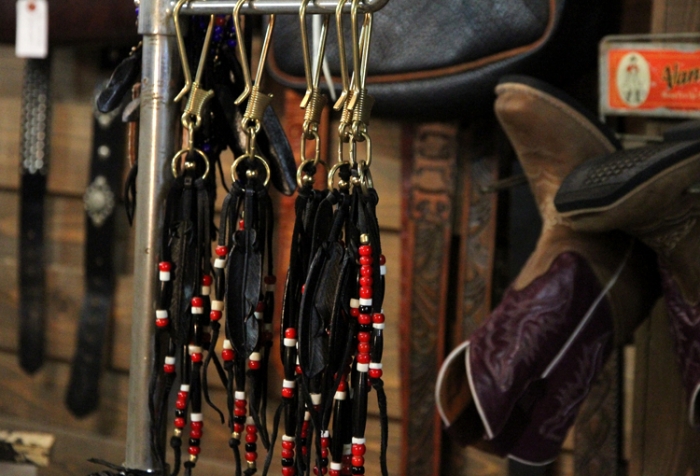
- Returning to the topic of the pieces, are the beads used also old ones?
Matsuzaki: The white ones are old. The white ones are beads from over 100 years ago, about 200 years ago. The red and blue ones are what are called White Hearts, which are not quite 100 years old, but they are relatively old beads. The general guideline for something being considered old is about 100 years, I suppose, for those kinds of things.
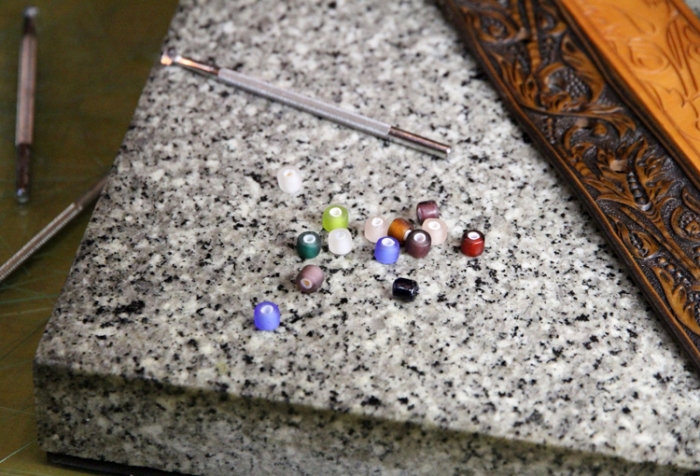
- Are new parts like beads not used?
Matsuzaki: No, if there are new beads that I like, I can use them without any problem. I just haven't found anything that I thought was good enough to use. Recently, I finally found some beads that I'm interested in. They are a bit cute, made in India, and while they are not that old, I'm thinking of using them next time.
- Is there something you've made so far that holds special meaning for you?
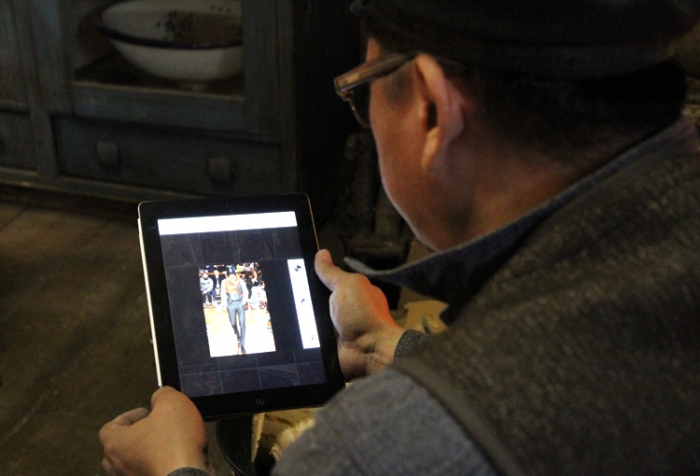
Matsuzaki: Something with memories... well, I can't think of anything right off the bat, so maybe not. If I had to say, it would probably be that saddleback. The one used in the N.Hoolywood runway in NY.
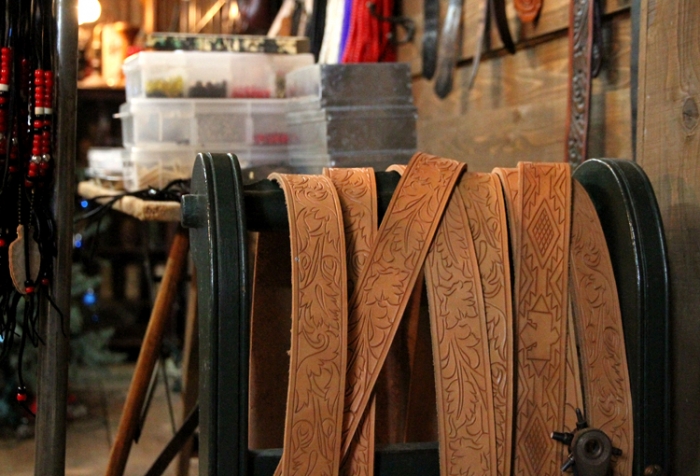
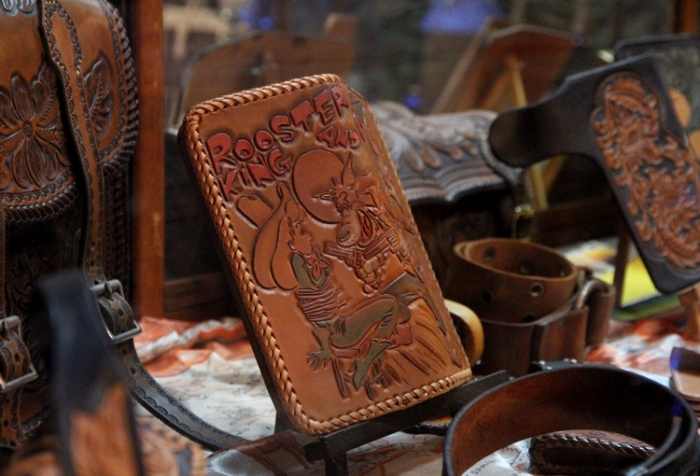
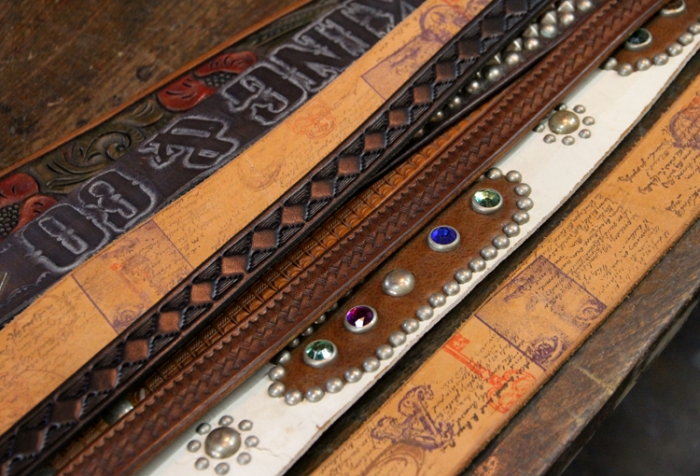
I also made these cuffs and belts around here. The bags there too.
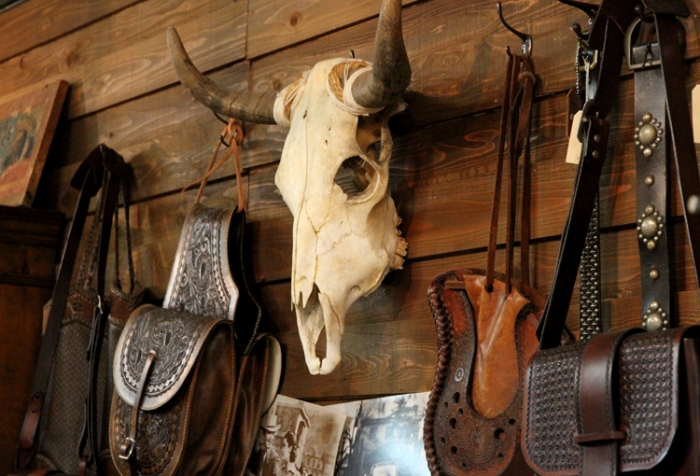
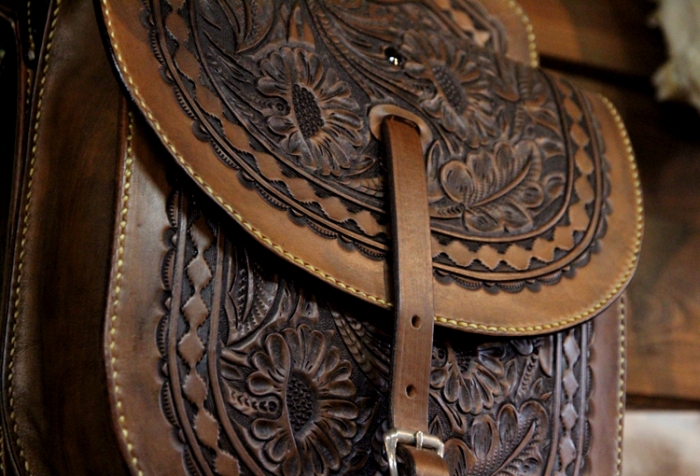
Well, it's tough, but I do it because I love it. If I didn't like it, I couldn't do it. (laughs)
- What happens to the parts that have been carved and turned black?
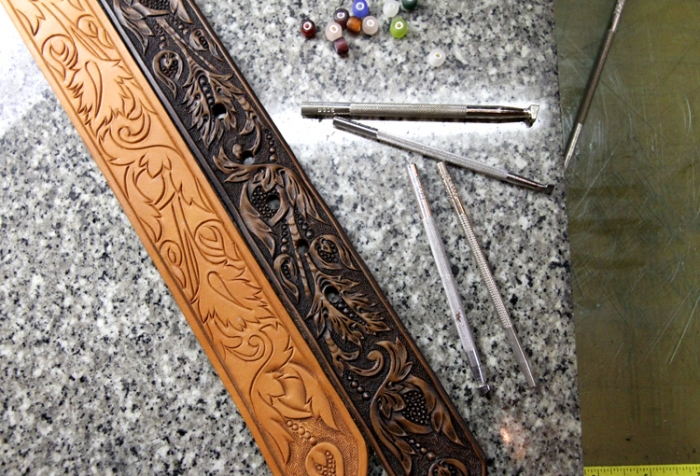
Matsuzaki: This is because color is added, so the color settles into the recessed parts and becomes darker.
Shall I show you a bit? For this, I use a knife called a swivel knife to draw lines where I've painted. This part is the knife, and I carve with it, but I wet it with a sponge like this, and when I carve, it turns out like this. It's a painstaking process, you know.
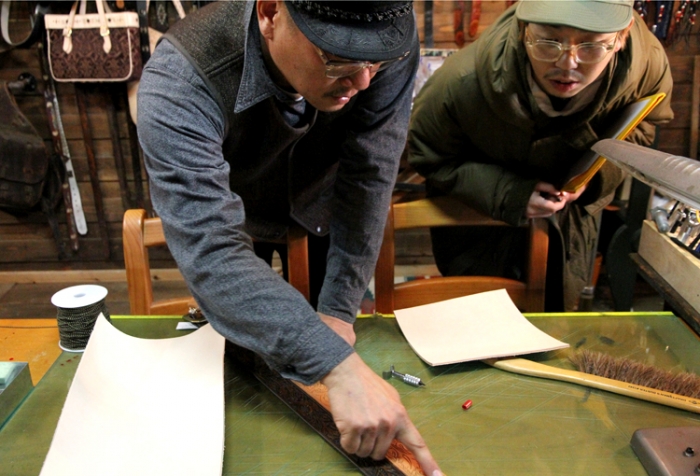
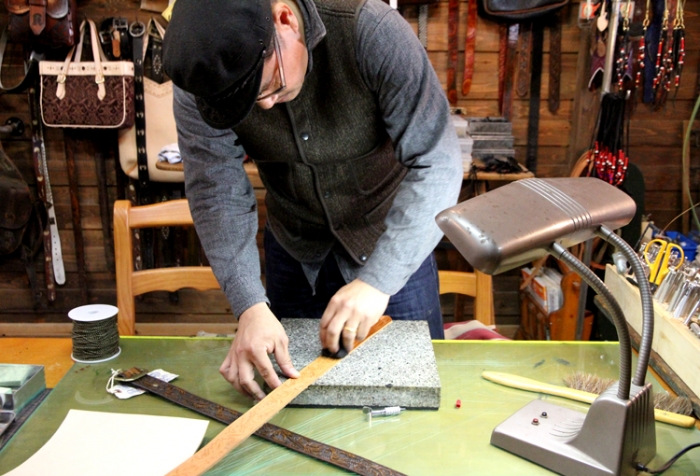
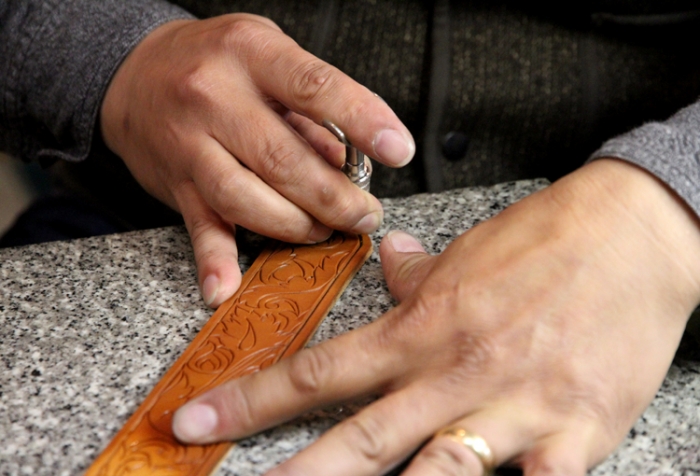
For this part, I carve deeply, and then I crush the recessed areas with this tiny tool, like this. I crush everything like this. It's a silly job, right? I keep doing this while varying the pressure. Then, it gives a sense of three-dimensionality. You can see why each piece is expensive, right? (laughs). I keep doing this endlessly. So, do you understand why I say it's one of a kind? It can only be made once. It makes you lose your mind while doing it, probably. When I do it, I work for about 12 hours a day. I have to make sure not to keep the customers waiting. If I make a mistake once, it becomes unusable. When I crush it like this, it turns out like this. It's completely different, right? Once I start, I can't stop. Well, it can be done like this.
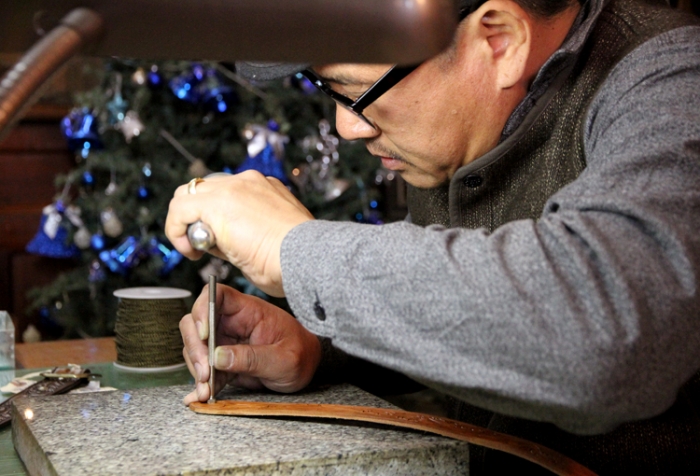
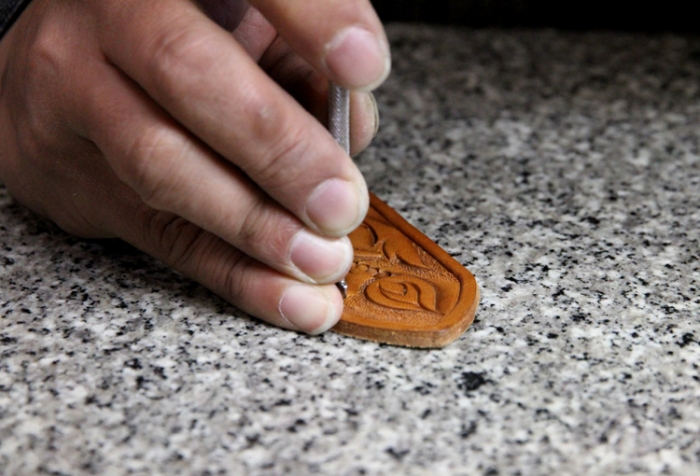
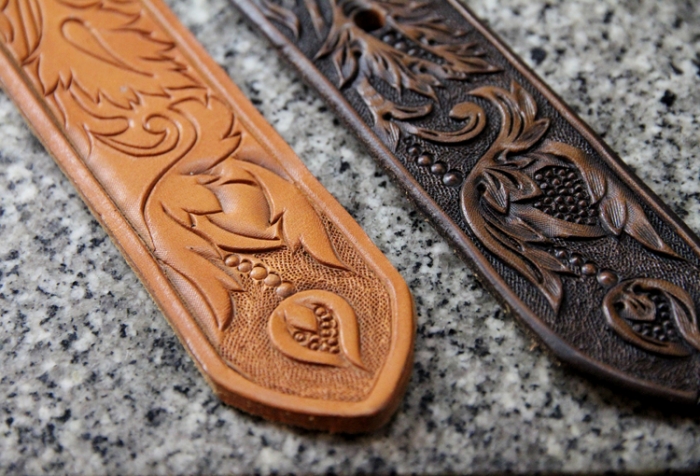
- For example, how long does it take to make this belt through all the processes?
Matsuzaki: For me, it takes about 4 days to make one (belt). Considering work efficiency, I do the process of turning the drawings into lines all at once for several pieces, and when I hit, I concentrate and make them all at once. If I'm quick, I can do it in 3 days. When I get a large order, I sometimes end up with dark circles under my eyes. (laughs). This is basically a concentration of focus. Well, it's tough, but I do it because I love it. If I didn't like it, I couldn't do it. (laughs)
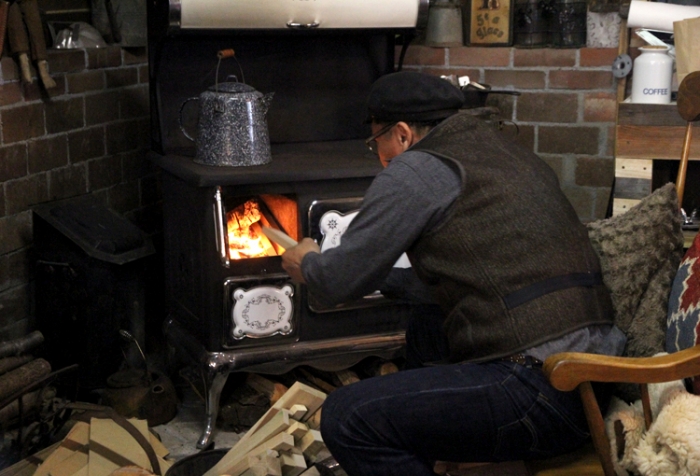
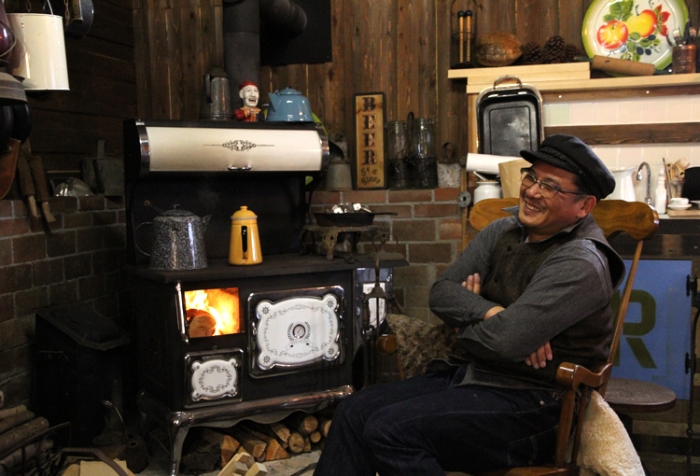
When I feel tired today, in winter, I can just sit by the fireplace and look at the fire to feel calm. I’ve reached the level of an old man, really. (laughs). Watching fire or natural things calms me down.
When I was in America, I used to surf, and I was famous for waiting for waves. (laughs). Even when the waves came, I would just keep waiting. "He's still waiting," they would say. (laughs). I often went there when I was tired. The people there are not aggressive at all. Surfing and work seem to be part of their lifestyle.
Recently, there have been more Japanese artists living abroad. It feels like they are continuously bringing things from there to Japan. Conversely, we need to bring things from here to there. MADE IN JAPAN.
- Do you take on apprentices?
Matsuzaki: No, I don't. I don't have the status for that. There have been many people who have asked me to be their master. But I say, "I don't take apprentices." Sounds cool, right? But honestly, if someone has the motivation, they can do it themselves without needing to be an apprentice. If you have the determination to learn and do it, anyone can do it.
The belt I showed you earlier can be done using techniques that have been around for a long time, so you can learn by watching the old ones. But something like this (wallet) is all about your own sense. So, you have to think about how to make it, how to carve it, and how to add color. You are turning your own drawing into three dimensions. It’s difficult because you have to think about what you like. But that's how you create something original. The Indian pieces I send to Dice are getting a great response, even from other places. They want them. Those are really tough to make.
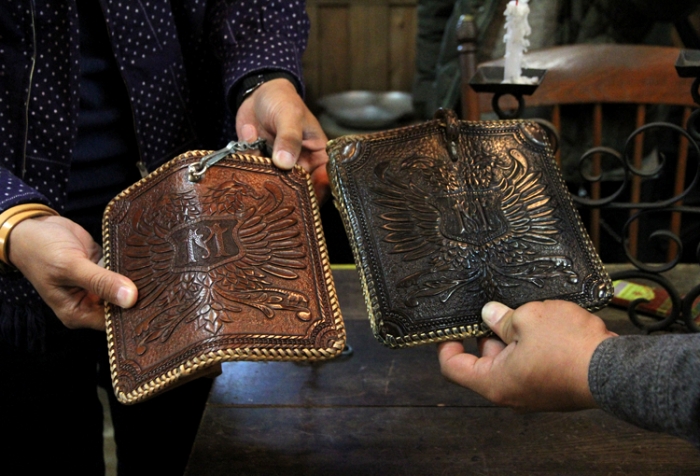
- I also bought the same thing as you, Matsuzaki. It's finally getting a bit softer. (Dice&Dice buyer Yoshida)
Matsuzaki: Wow, it's turning into a nice color! It's the same as mine. Mine is this one, and it's 10 years old. Hahaha. It's worn out, though! The new ones are definitely more elaborate. They all started from the same color and changed like this. Well, mine is worn out, though.
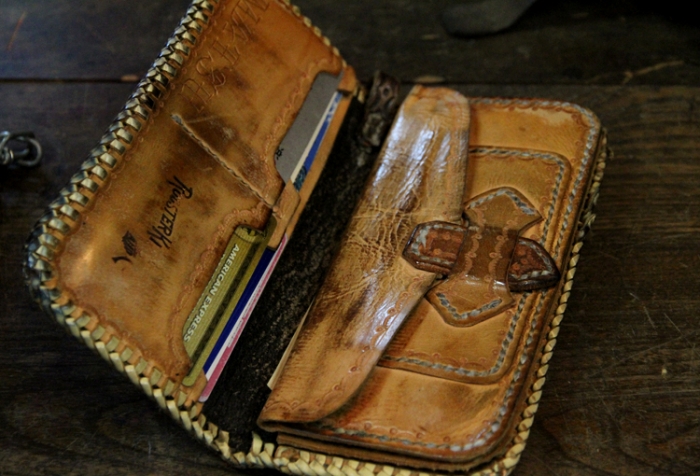
- Do you feel glad that you are doing this job?
Matsuzaki: Yes, I can't imagine doing any other job. I've always liked making things. As for what I might do next, I’m thinking of becoming a potter or something. (laughs). At that time, I might build a kiln next door. I think that would be nice.
I sometimes think that I might be able to do this job because my wife was hospitalized when our little one was born. Well, maybe I can only think that way now.
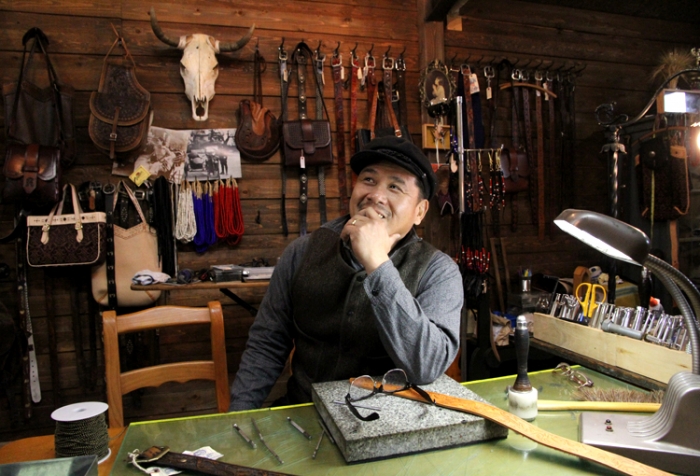
- What future developments are you considering?
Matsuzaki: Well, I think it would be nice if I could continue at this pace. I hope not to aspire too high or look too low. I just want to live a mundane life. I can only create works little by little.
I don't think I can rely on others' hands in the future, and I will probably continue doing it alone. So, I think that's fine, and since I can make a living that way, I feel that way.
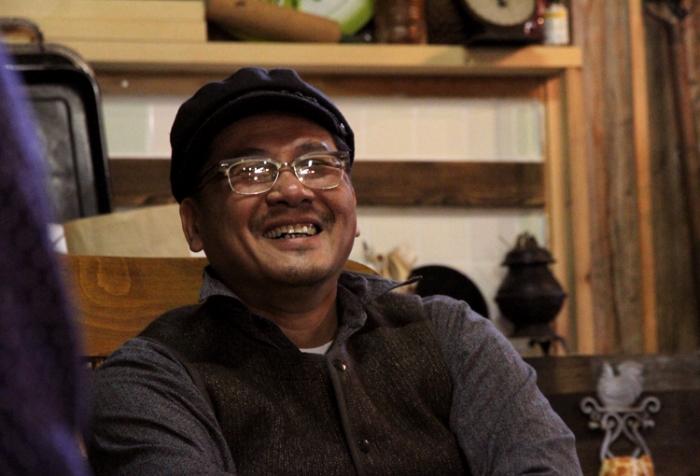
- Postscript to the interview -
As a fan, I was further drawn into the charm of RoosterKing&Co. during this atelier visit.
Please check out the one-of-a-kind pieces created by Matsuzaki at the store or online.
Check out RoosterKing&Co. products here>
【You can view Part 1 here】
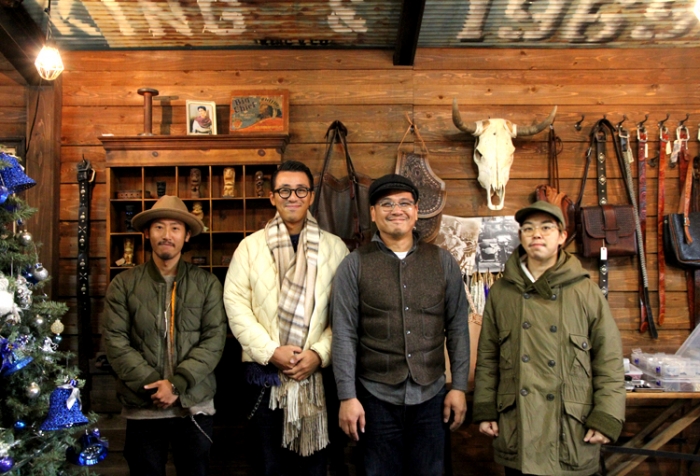
RoosterKing&Co. Matsuzaki Yukio
(Designer of RoosterKing&Co.)
RoosterKing&Co.>
RoosterKing&Co.. instagram>
The general guideline for something being considered old is about 100 years, I suppose.
- Returning to the topic of the pieces, are the beads used also old ones?
Matsuzaki: The white ones are old. The white ones are beads from over 100 years ago, about 200 years ago. The red and blue ones are what are called White Hearts, which are not quite 100 years old, but they are relatively old beads. The general guideline for something being considered old is about 100 years, I suppose, for those kinds of things.
- Are new parts like beads not used?
Matsuzaki: No, if there are new beads that I like, I can use them without any problem. I just haven't found anything that I thought was good enough to use. Recently, I finally found some beads that I'm interested in. They are a bit cute, made in India, and while they are not that old, I'm thinking of using them next time.
- Is there something you've made so far that holds special meaning for you?
Matsuzaki: Something with memories... well, I can't think of anything right off the bat, so maybe not. If I had to say, it would probably be that saddleback. The one used in the N.Hoolywood runway in NY.
I also made these cuffs and belts around here. The bags there too.
Well, it's tough, but I do it because I love it. If I didn't like it, I couldn't do it. (laughs)
- What happens to the parts that have been carved and turned black?
Matsuzaki: This is because color is added, so the color settles into the recessed parts and becomes darker.
Shall I show you a bit? For this, I use a knife called a swivel knife to draw lines where I've painted. This part is the knife, and I carve with it, but I wet it with a sponge like this, and when I carve, it turns out like this. It's a painstaking process, you know.
For this part, I carve deeply, and then I crush the recessed areas with this tiny tool, like this. I crush everything like this. It's a silly job, right? I keep doing this while varying the pressure. Then, it gives a sense of three-dimensionality. You can see why each piece is expensive, right? (laughs). I keep doing this endlessly. So, do you understand why I say it's one of a kind? It can only be made once. It makes you lose your mind while doing it, probably. When I do it, I work for about 12 hours a day. I have to make sure not to keep the customers waiting. If I make a mistake once, it becomes unusable. When I crush it like this, it turns out like this. It's completely different, right? Once I start, I can't stop. Well, it can be done like this.
- For example, how long does it take to make this belt through all the processes?
Matsuzaki: For me, it takes about 4 days to make one (belt). Considering work efficiency, I do the process of turning the drawings into lines all at once for several pieces, and when I hit, I concentrate and make them all at once. If I'm quick, I can do it in 3 days. When I get a large order, I sometimes end up with dark circles under my eyes. (laughs). This is basically a concentration of focus. Well, it's tough, but I do it because I love it. If I didn't like it, I couldn't do it. (laughs)
When I feel tired today, in winter, I can just sit by the fireplace and look at the fire to feel calm. I’ve reached the level of an old man, really. (laughs). Watching fire or natural things calms me down.
When I was in America, I used to surf, and I was famous for waiting for waves. (laughs). Even when the waves came, I would just keep waiting. "He's still waiting," they would say. (laughs). I often went there when I was tired. The people there are not aggressive at all. Surfing and work seem to be part of their lifestyle.
Recently, there have been more Japanese artists living abroad. It feels like they are continuously bringing things from there to Japan. Conversely, we need to bring things from here to there. MADE IN JAPAN.
- Do you take on apprentices?
Matsuzaki: No, I don't. I don't have the status for that. There have been many people who have asked me to be their master. But I say, "I don't take apprentices." Sounds cool, right? But honestly, if someone has the motivation, they can do it themselves without needing to be an apprentice. If you have the determination to learn and do it, anyone can do it.
The belt I showed you earlier can be done using techniques that have been around for a long time, so you can learn by watching the old ones. But something like this (wallet) is all about your own sense. So, you have to think about how to make it, how to carve it, and how to add color. You are turning your own drawing into three dimensions. It’s difficult because you have to think about what you like. But that's how you create something original. The Indian pieces I send to Dice are getting a great response, even from other places. They want them. Those are really tough to make.
- I also bought the same thing as you, Matsuzaki. It's finally getting a bit softer. (Dice&Dice buyer Yoshida)
Matsuzaki: Wow, it's turning into a nice color! It's the same as mine. Mine is this one, and it's 10 years old. Hahaha. It's worn out, though! The new ones are definitely more elaborate. They all started from the same color and changed like this. Well, mine is worn out, though.
- Do you feel glad that you are doing this job?
Matsuzaki: Yes, I can't imagine doing any other job. I've always liked making things. As for what I might do next, I’m thinking of becoming a potter or something. (laughs). At that time, I might build a kiln next door. I think that would be nice.
I sometimes think that I might be able to do this job because my wife was hospitalized when our little one was born. Well, maybe I can only think that way now.
- What future developments are you considering?
Matsuzaki: Well, I think it would be nice if I could continue at this pace. I hope not to aspire too high or look too low. I just want to live a mundane life. I can only create works little by little.
I don't think I can rely on others' hands in the future, and I will probably continue doing it alone. So, I think that's fine, and since I can make a living that way, I feel that way.
- Postscript to the interview -
As a fan, I was further drawn into the charm of RoosterKing&Co. during this atelier visit.
Please check out the one-of-a-kind pieces created by Matsuzaki at the store or online.
Check out RoosterKing&Co. products here>
【You can view Part 1 here】
RoosterKing&Co. Matsuzaki Yukio
(Designer of RoosterKing&Co.)
RoosterKing&Co.>
RoosterKing&Co.. instagram>