

I have never really felt "admiration" for anyone until now. "Admiration" is a bit different from "like." You can say "like" irresponsibly, but "admiration" requires some basis.
"Admiration" means wanting to be like that person someday. If that's the case, there must be some commonality between myself and the person I admire. At the very least, I must be under the illusion that there is some commonality.
That's why I have never been able to easily "admire" anyone. I lacked the confidence to say something as arrogant as "I admire someone."
When I was in elementary school, I often felt envious every time a friend who played little league baseball said, "I admire professional baseball players." Indeed, there is a commonality between my friend and professional baseball players in baseball. That's why my friend can "admire" professional baseball players. However, at that time, I had no commonality to connect with those heroes of the world.
While I was absentmindedly thinking about such things, I was getting my hair cut by my father. My family runs a barbershop called "Cut Club Woodstock." So, since I was young, my father has always been the one to cut my hair.
I have never once asked my father to give me a hairstyle like someone else's. Each time, I would give detailed orders like "shorter by a few centimeters." When I think about it, the reason I go through such trouble is probably because I can't "admire someone." I couldn't even say something as arrogant as "give me a hairstyle like someone else's" to my father. No, perhaps it was because he was my father that I couldn't say it.
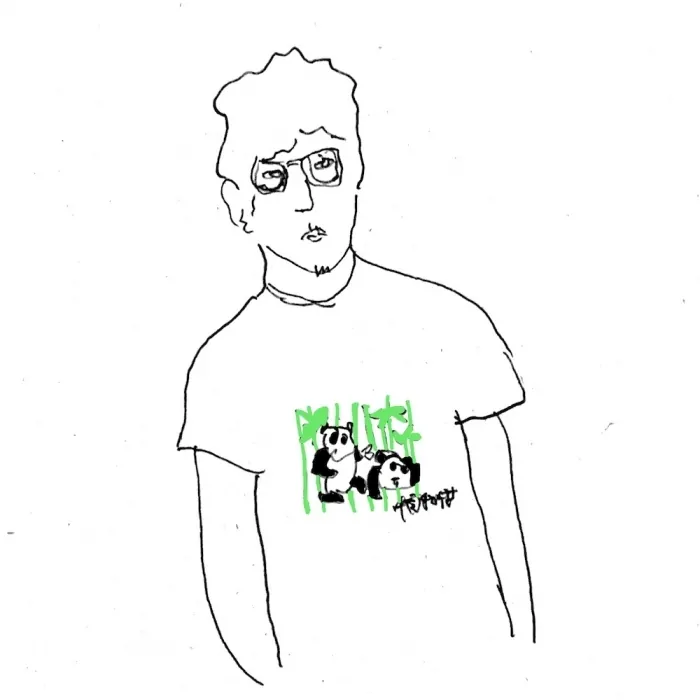
However, this time I decided to show my father a photo of someone. That someone was Mr. Daimaru, the designer of "OVERCOAT." He was the first person I ever wanted to resemble in my life. I felt that I could honestly say "I admire him" if it were him. I thought so, and I made the decision to show the photo and get my hair cut, which I had been hesitating to do until now.
I felt suddenly very embarrassed at the thought that my father might ask me, "Do you admire that person?" However, I had made up my mind, so I cautiously showed my smartphone screen to my father. When my father asked, "Who is this person?" I felt a jolt, but I managed to maintain my composure and simply said, "He's a designer." My father didn't ask anything more.
While getting a perm, I flipped through the pages of a fashion magazine handed to me by my father. However, I couldn't absorb any of the content. I was preoccupied with why I admired Mr. Daimaru so much, and my mind was filled with that thought. As I pondered, vague memories from my middle school days resurfaced.
I was small and lacked athletic ability, so I was completely a burden in the basketball club I joined. While my classmates practiced with the ball, I was alone doing sit-ups on the side of the court to build my basic fitness.
On days off, I gathered at friends' houses to play video games. Everyone was engrossed in Winning Eleven and Smash Bros, but I couldn't shine there either. Whenever someone was on my team, they would be disappointed and say, "We're definitely going to lose," one after another. I realized there that my reflexes were inferior to others, in addition to my lack of athletic ability.
Looking back now, the only thing that allowed me to attract attention from my friends at that time might have been fashion.
My family didn't have affordable toys like games, so I had no choice but to pass the time reading fashion magazines that my father brought home from the shop when they were no longer needed.
At that age, I was just starting to become aware of fashion, and naturally, everyone began to show interest in it. In that context, for some reason, everyone started asking me various questions because I seemed to know a bit about fashion.
Before long, my image of being "clumsy and unable to do sports or games" was enhanced with the added value of "but somehow stylish," and I began to be regarded with respect by everyone. After that, even if I failed in club activities and was laughed at, I started to think, "Isn't that actually 'delicious'?"
Even someone like me could be respected if I knew something interesting. Even if I had shortcomings, they could be transformed into positives.
I might have experienced the mysterious power that things like fashion, art, or culture possess for the first time at that moment.
Since then, I have vaguely wanted to pursue a path in fashion. However, even if I thought that, I had no idea what to do specifically at that time.
To me, people in the fashion world looked completely different from typical heroes like professional baseball players. I lacked the confidence to make someone who deviated from societal standards an object of "admiration."
Unlike baseball, fashion is hard to feel a sense of "effort" in. No matter how serious I was, from the perspective of school or parents, it was ultimately just a game.
I thought I was connected to those unconventional heroes through the commonality of fashion, but I still lacked the confidence to declare that strongly to the adults around me.
I spent three years in high school in that state, and I insisted on going to a fashion vocational school against my parents' opposition.
The vocational school I decided to attend had a scholarship program. Depending on the results of the interview, one would be determined to be either a scholarship student or a regular student, and if one became a scholarship student, a portion of the tuition would be waived.
I desperately wanted to become a scholarship student. If I could become a scholarship student here, I thought I could prove that what had been considered play until now was my own effort.
To become a scholarship student, I needed to present a self-assigned project during the interview. I immediately pulled out my mother's old sewing machine from the closet and dismantled a pair of denim pants to create a piece by sewing it together with a bandana.
That alone didn't feel sufficient, so I decided to interview some clothing stores as another project, create a database, and submit it as a shopping guide.
I set out to the city for interviews with high spirits, but it didn't go well at all. Looking back now, it was obvious, but a high school student bluntly asking for confidential information like customer numbers, average spending, and best-selling items would surely be annoying. I was turned away at most stores, and even when I managed to talk to someone, I often got scolded.
After spending several days like that, I finally had only one store left on my list. That store was Dice and Dice.
Dice was a store that held a special place in my heart. I couldn't casually say "admiration" about it. It was more like an awe-inspiring presence.
The store's appearance and the atmosphere of the staff were completely different from others. I always ended up drenched in sweat just from shopping there.
That day, I was so nervous that I walked back and forth in front of the store, thinking several times about whether I should just go home.
However, to become a scholarship student, I had to overcome this trial. I told myself that and, with a determined resolve, I plunged into the store. While suppressing the sweat pouring down like a waterfall, I explained the outline of the interview to the staff.
To my surprise, they said, "That's totally fine," and kindly agreed to the interview. Not only did they agree to the interview, but they also offered to help with my self-assigned project, and I still clearly remember them saying, "Good luck!" at the end.
Looking back, this experience was a very important one in my life. It was a "good luck!" that was more delightful than anything I could have been told by anyone else. It felt like my efforts were finally recognized for the first time.
It goes without saying that this was the catalyst for my strong desire to work in a store like that someday.
I took the self-assigned project I had finally completed to the interview at the vocational school. The result was a rejection.
I later learned that you couldn't become a scholarship student without a high internal assessment score from high school.
The vocational school I started attending as a regular student was one I couldn't fully engage with. Looking back, I was probably naive, but at that time, I felt no reality in learning meaningless voice projection or how to fold clothes at school.
Without consulting my parents, I quit school within a year. In my pure pursuit of admiration, I had lost sight of reality and was unable to manage myself.
I became unable to get along with my parents, making it uncomfortable to stay at home, and I spent about six months living in parks.
I thought things would somehow work out, but in reality, they didn't. When I was in a state of decay, I received an unexpected invitation from an acquaintance. "How about working at Dice?" I immediately replied, "Yes."
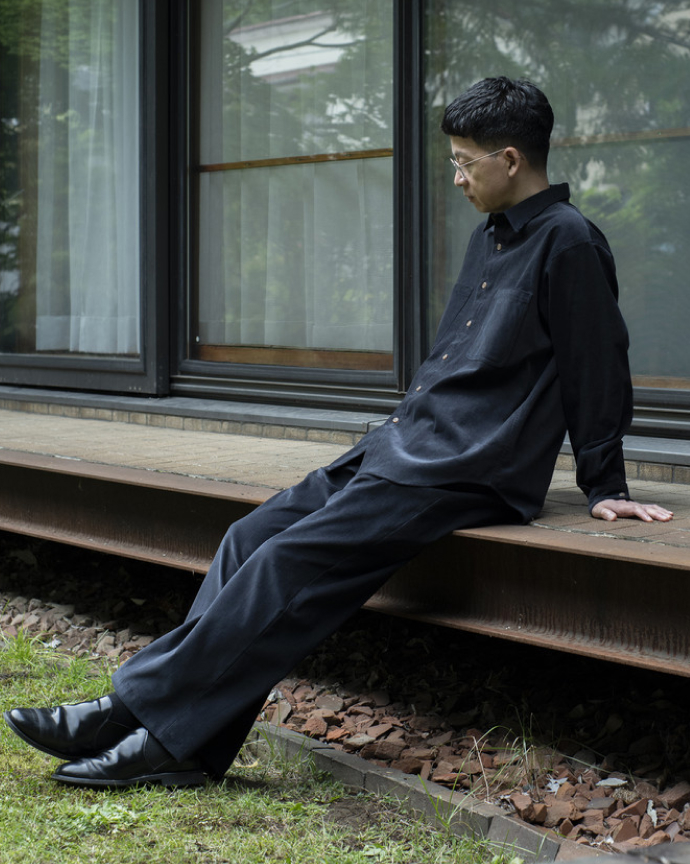
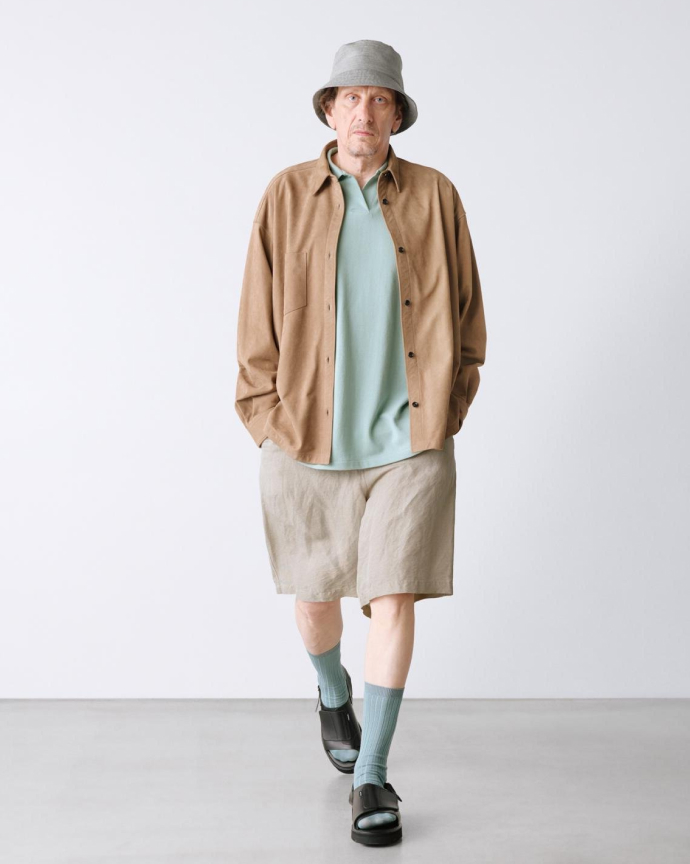
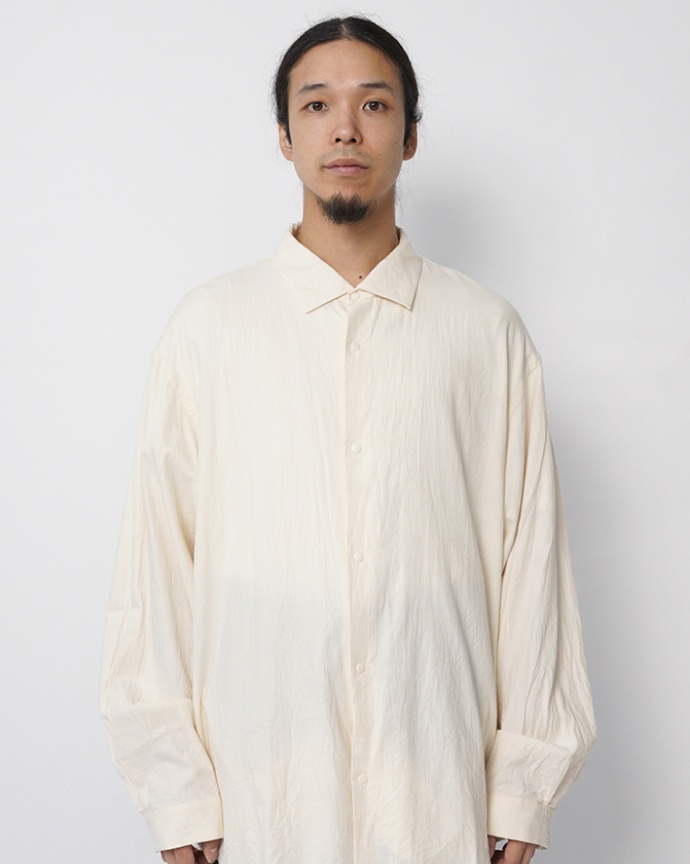
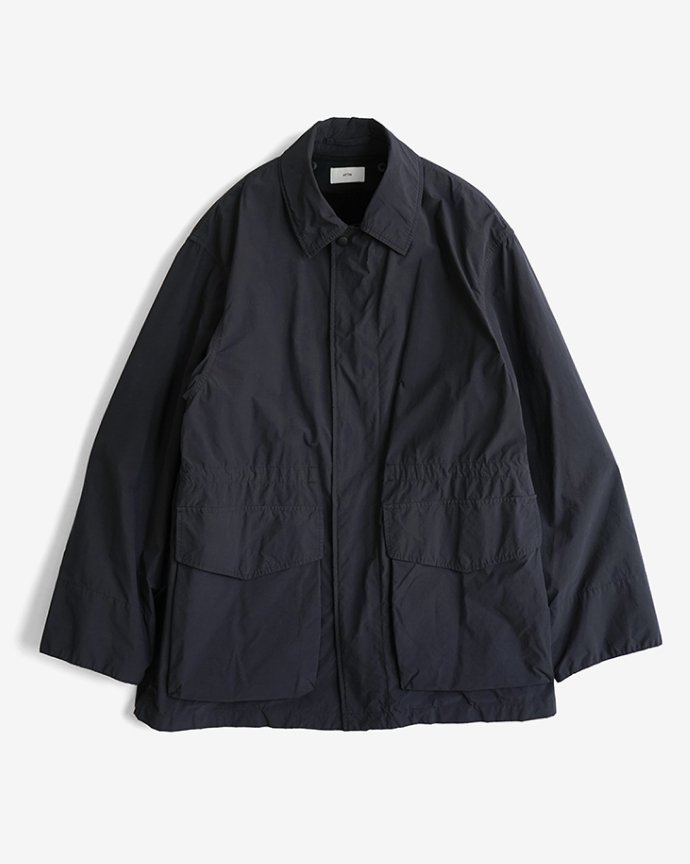
It's been about 10 years since I started working at the place I admired. During that time, I encountered many wonderful clothes. Among them, the most shocking was the "OVERCOAT" created by Mr. Daimaru.
When I first wore an "OVERCOAT" piece, I felt a strong sense of discomfort. I noticed that there was space where it usually felt tight. For some reason, the fabric conformed to areas where it usually didn't. The areas that were tense relaxed just right, while the areas that were loose felt corrected. To put it simply, it felt "comfortable to wear," but that didn't seem sufficient, and I realized it was inappropriate to describe it as discomfort.
At first glance, it seems simple, but when you look closely, it is actually incredibly complex. The intricately calculated patterns create a kind of magic that literally embraces diverse bodies.
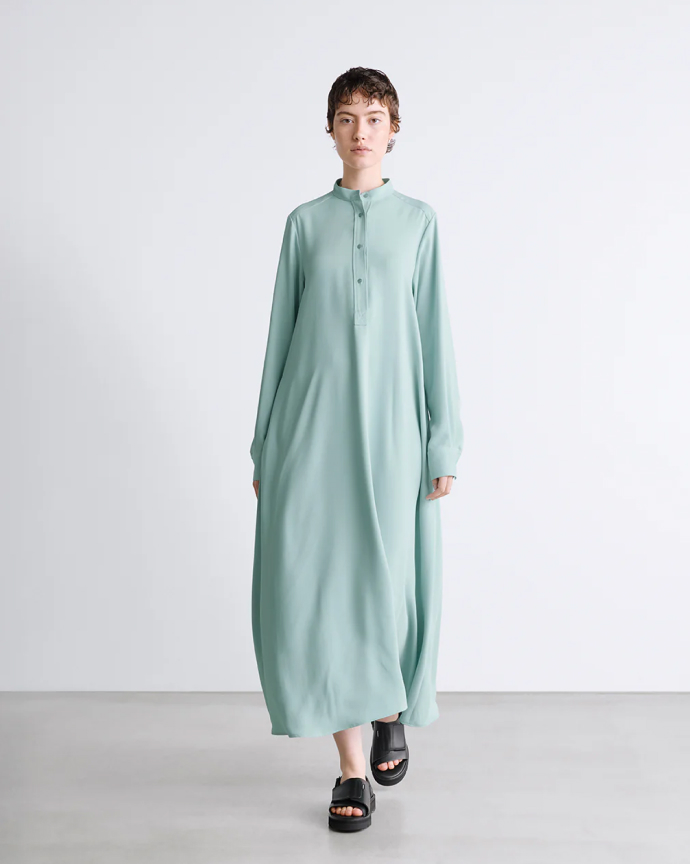
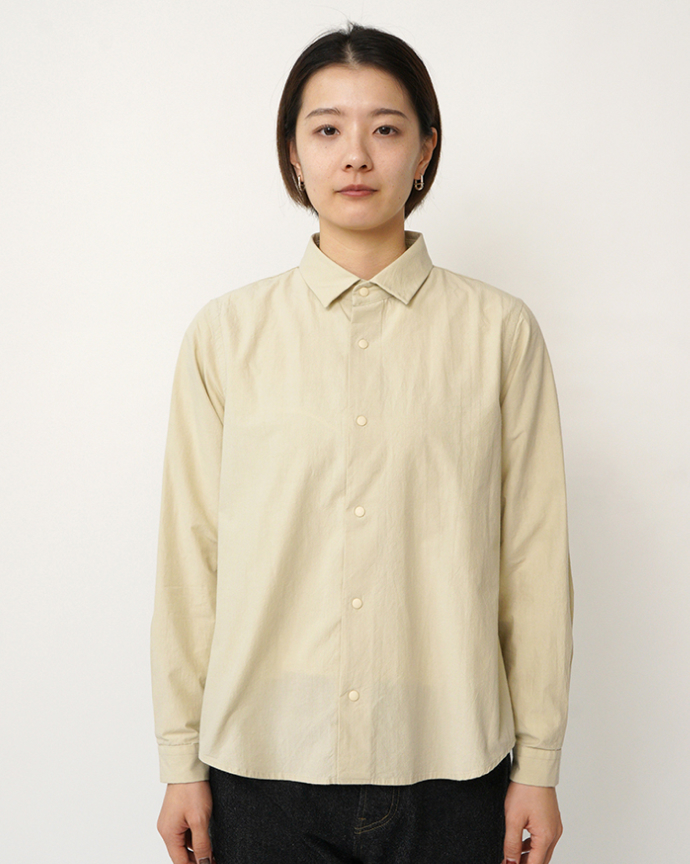
The clothes from "OVERCOAT" are gentle garments that accompany and delight everyone like never before. At the same time, they are clothes that attempt to realize the challenging concept of "overcoming discrimination" through the inherent power of fabric, sewing, and patterns. Without fear of misunderstanding, I can say that they are quite "sharp" clothes.
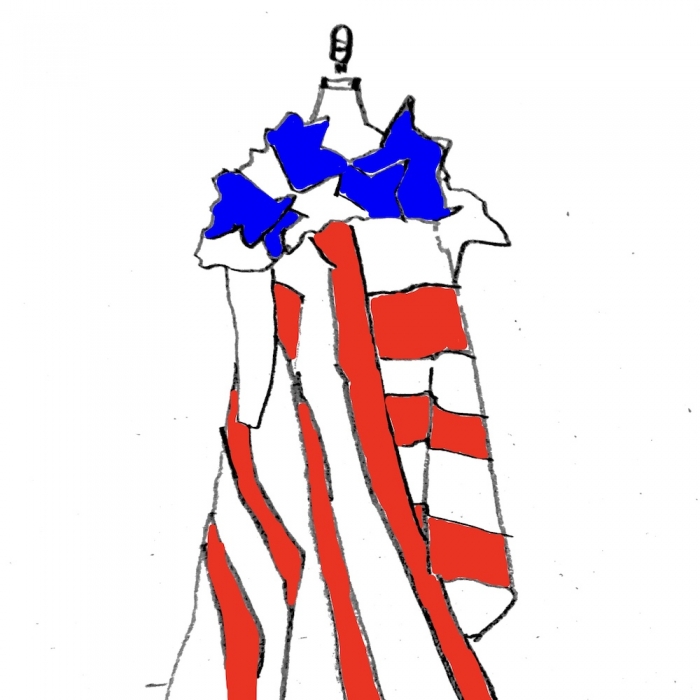
I believe there is no clothing that makes such an impact on society anywhere in the world. Therefore, even when I heard that Mr. Daimaru tailored clothes for Kamala Harris, which is indeed impressive, I strangely found it convincing.
This is just my personal speculation, but I can't help but think that the reason such gentle yet sharp clothes are created is influenced by Mr. Daimaru's life up to now. (In "Meeting Dice&Dice and OVERCOAT. Part 1 & Part 2, Mr. Daimaru shares his life story.)
And while I think it might be hard to listen to, I shared my life story in the first half because I arrogantly overlap my life with Mr. Daimaru's life.
Mr. Daimaru's life is neither a typical hero's tale nor a flashy success story of rising to the top. To put it simply, it feels like a twisted person who has deviated from society shines brightly while remaining twisted.
I have been captivated by Mr. Daimaru's simple humanity and the clothes he creates, and I have developed a rare admiration, thinking, "I want to shine like Mr. Daimaru someday."
After finishing the final adjustments, my father quietly said, "Alright," and removed the cape wrapped around my neck. I peered into the mirror in front of me to check the finish. There I was, with a hairstyle like Mr. Daimaru's.
A ticklish and proud feeling suddenly overwhelmed me, and I instinctively looked away from the mirror. My father, as usual, used a brush and carefully brushed the hair off my body. I said to my father, "Thank you."
Fujiyuki
Here is the page for "OVERCOAT" on the Dice&Dice ONLINE STORE.
"Admiration" means wanting to be like that person someday. If that's the case, there must be some commonality between myself and the person I admire. At the very least, I must be under the illusion that there is some commonality.
That's why I have never been able to easily "admire" anyone. I lacked the confidence to say something as arrogant as "I admire someone."
When I was in elementary school, I often felt envious every time a friend who played little league baseball said, "I admire professional baseball players." Indeed, there is a commonality between my friend and professional baseball players in baseball. That's why my friend can "admire" professional baseball players. However, at that time, I had no commonality to connect with those heroes of the world.
While I was absentmindedly thinking about such things, I was getting my hair cut by my father. My family runs a barbershop called "Cut Club Woodstock." So, since I was young, my father has always been the one to cut my hair.
I have never once asked my father to give me a hairstyle like someone else's. Each time, I would give detailed orders like "shorter by a few centimeters." When I think about it, the reason I go through such trouble is probably because I can't "admire someone." I couldn't even say something as arrogant as "give me a hairstyle like someone else's" to my father. No, perhaps it was because he was my father that I couldn't say it.
However, this time I decided to show my father a photo of someone. That someone was Mr. Daimaru, the designer of "OVERCOAT." He was the first person I ever wanted to resemble in my life. I felt that I could honestly say "I admire him" if it were him. I thought so, and I made the decision to show the photo and get my hair cut, which I had been hesitating to do until now.
I felt suddenly very embarrassed at the thought that my father might ask me, "Do you admire that person?" However, I had made up my mind, so I cautiously showed my smartphone screen to my father. When my father asked, "Who is this person?" I felt a jolt, but I managed to maintain my composure and simply said, "He's a designer." My father didn't ask anything more.
While getting a perm, I flipped through the pages of a fashion magazine handed to me by my father. However, I couldn't absorb any of the content. I was preoccupied with why I admired Mr. Daimaru so much, and my mind was filled with that thought. As I pondered, vague memories from my middle school days resurfaced.
I was small and lacked athletic ability, so I was completely a burden in the basketball club I joined. While my classmates practiced with the ball, I was alone doing sit-ups on the side of the court to build my basic fitness.
On days off, I gathered at friends' houses to play video games. Everyone was engrossed in Winning Eleven and Smash Bros, but I couldn't shine there either. Whenever someone was on my team, they would be disappointed and say, "We're definitely going to lose," one after another. I realized there that my reflexes were inferior to others, in addition to my lack of athletic ability.
Looking back now, the only thing that allowed me to attract attention from my friends at that time might have been fashion.
My family didn't have affordable toys like games, so I had no choice but to pass the time reading fashion magazines that my father brought home from the shop when they were no longer needed.
At that age, I was just starting to become aware of fashion, and naturally, everyone began to show interest in it. In that context, for some reason, everyone started asking me various questions because I seemed to know a bit about fashion.
Before long, my image of being "clumsy and unable to do sports or games" was enhanced with the added value of "but somehow stylish," and I began to be regarded with respect by everyone. After that, even if I failed in club activities and was laughed at, I started to think, "Isn't that actually 'delicious'?"
Even someone like me could be respected if I knew something interesting. Even if I had shortcomings, they could be transformed into positives.
I might have experienced the mysterious power that things like fashion, art, or culture possess for the first time at that moment.
Since then, I have vaguely wanted to pursue a path in fashion. However, even if I thought that, I had no idea what to do specifically at that time.
To me, people in the fashion world looked completely different from typical heroes like professional baseball players. I lacked the confidence to make someone who deviated from societal standards an object of "admiration."
Unlike baseball, fashion is hard to feel a sense of "effort" in. No matter how serious I was, from the perspective of school or parents, it was ultimately just a game.
I thought I was connected to those unconventional heroes through the commonality of fashion, but I still lacked the confidence to declare that strongly to the adults around me.
I spent three years in high school in that state, and I insisted on going to a fashion vocational school against my parents' opposition.
The vocational school I decided to attend had a scholarship program. Depending on the results of the interview, one would be determined to be either a scholarship student or a regular student, and if one became a scholarship student, a portion of the tuition would be waived.
I desperately wanted to become a scholarship student. If I could become a scholarship student here, I thought I could prove that what had been considered play until now was my own effort.
To become a scholarship student, I needed to present a self-assigned project during the interview. I immediately pulled out my mother's old sewing machine from the closet and dismantled a pair of denim pants to create a piece by sewing it together with a bandana.
That alone didn't feel sufficient, so I decided to interview some clothing stores as another project, create a database, and submit it as a shopping guide.
I set out to the city for interviews with high spirits, but it didn't go well at all. Looking back now, it was obvious, but a high school student bluntly asking for confidential information like customer numbers, average spending, and best-selling items would surely be annoying. I was turned away at most stores, and even when I managed to talk to someone, I often got scolded.
After spending several days like that, I finally had only one store left on my list. That store was Dice and Dice.
Dice was a store that held a special place in my heart. I couldn't casually say "admiration" about it. It was more like an awe-inspiring presence.
The store's appearance and the atmosphere of the staff were completely different from others. I always ended up drenched in sweat just from shopping there.
That day, I was so nervous that I walked back and forth in front of the store, thinking several times about whether I should just go home.
However, to become a scholarship student, I had to overcome this trial. I told myself that and, with a determined resolve, I plunged into the store. While suppressing the sweat pouring down like a waterfall, I explained the outline of the interview to the staff.
To my surprise, they said, "That's totally fine," and kindly agreed to the interview. Not only did they agree to the interview, but they also offered to help with my self-assigned project, and I still clearly remember them saying, "Good luck!" at the end.
Looking back, this experience was a very important one in my life. It was a "good luck!" that was more delightful than anything I could have been told by anyone else. It felt like my efforts were finally recognized for the first time.
It goes without saying that this was the catalyst for my strong desire to work in a store like that someday.
I took the self-assigned project I had finally completed to the interview at the vocational school. The result was a rejection.
I later learned that you couldn't become a scholarship student without a high internal assessment score from high school.
The vocational school I started attending as a regular student was one I couldn't fully engage with. Looking back, I was probably naive, but at that time, I felt no reality in learning meaningless voice projection or how to fold clothes at school.
Without consulting my parents, I quit school within a year. In my pure pursuit of admiration, I had lost sight of reality and was unable to manage myself.
I became unable to get along with my parents, making it uncomfortable to stay at home, and I spent about six months living in parks.
I thought things would somehow work out, but in reality, they didn't. When I was in a state of decay, I received an unexpected invitation from an acquaintance. "How about working at Dice?" I immediately replied, "Yes."
It's been about 10 years since I started working at the place I admired. During that time, I encountered many wonderful clothes. Among them, the most shocking was the "OVERCOAT" created by Mr. Daimaru.
When I first wore an "OVERCOAT" piece, I felt a strong sense of discomfort. I noticed that there was space where it usually felt tight. For some reason, the fabric conformed to areas where it usually didn't. The areas that were tense relaxed just right, while the areas that were loose felt corrected. To put it simply, it felt "comfortable to wear," but that didn't seem sufficient, and I realized it was inappropriate to describe it as discomfort.
At first glance, it seems simple, but when you look closely, it is actually incredibly complex. The intricately calculated patterns create a kind of magic that literally embraces diverse bodies.
The clothes from "OVERCOAT" are gentle garments that accompany and delight everyone like never before. At the same time, they are clothes that attempt to realize the challenging concept of "overcoming discrimination" through the inherent power of fabric, sewing, and patterns. Without fear of misunderstanding, I can say that they are quite "sharp" clothes.
I believe there is no clothing that makes such an impact on society anywhere in the world. Therefore, even when I heard that Mr. Daimaru tailored clothes for Kamala Harris, which is indeed impressive, I strangely found it convincing.
This is just my personal speculation, but I can't help but think that the reason such gentle yet sharp clothes are created is influenced by Mr. Daimaru's life up to now. (In "Meeting Dice&Dice and OVERCOAT. Part 1 & Part 2, Mr. Daimaru shares his life story.)
And while I think it might be hard to listen to, I shared my life story in the first half because I arrogantly overlap my life with Mr. Daimaru's life.
Mr. Daimaru's life is neither a typical hero's tale nor a flashy success story of rising to the top. To put it simply, it feels like a twisted person who has deviated from society shines brightly while remaining twisted.
I have been captivated by Mr. Daimaru's simple humanity and the clothes he creates, and I have developed a rare admiration, thinking, "I want to shine like Mr. Daimaru someday."
After finishing the final adjustments, my father quietly said, "Alright," and removed the cape wrapped around my neck. I peered into the mirror in front of me to check the finish. There I was, with a hairstyle like Mr. Daimaru's.
A ticklish and proud feeling suddenly overwhelmed me, and I instinctively looked away from the mirror. My father, as usual, used a brush and carefully brushed the hair off my body. I said to my father, "Thank you."
Fujiyuki
Here is the page for "OVERCOAT" on the Dice&Dice ONLINE STORE.